
Nadeshiko
なでしこ
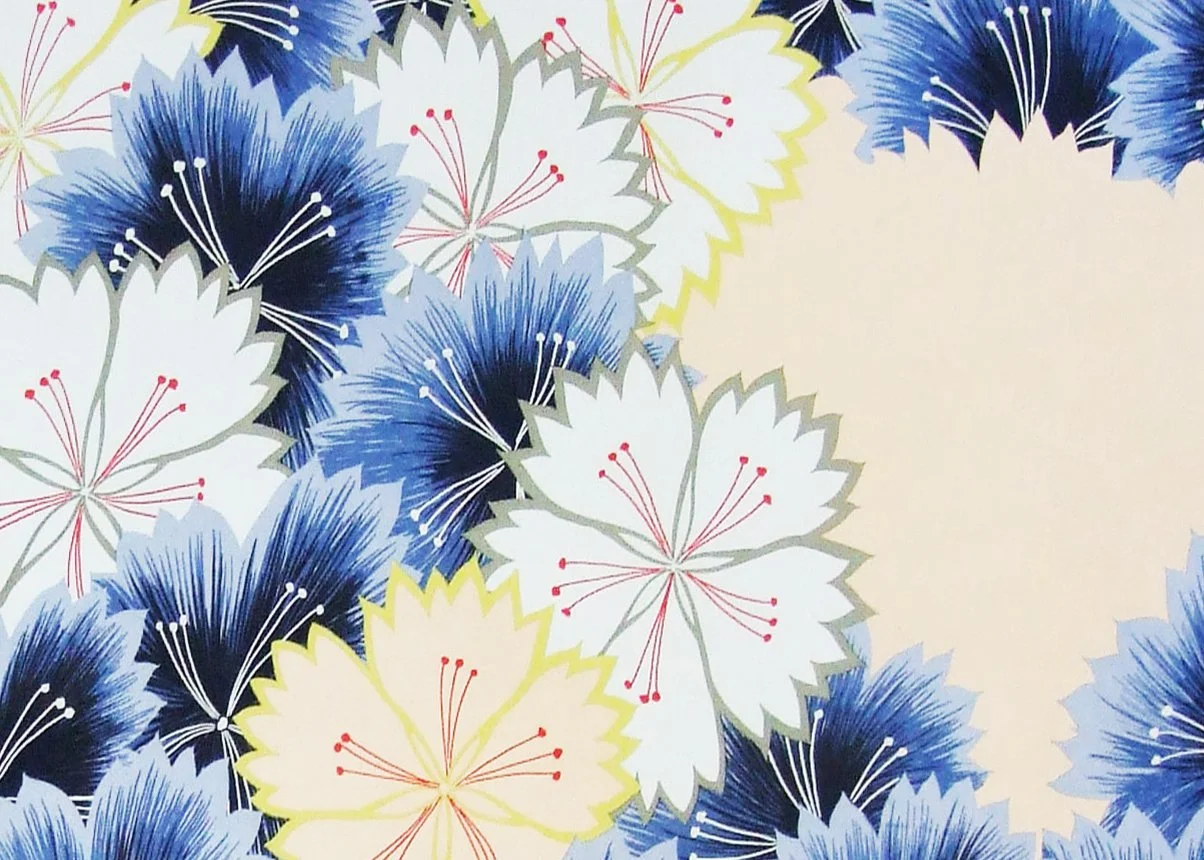
The Story of the Nadeshiko Pattern
The pink carnation is a beloved flower, considered one of the Seven Autumn Flowers. One theory about the origin of the name nadeshiko is that its delicate beauty inspires the desire to gently stroke it, leading to the name “nadesasuri-gusa” (stroking grass), which later evolved into “nadeshiko.”
Because it blooms over a long period from spring to summer, it is also known as tokonatsu (“eternal summer”).
Since ancient times, the pink carnation has been cherished for its soft white and pale pink blossoms. Varieties introduced from the Asian continent were distinguished from the native Japanese type, which came to be known as Yamato-nadeshiko (Japanese carnation).
In The Pillow Book, it is written: “Among the flowers of the grasses, the carnation is beautiful; the imported variety is especially lovely, yet the Japanese one is also very beautiful,” suggesting that both were admired in the imperial court. The introduced variety, also known as sekichiku, tends to have slightly rounder petals and more vivid colors, giving it a charming and lively impression. In contrast, the Yamato-nadeshiko is appreciated for its modest and refined elegance. This particular pattern appears closer to the more vibrant style, reflecting the sense of beauty described in The Pillow Book.
Originally used to distinguish it from imported varieties, the term Yamato-nadeshiko has come to represent the idealized image of Japanese femininity—graceful, pure, and refined. Today, it is also associated with strength and vitality, as seen in the nickname of Japan’s women’s national soccer team, Japan women's national football team.
In this way, nadeshiko embodies not only delicate beauty, but also quiet strength—an enduring symbol of elegance that has been reinterpreted across generations.