
Nadeshiko to Matsuba
撫子と松葉
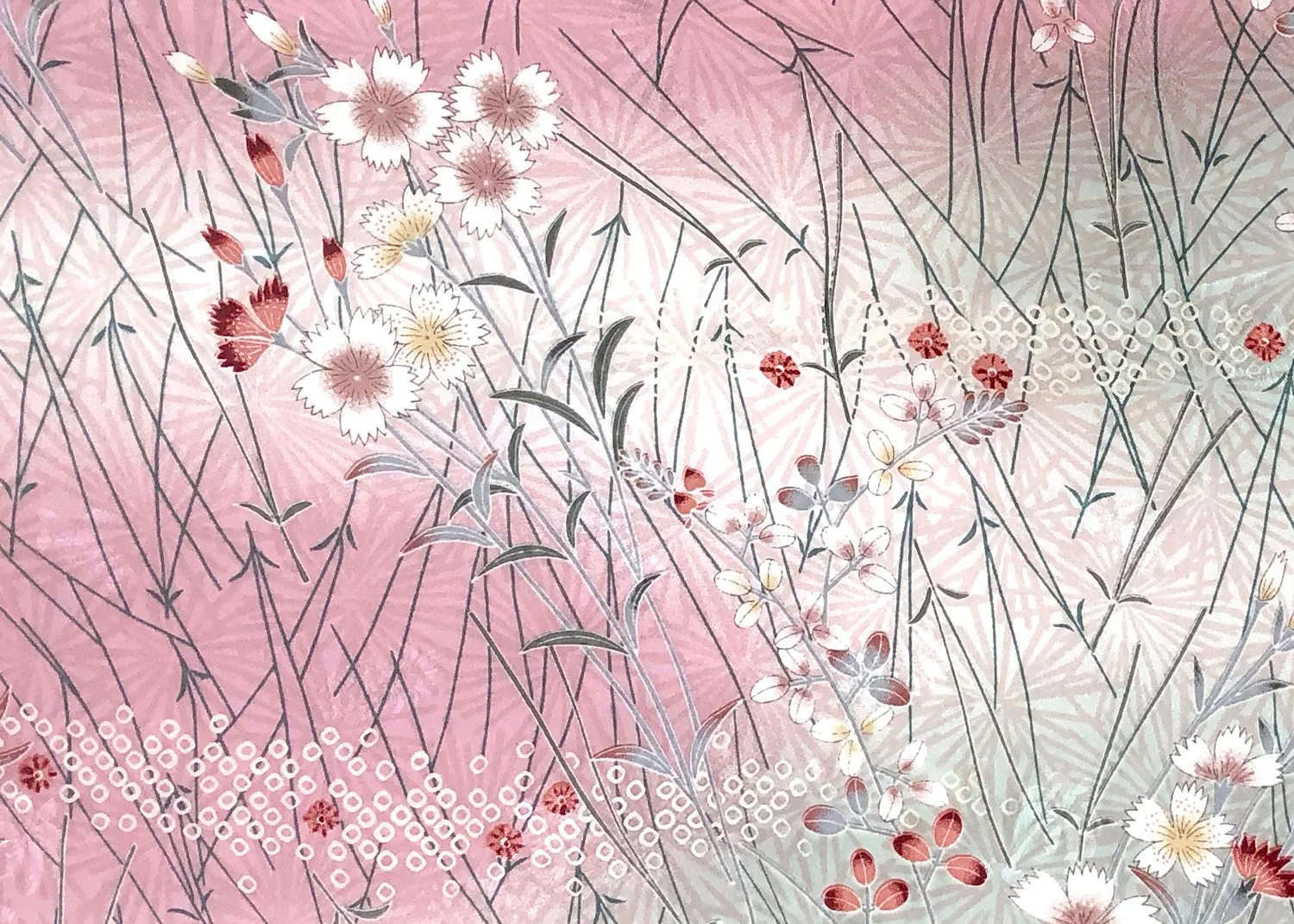
The Story of the Nadeshiko to Matsuba Pattern
A pattern featuring scattered, needle-like pine leaves is known as matsuba-chirashi (“scattered pine needles”). In this design, pink carnations (nadeshiko) and bush clover (hagi) are depicted over the matsuba-chirashi background.
Nadeshiko, also known as river pink or Yamato-nadeshiko, is a beloved flower and one of the Seven Autumn Flowers. While the variety introduced from the Asian continent is called kara-nadeshiko (also known as sekichiku), the native Japanese variety is referred to as Yamato-nadeshiko.
Because it blooms gracefully over a long period from spring to summer, it is also called tokonatsu (“eternal summer”).
There is a charming theory that the name nadeshiko comes from nadesasuri-gusa (“stroking grass”), as its delicate beauty makes one instinctively want to gently stroke it. Over time, the term Yamato-nadeshiko came to represent the image of an elegant and refined Japanese woman—graceful and composed… what do you think?
The word “pine” (matsu) is sometimes used as a play on words for “to wait.” One might imagine a young woman, as delicate as a carnation, quietly waiting for someone special to appear.
Bush clover (hagi) is also one of the Seven Autumn Flowers and is frequently featured in the Man'yōshū. With its small oval leaves and branches filled with charming butterfly-shaped blossoms in shades of reddish-purple and white, hagi has long been a popular motif in kimono design.