
Previous
Previous
Spring Collection Quarter-Sleeve Tee
Next
Next


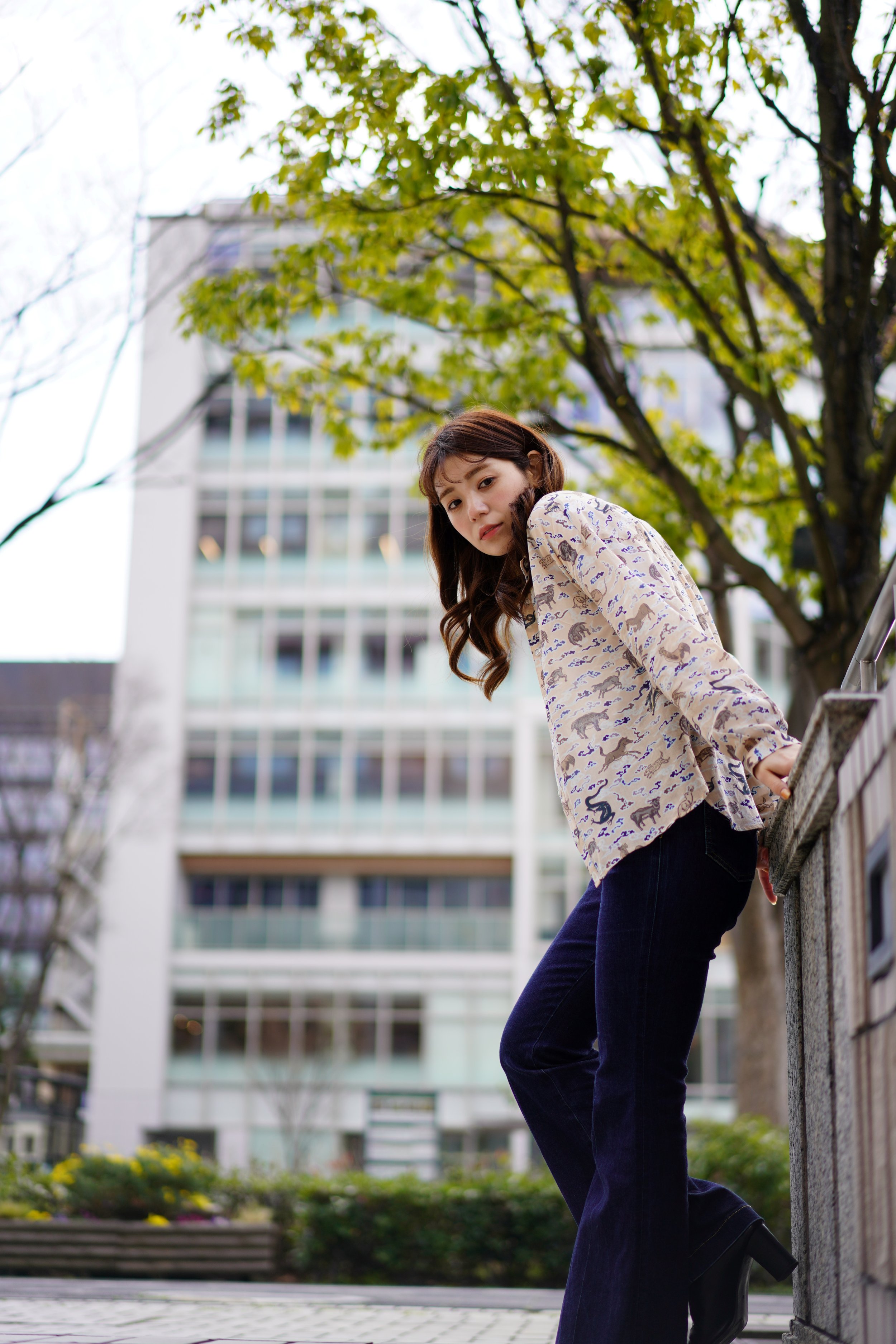
Color / White and Multi-color Care Instruction
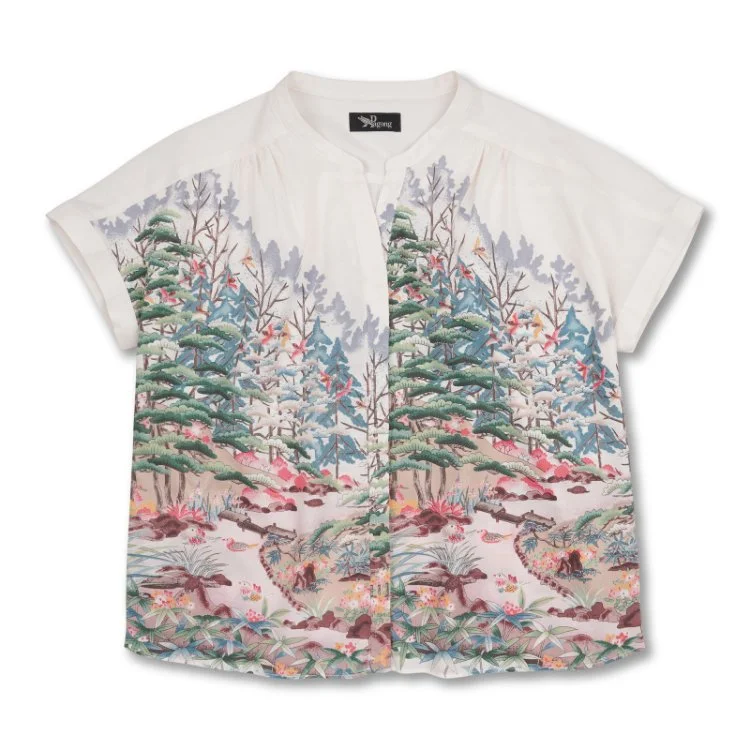
Japanese name / 風景画 (fukeiga)
-About-
From ancient times, beautiful artistic patterns on kimono have reflected a delicate sensibility with nature. Fukeiga or “Japanese Mountain Landscape” is no exception, which celebrates forested mountains, and a river with turtles and ducks which are meant to bring back idyllic childhood memories of childhood. In short, a desirable place for one to live!
・Cotton 75% / Rayon 25%
・Made in Japan
・Hand-wash
・Model ( 5 feet, 3 inches )
Currency : US Dollar (USD)
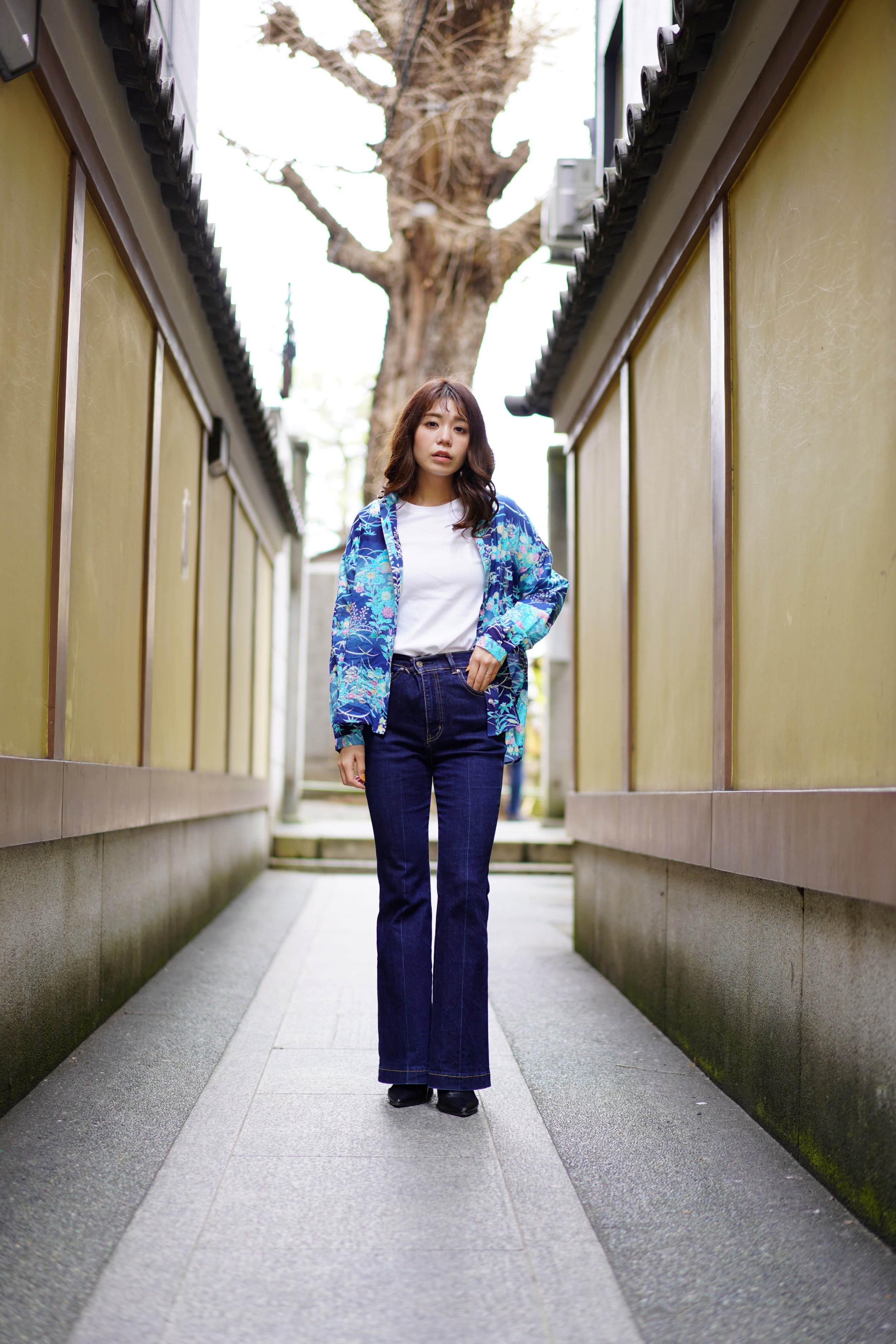
Color / White and Multi-color Care Instruction
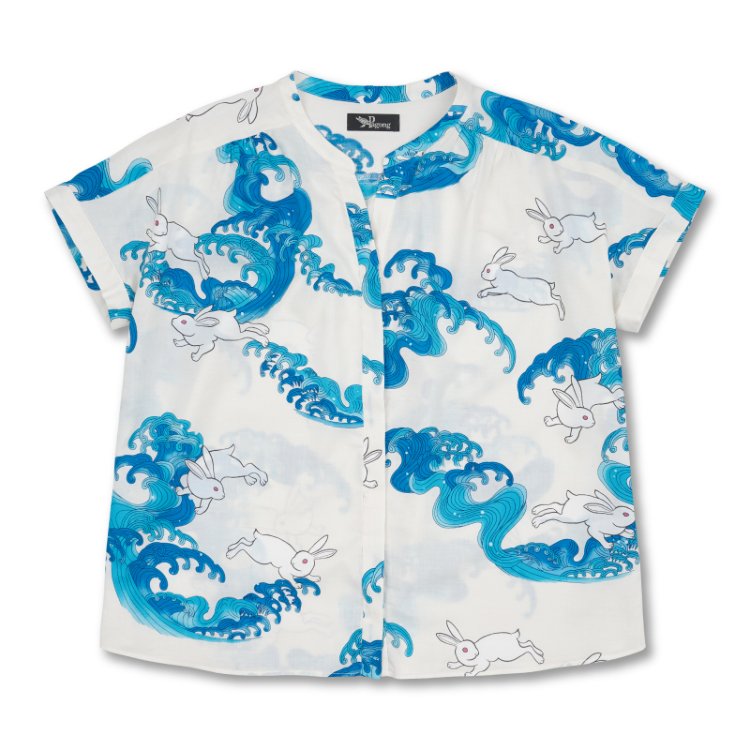
Japanese name / 波に兎 ( Nami ni usagi )
-About-
In Japan, rabbits are known as “messengers from the gods, or “kami”, and represent intelligence, prosperity, and moving forward especially in new directions.
In this dynamic, fun-loving pattern, rabbits are seen frolicking with “standing waves”, or “seigaha” taking on an even deeper traditional meaning representing surges ofgood fortune, power against adversity, and resilience.
・Cotton 75% / Rayon 25%
・Made in Japan
・Hand-wash
・Model ( 5 feet, 3 inches )
Currency : US Dollar (USD)
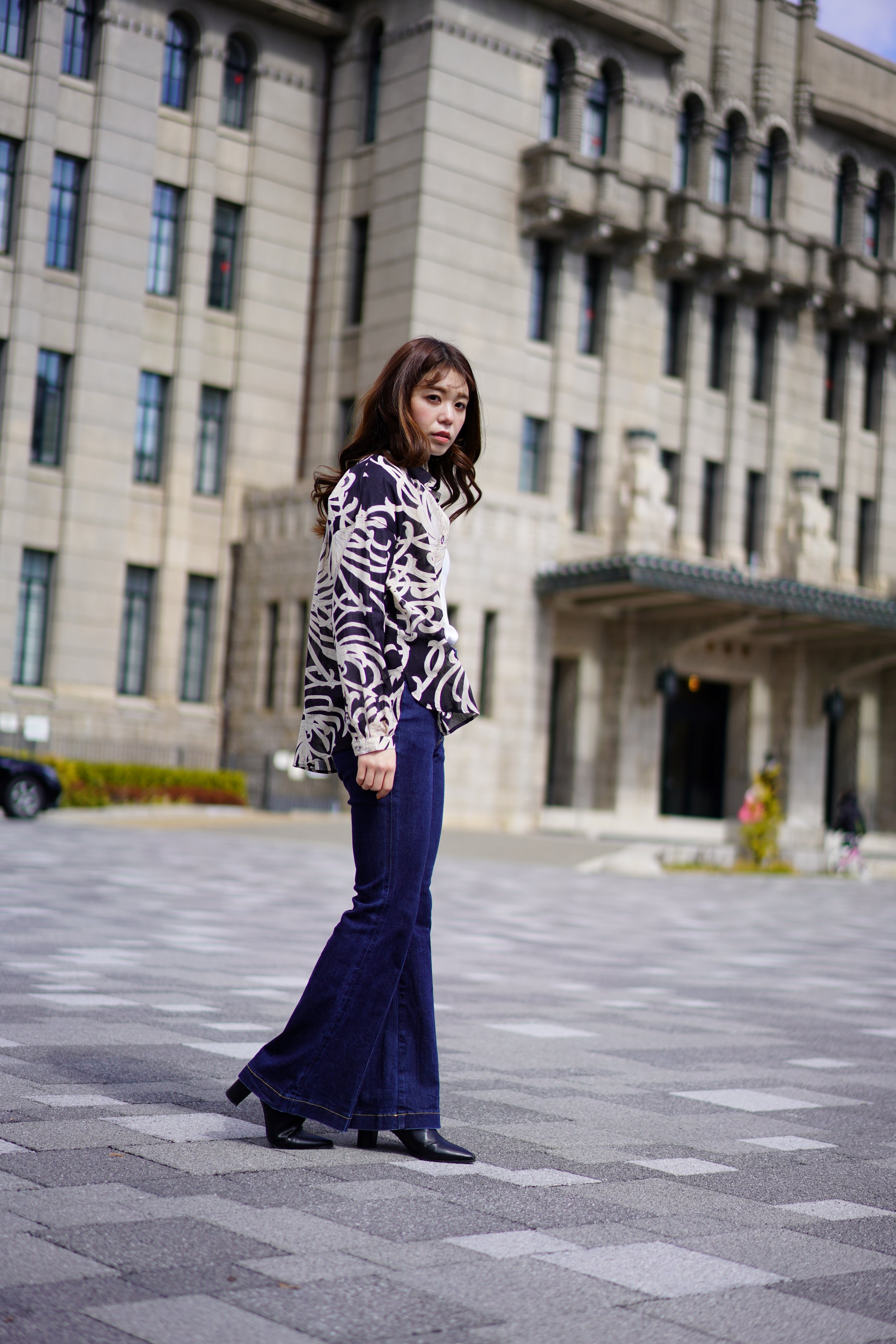
Color / Gray and Multi-color Care Instruction
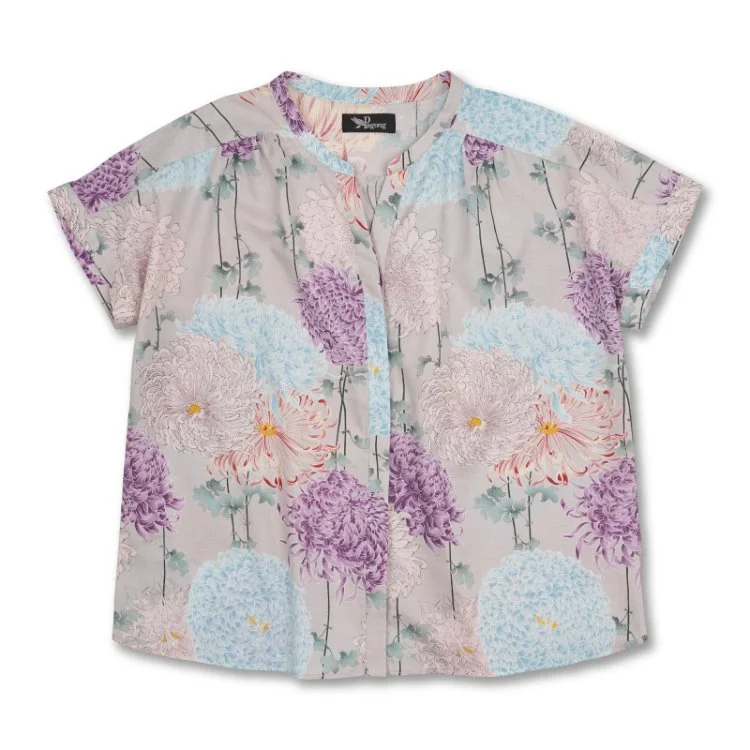
Japanese name / 彩り菊蔦文様 ( Irodori Kikutsuta monyo )
-About-
The colorful chrysanthemum and ivy pattern beautifully combines the elegance of the chrysanthemum with the vitality of ivy, resulting in a design that exudes sophistication and refinement. This pattern is particularly popular on women's kimonos, obi, and various Japanese accessories, as it creates a noble and aesthetically pleasing appearance.
The chrysanthemum symbolizes "nobility" and "elegance," while ivy represents "vitality," "prosperity," and "growth." The harmonious combination of these two plants is considered auspicious, making it a favored choice for kimonos and obi worn during celebratory occasions such as weddings, coming-of-age ceremonies, Shichigosan, and school entrance ceremonies.
The chrysanthemum and ivy pattern is especially prevalent on women's "furisode" and "homongi" kimonos, which are worn during significant events. This pattern not only adds a gorgeous and noble impression but also carries with it wishes for good luck and prosperity.
・Cotton 75% / Rayon 25%
・Made in Japan
・Hand-wash
・Model ( 5 feet, 3 inches )
Currency : US Dollar (USD)
Color / Purple and Multi-color Care Instruction
Japanese name/ 菊に常盤木 - Kiku ni Tokiwagi
-About-
Chrysanthemums are known as a quintessential flower of autumn, admired for their refined beauty and graceful presence. They have long been associated with longevity, vitality, and enduring elegance, making them a beloved motif in seasonal design.
Pine, also known as tokiwagi (evergreen), is a symbol of resilience and continuity. Remaining green throughout the changing seasons, it represents unwavering strength and the idea of permanence. Because of this, pine has been cherished as an auspicious motif, often used to convey wishes for stability and long-lasting prosperity.
In this design, chrysanthemums are depicted with long, slender petals that stretch upward with a sense of quiet movement. Their delicate, flowing form adds refinement and a subtle dynamism to the composition.
The pattern itself is expressed in a simple and balanced style, allowing each element to stand out while maintaining overall harmony. The pairing of chrysanthemums and evergreen pine creates a meaningful contrast—soft elegance alongside steadfast strength.
Together, these motifs embody a wish for longevity, resilience, and a life that remains vibrant through the passage of time.
・Cotton 95% / Silk 5%
・Made in Japan
・Hand-wash
Currency : US Dollar (USD)
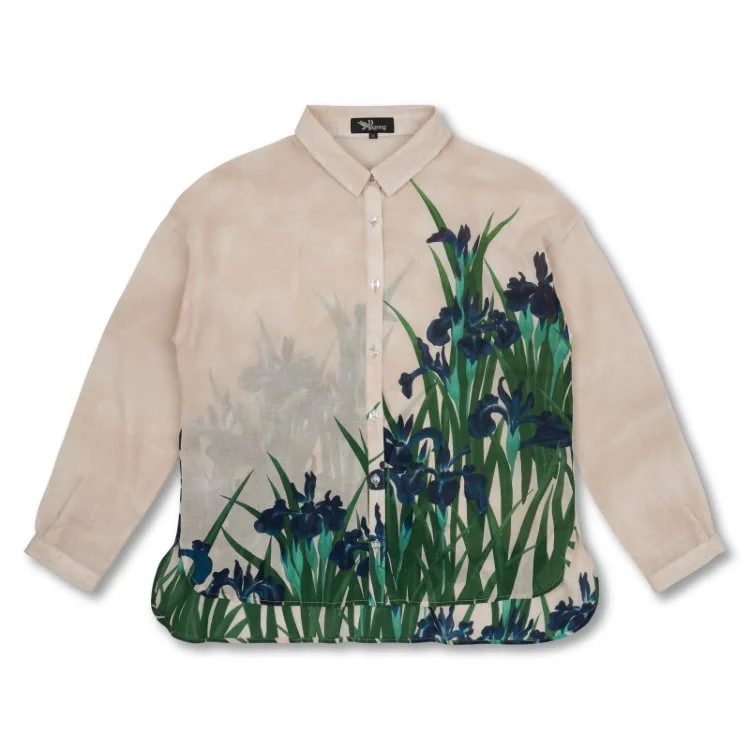
Color / Beige and Green Care Instruction
Japanese name/ 燕子花 (Kakitsubata)
-About-
This exquisite pattern was inspired by a work of art in the collection of the Metropolitan Museum of Art in New York called “Irises at Yatsuhashi (Eight Bridges)”, a pair of six-panel folding screens or “byobu” by Japanese artist Ogata Korin (1658-1716) of the Rimpa school. Born and raised in Kyoto, Korin became an official painter for the royal court in 1701, with Irises being painted just after receiving this honor.
Korin’s focus on irises seems to have many hidden meanings which stem from Japanese literature written over 1,000 years ago; telling of the noble class putting the iris in high regard due to its purple color, which could purify negative energies, and protect those who wore it. The flower was also believed to bring happiness and good fortune, as well as symbolize wisdom, hope, trust, and valor; therefore becoming a pattern which is often seen used on ceremonial kimono.
We are delighted to have been given official permission to use this extraordinary painting from the Metropolitan Museum of Art in New York, to which Pagong has implemented the dye technique of Kyoto Yuzen.
・Cotton 95% / Silk 5%
・Made in Japan
・Hand-wash
Currency : US Dollar (USD)
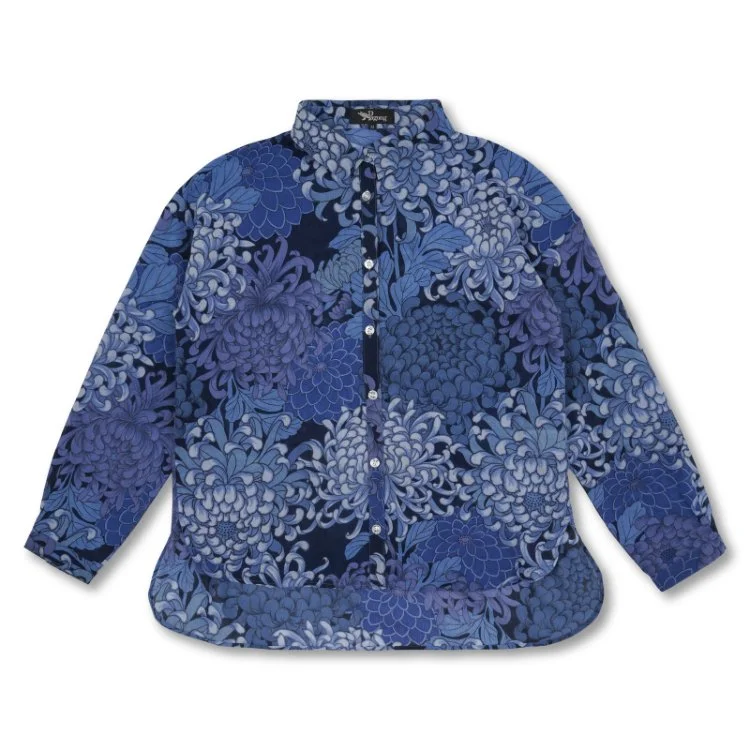
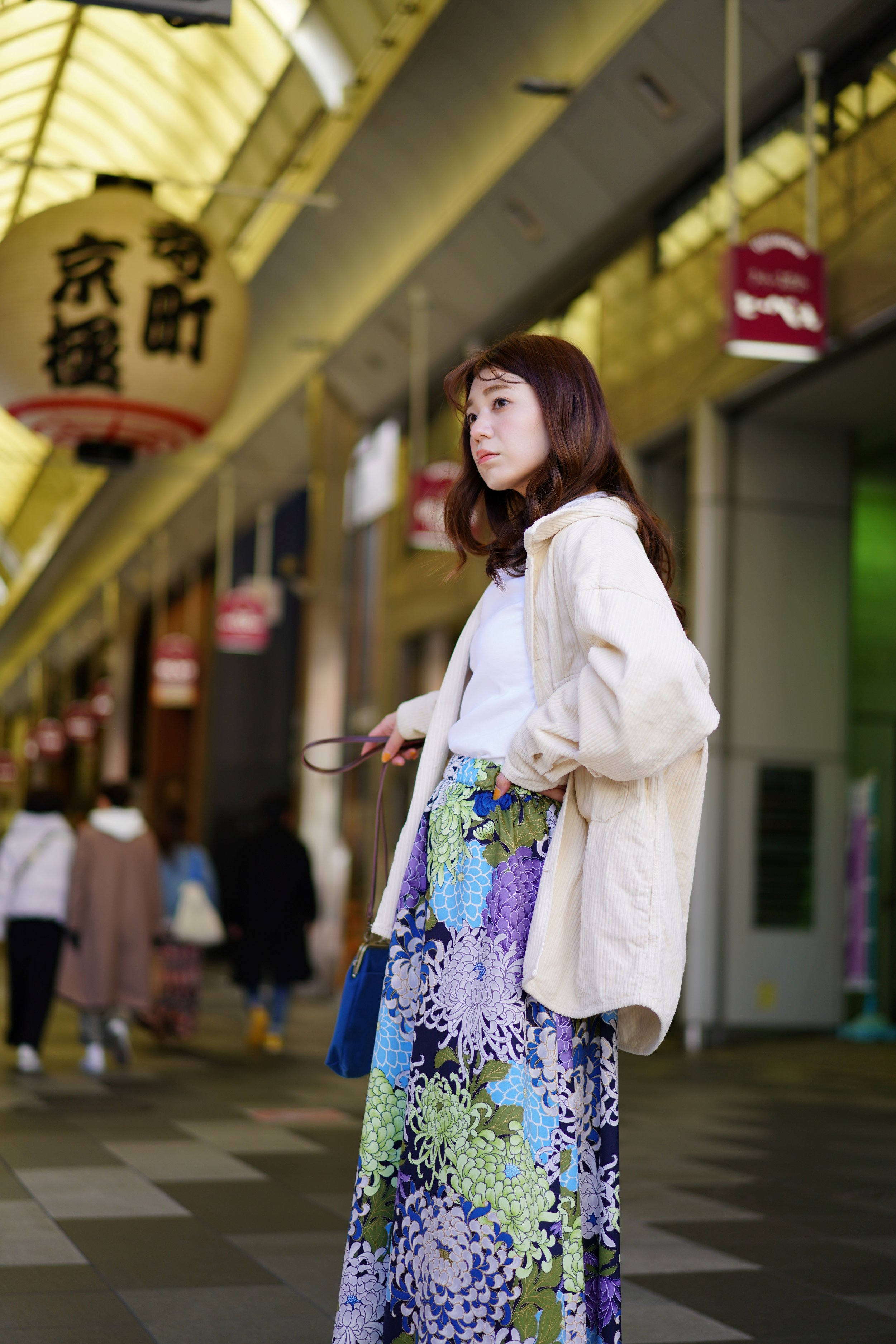
Color / Blue Care Instruction
Japanese name / ( 大輪菊 ) Dairingiku
-About-
Kiku, or chrysanthemums, were introduced to Japan from China in the Nara-era ( 710-794 ). In Japan, the chrysanthemum has become a symbol for the emperor and appears on the Japanese imperial seal. In the language of flowers, the chrysanthemum carries the symbolic meaning of devoted love, loyalty, happiness, longevity, and joy.
・Cotton 95% / Silk 5%
・Made in Japan
・Hand-wash
Currency : US Dollar (USD)
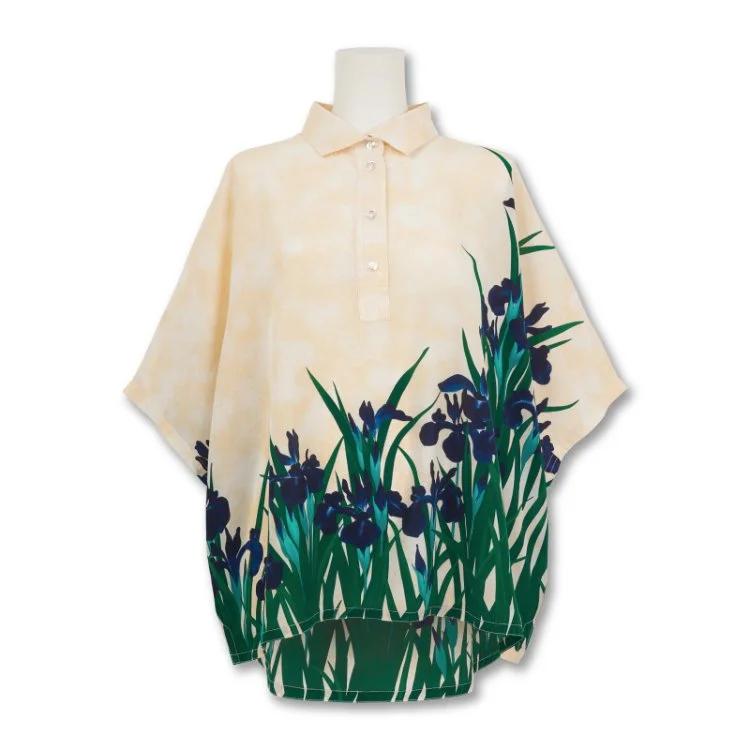
Color/ Beige Care Instruction
Japanese name / 燕子花(Kakitsubata)
-About-
This exquisite pattern was inspired by a work of art in the collection of the Metropolitan Museum of Art in New York called “Irises at Yatsuhashi (Eight Bridges)”, a pair of six-panel folding screens or “byobu” by Japanese artist Ogata Korin (1658-1716) of the Rimpa school. Born and raised in Kyoto, Korin became an official painter for the royal court in 1701, with Irises being painted just after receiving this honor.
Korin’s focus on irises seems to have many hidden meanings which stem from Japanese literature written over 1,000 years ago; telling of the noble class putting the iris in high regard due to its purple color, which could purify negative energies, and protect those who wore it. The flower was also believed to bring happiness and good fortune, as well as symbolize wisdom, hope, trust, and valor; therefore becoming a pattern which is often seen used on ceremonial kimono.
We are delighted to have been given official permission to use this extraordinary painting from the Metropolitan Museum of Art in New York, to which Pagong has implemented the dye technique of Kyoto Yuzen.
・100% Polyurethane
・Made in Japan
・Dry-clean
・Use pressing cloth to iron
・Model (5 feet, 3 inches)
・Currency : US Dollar (USD)
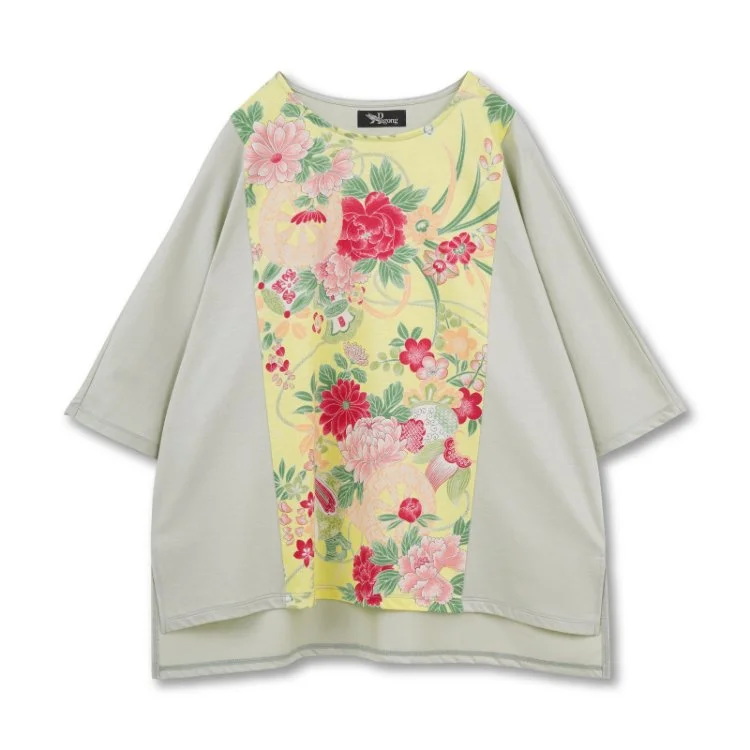
Color / Grey and Multi-color Size Chart
Japanese name / 花車と宝尽くし (Hanaguruma to Takazukushi)
-About-
This design is inspired by a formal kimono pattern for young women from the early Showa era. It features a flower cart overflowing with seasonal blossoms and symbolic treasures.
At its center is the peony, often called the “king of flowers” for its rich and elegant beauty. Traditionally, the peony represents wealth, nobility, and prosperity. It is also associated with the wish for a fortunate marriage and a life of abundance.
The flower cart, filled with blossoms and treasures, expresses a parent’s heartfelt hope that their daughter will grow to live a life as beautiful, graceful, and prosperous as the flowers themselves.
・Material: (Patterned part) 100% cotton (Solid part) 70% rayon, 30% cotton
・Made in Japan
・Hand-wash
Currency : US Dollar (USD)

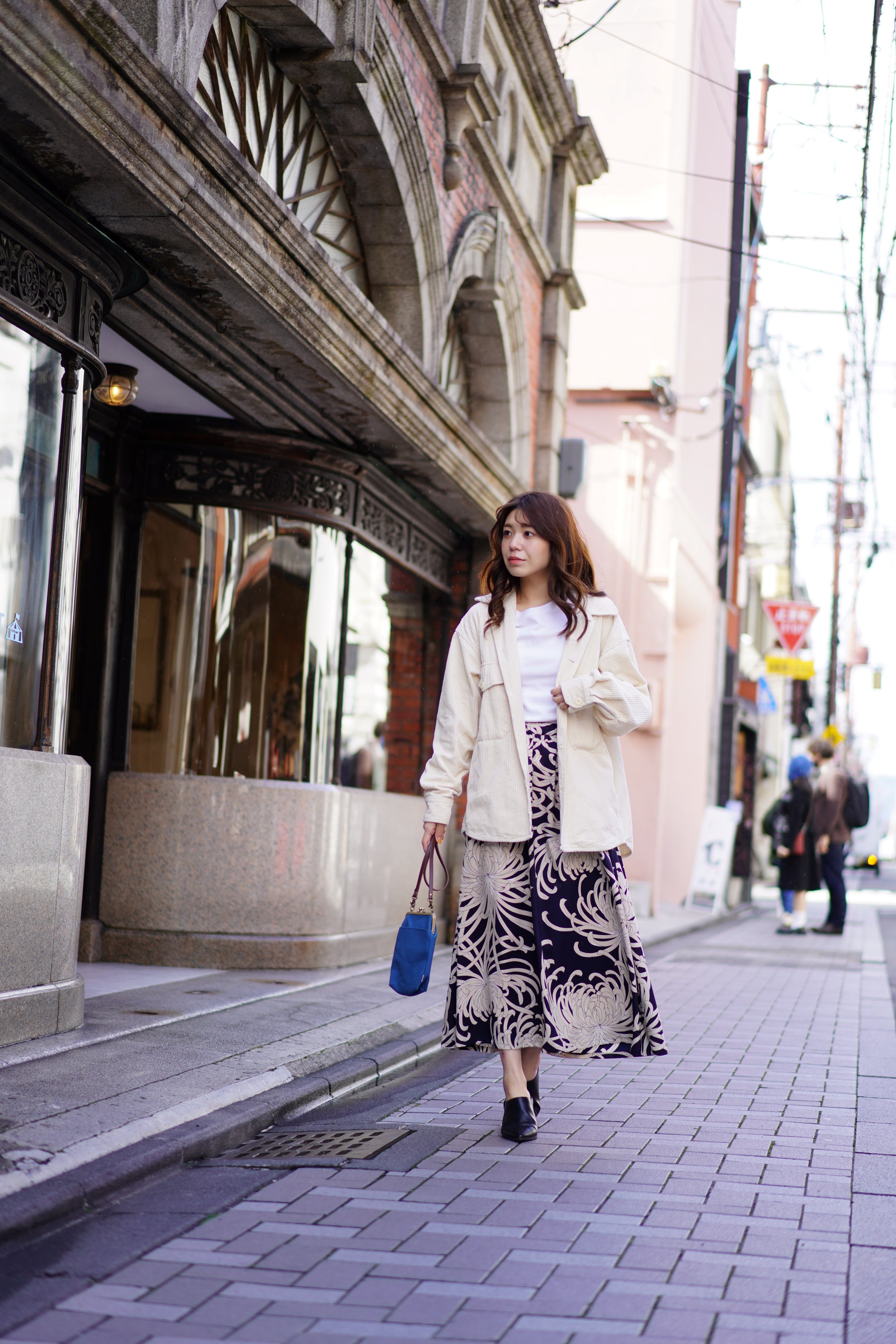
Color / Navy and Multi-color Care Instruction
Japanese name / 百合と露芝 (Yuri to Ro )
-About-
Japan is famously known as the land of lilies, which have thrived in its mountains and fields since the Manyo period. The bulbs, referred to as lily roots, consist of overlapping, fleshy, scale-like leaves. The name "lily" is thought to originate from the way these leaves gather together, with some theories suggesting it comes from the flower's graceful sway in the wind. Lilies have been appreciated for centuries, but realistic motifs are mainly found in Noh costumes from the Momoyama period.
As Western flowers gained popularity in the late Meiji period, sketch-like designs began to emerge, and by the Taisho period, lilies started to appear on kimonos.
This style often depicted lilies in a realistic yet simplistic manner, emphasizing their elegance. The Japanese aesthetic values the fleeting beauty of morning dew. The "dew grass" pattern features layered grass shapes adorned with dewdrops, capturing a quintessential Japanese sentiment. The saying "walking like a lily flower" highlights the flower’s dignified beauty, evoking images of misty fields with graceful lilies swaying in the breeze. Wearing this pattern of lilies and dew grass offers an ultimate expression of elegance.
・Cotton 75% / Rayon 25%
・Made in Japan
・Hand-wash
・Model ( 5 feet, 3 inches )
Currency : US Dollar (USD)