
Peony and Korin Chrysanthemum
大牡丹と光琳菊 - Daibotan to Koringiku
The Story of the Peony and Korin Chrysanthemum Pattern
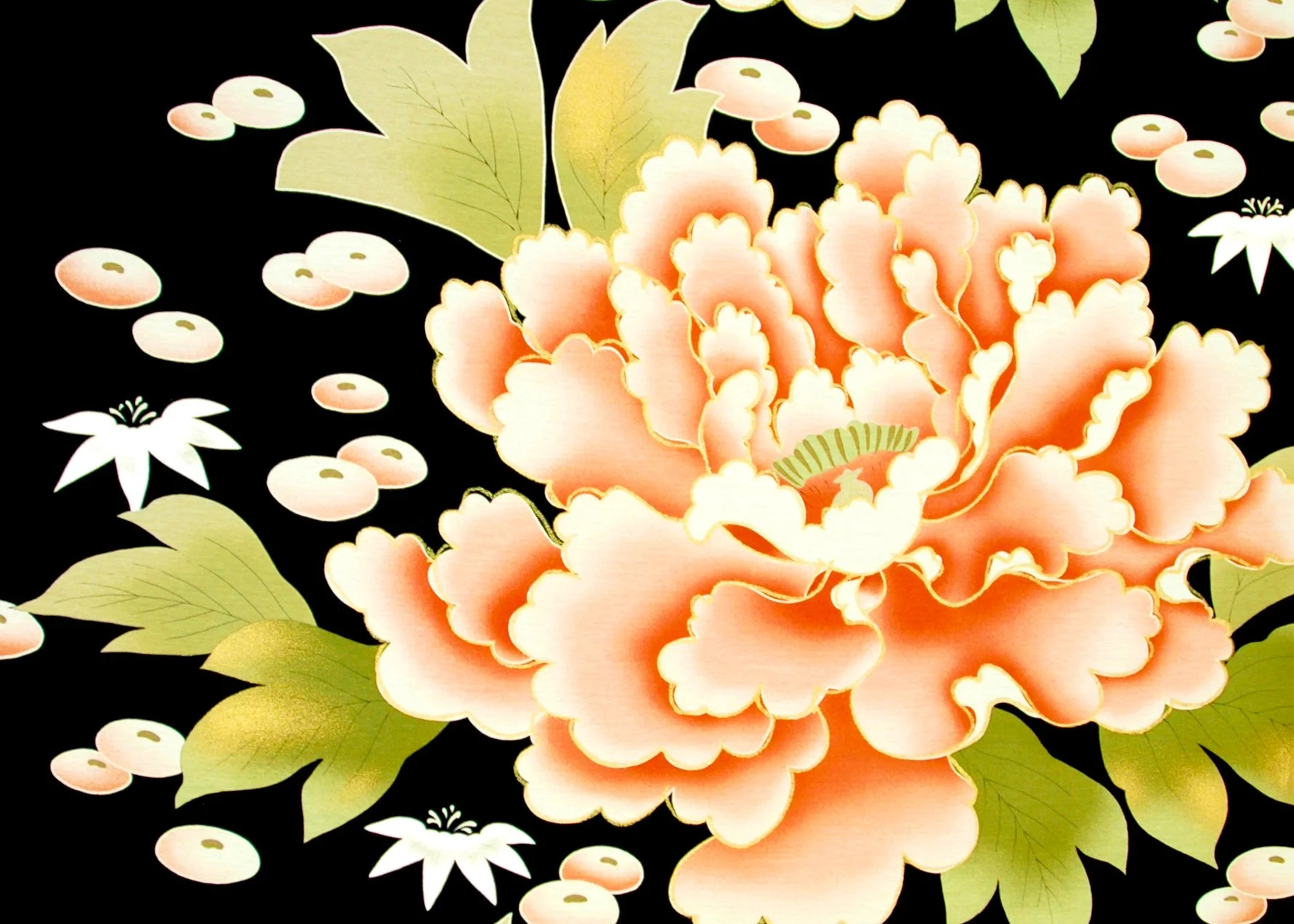
This design features a close-up interpretation of the exquisite peonies and chrysanthemums found in wedding kimono patterns from the Taisho period to the Showa period. In those traditional garments, the flowers were often hand-painted, and the delicate yet powerful brushwork reveals an extraordinary level of craftsmanship.
In traditional symbolism, the lion is regarded as the king of beasts, and the phoenix as the king of birds—likewise, the peony is celebrated as the “king of flowers.” Its grand, luxurious, and radiant appearance truly embodies this title. The peony is also known as the “flower of wealth and nobility,” symbolizing prosperity, status, and success.
The peony was highly revered as an emblem of wealth and refinement. It was introduced to Japan and appreciated from around the Heian period, initially appearing in courtly arts and decorative crafts. However, it was during the Edo period that the peony truly evolved into a distinctly Japanese aesthetic, becoming widely used as a motif on kosode (short-sleeved kimono) and other textiles.
Beside the grand peony blooms in this design is the elegant Kōrin chrysanthemum. Its name derives from the artist Ogata Kōrin, who is known for transforming natural floral forms into bold, stylized compositions. The Kōrin chrysanthemum is a simplified yet powerful interpretation of the flower, emphasizing rhythm and form over realism. It is also called the “manju chrysanthemum,” a name inspired by its rounded, abundant shape resembling a steamed bun (manjū), symbolizing fullness and prosperity.
With large peonies blooming across the garment, this design invites the wearer to embody the spirit of the “King of Flowers”—a celebration of beauty, dignity, and quiet strength