Kabuki
歌舞伎 - Kabuki
The Story of the Kabuki Pattern
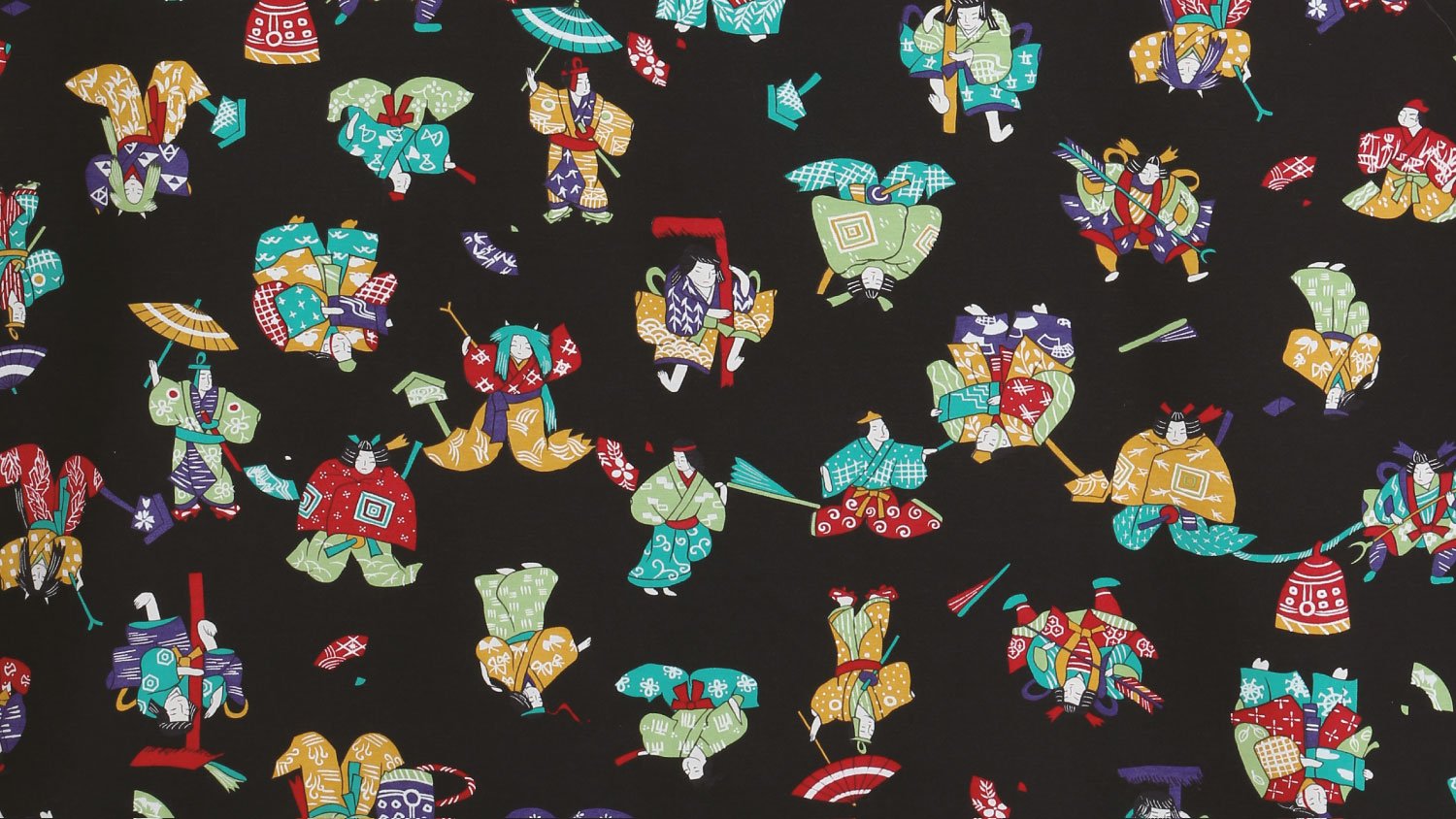
This kimono pattern is a refined revival of a Showa-era design inspired by Edo-style chiyogami, centered on themes from the celebrated Kabuki repertoire known as the “Kabuki Eighteen.” Rather than depicting full scenes, the pattern transforms iconic elements from these plays into decorative motifs, blending theatrical energy with graphic elegance.
Across the design, symbols and figures from selected plays are arranged in a lively yet balanced composition. Bold shapes, expressive poses, and stylized props create a sense of movement, echoing the dramatic spirit of kabuki. Each motif stands out individually while contributing to an overall rhythm, much like scenes unfolding across a stage.
The visual style reflects the influence of aragoto theater, with its exaggerated forms and powerful presence. Strong lines and contrasting colors give the pattern a striking impact, while the arrangement across the fabric maintains harmony and flow.
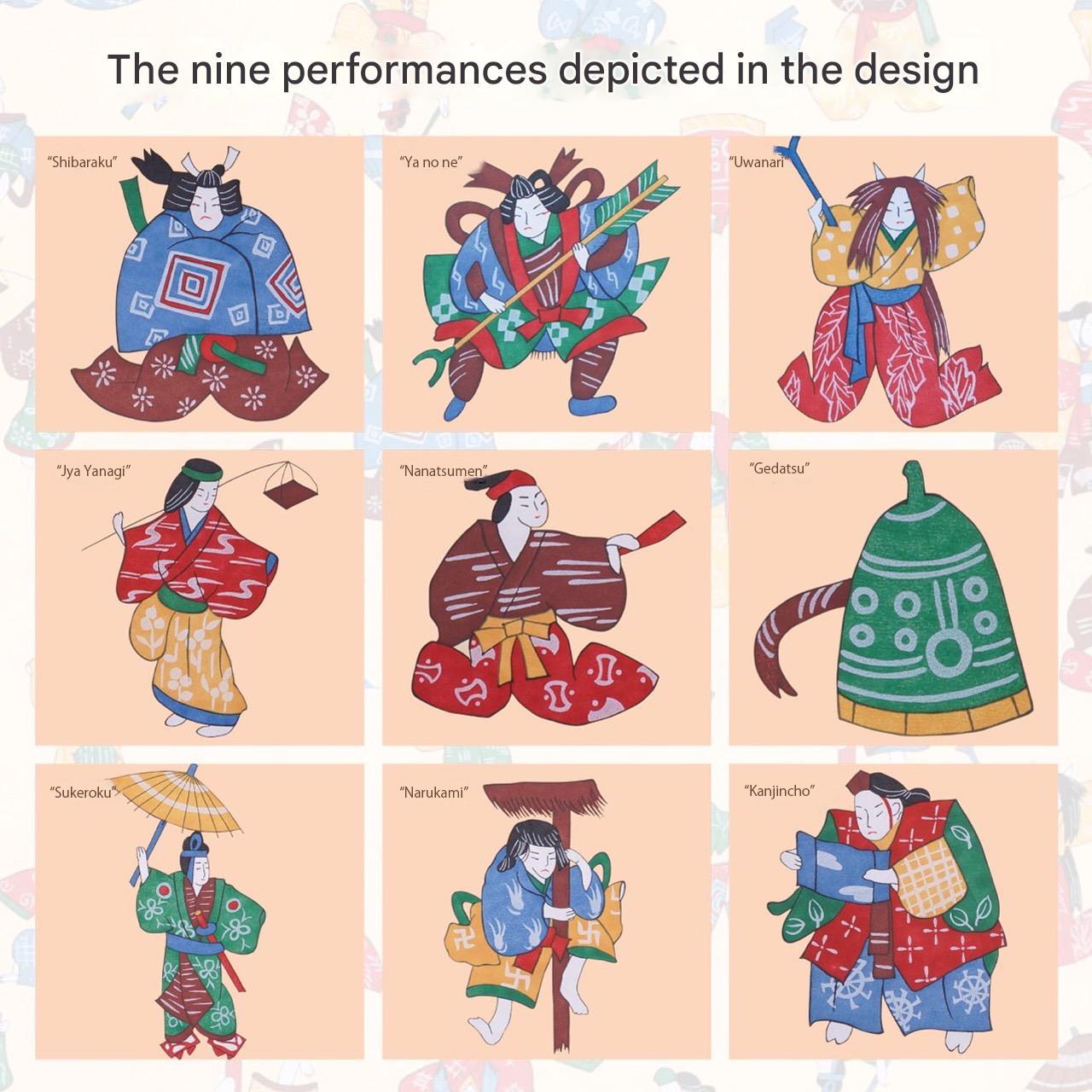
By incorporating motifs from plays such as Shibaraku, Yanone, Uwanari, Jayanagi, Nanatsumen, Gedatsu, Sukeroku, Narukami, and Kanjincho, the design captures the richness and variety of kabuki expression. At the same time, it reinterprets these themes through a modern lens, simplifying and stylizing them into a cohesive textile pattern.
Overall, this design merges tradition and artistry, turning theatrical heritage into a bold and sophisticated visual composition that carries both cultural depth and decorative appeal.