
Ukiyo-e
浮世絵- Ukiyo-e
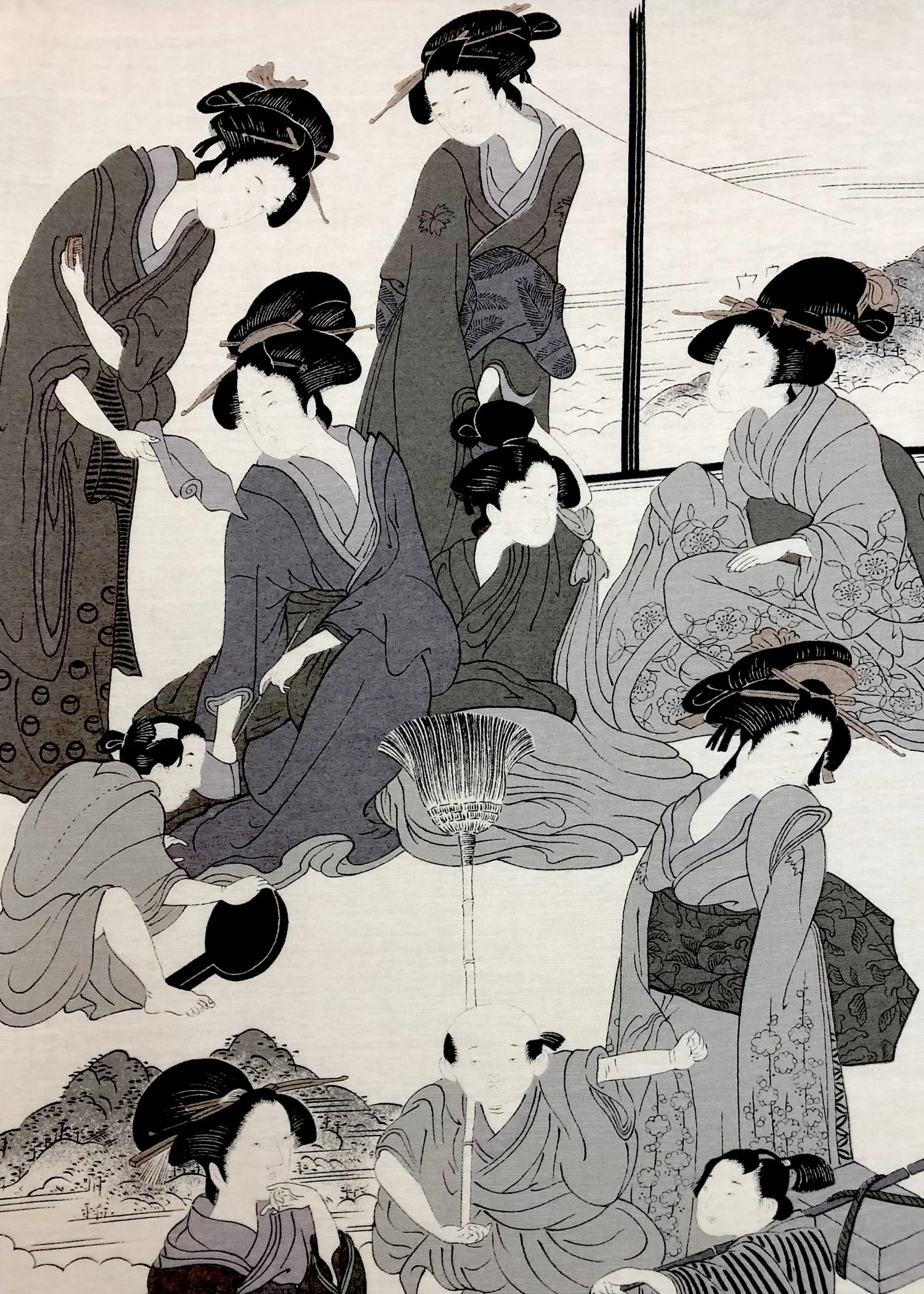
The Story of the Ukiyo-e Style Pattern
This pattern originates from the lining of a men’s haori jacket, where hidden designs often carried a sense of personal taste and quiet sophistication. While ukiyo-e prints were commonly used for such linings, this particular design stands out for its lively composition—depicting women and children of various ages in scenes reminiscent of classic Edo-period artistry.
The imagery reflects the refined culture of the late Edo period, when urban life flourished and everyday moments were captured with elegance and subtle humor. Rather than focusing on grand subjects, the pattern offers a glimpse into the lives, fashion, and atmosphere of the time.
One of the most striking features is the variety of women’s hairstyles. During this period, hair was carefully styled in elaborate forms, with great attention given to shape, volume, and detail. The silhouettes of these styles—graceful, structured, and expressive—were an essential part of fashion, much like the kimono itself.
Different figures within the design reflect different stages of life. A refined woman, absorbed in a quiet moment, is shown with a composed elegance. Nearby, a younger attendant carries herself with a softer, more delicate presence. A married woman appears with a more mature and understated style, while a young girl stands with a fresh, youthful energy, her long sleeves and flowing form capturing a sense of innocence and vitality.
Children are also depicted at play, imitating the world of adults with curiosity and imagination. Their playful gestures bring warmth and liveliness to the scene, adding a sense of movement and storytelling throughout the composition.
The setting itself is thoughtfully arranged, with interior elements blending seamlessly into glimpses of the outside world. This creates a natural flow between spaces, enhancing the depth and narrative of the design.
The result is more than a pattern — it is a quiet window into everyday life, where elegance, playfulness, and human connection are woven together in timeless harmony.