
The Lion’s Arabesque
獅子毛唐草 - Shishige Karakusa
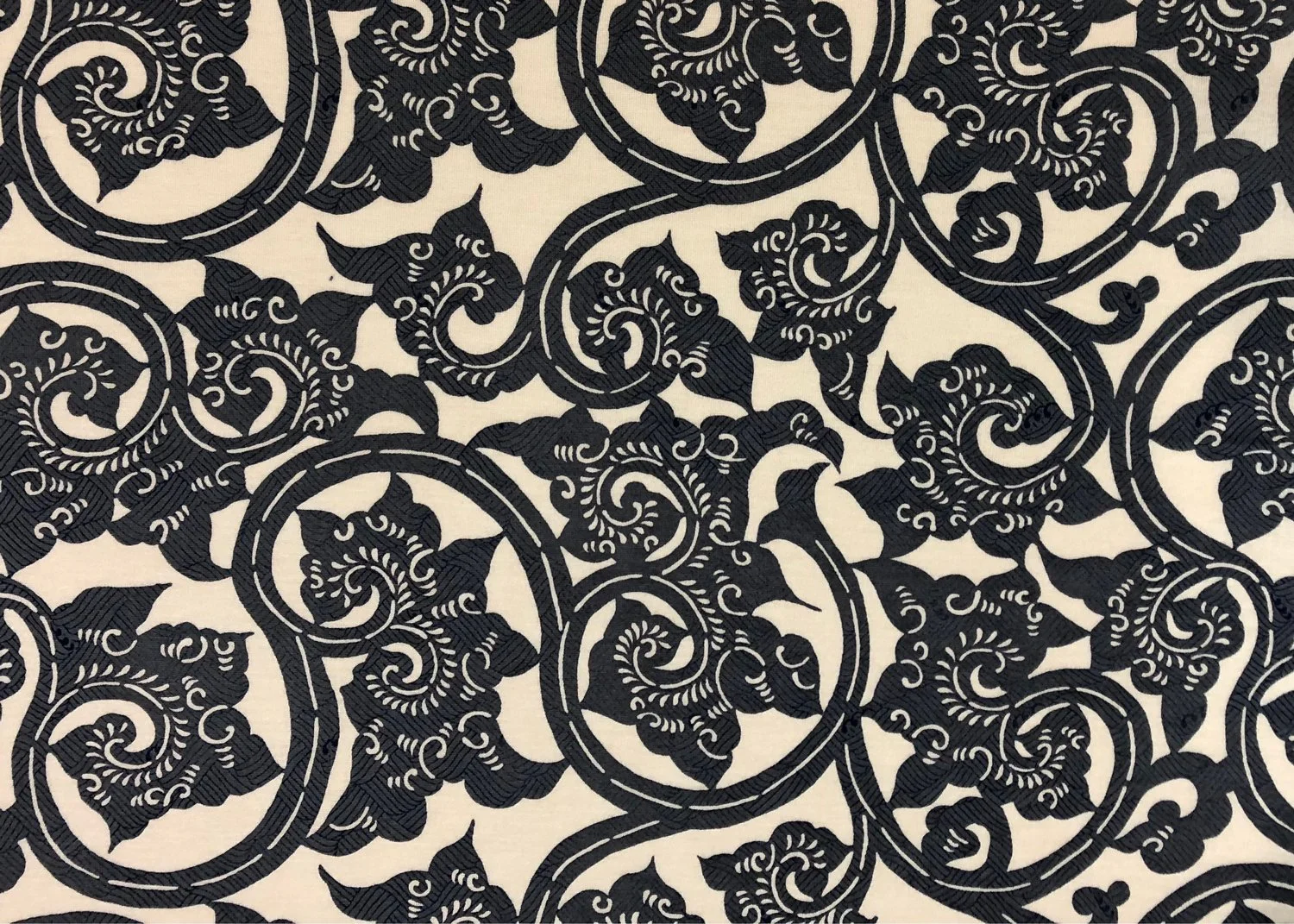
The Story of the Lion’s Arabesque Pattern
Arabesque, a flowing vine pattern, traces its origins to ancient civilizations such as Egypt, Mesopotamia, and Greece. It later spread eastward along the Silk Road, eventually reaching Japan. Though arabesque does not represent a specific plant, its spiraling, interwoven forms are inspired by climbing vines like grapes. Because of their strong vitality and endlessly extending growth, such patterns came to symbolize longevity and the flourishing of future generations.
In this design, the arabesque takes on a form reminiscent of a lion’s mane, adding a sense of movement and strength.
The lion, or shishi, has long been regarded as a sacred and mythical beast. Originally associated with the power of the sun and kingship, it was introduced to Japan through cultural transmission and came to be imagined in various expressive forms. Rather than being seen as a real animal, it was embraced as a symbolic and protective figure.
Across cultures, the sun has been revered as the source of all life. In Japan, this role is embodied by Amaterasu Omikami. The well-known myth of her retreat into the Heavenly Rock Cave tells how the world was plunged into darkness until the gods gathered to draw her out once more—restoring light and harmony to the world. This story reflects the deep belief in the sun as the origin of life and vitality.
Inspired by the flowing energy of arabesque and the lion’s radiant symbolism, this pattern evokes strength, continuity, and brightness. It carries with it a wish for enduring prosperity and a future filled with light.