
Current with Standing Wave
渦と立波 - Uzu to Tatsunami
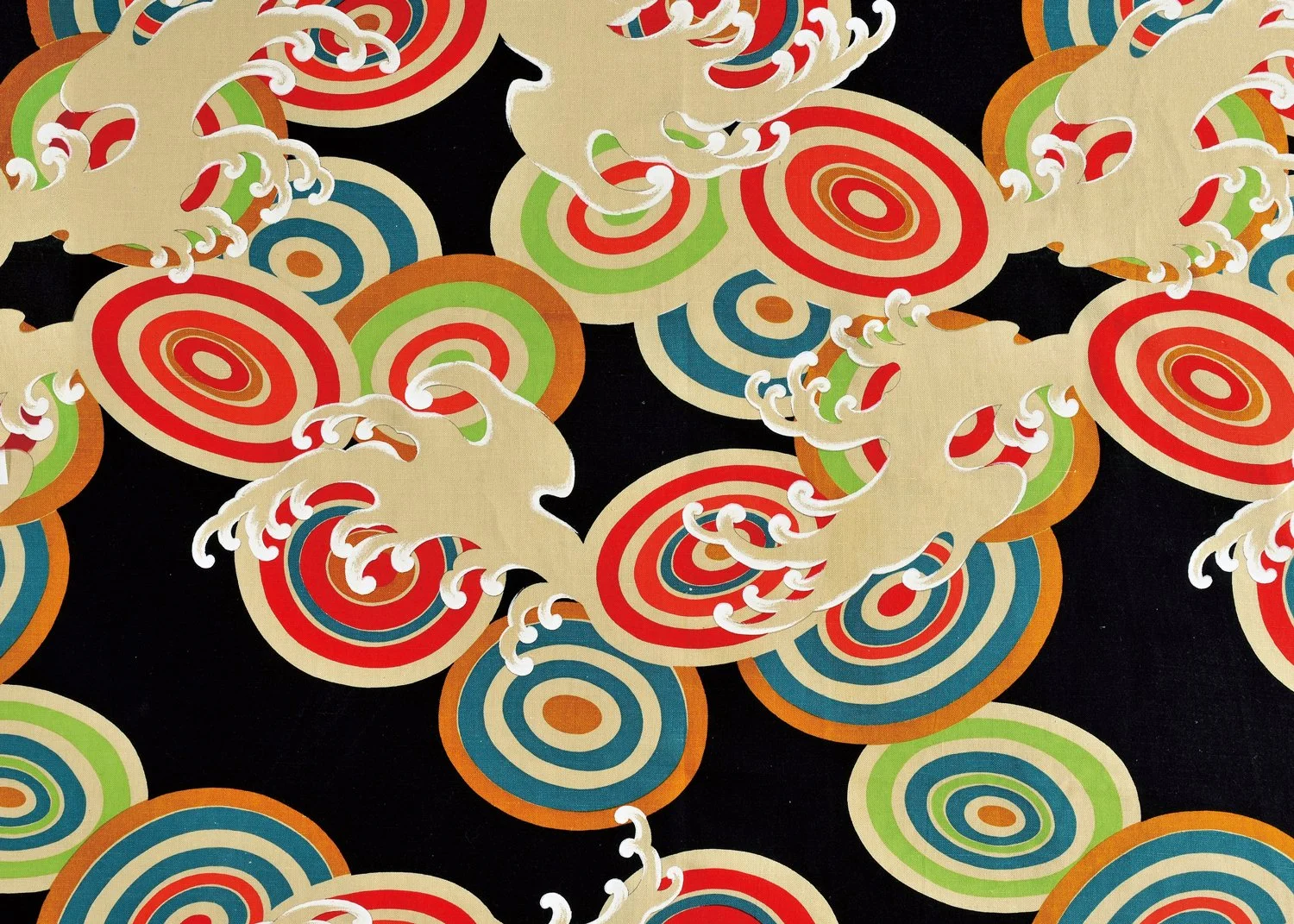
The Story of the Current with Standing Wave
Waves have long been a beloved motif in Japanese design, admired for their ever-changing forms and natural rhythm. Their rising and falling motion, along with their fleeting shapes, have been beautifully stylized and expressed in crafts and kimono patterns throughout history.
From around the Momoyama period, wave motifs began to stand out more boldly on their own. Among them, the powerful “standing waves” became especially popular, celebrated for their dynamic energy and striking presence.
Waves continuously ebb and flow—receding, returning, and never truly ending. Because of this, they have come to symbolize longevity and continuity, while also reflecting the natural ups and downs of life.
Over time, artists explored countless variations of wave expression, creating designs that range from gentle and flowing to bold and dramatic. These interpretations brought a sense of movement and vitality, making waves a powerful standalone motif.
Alongside the waves, this pattern features swirling vortex forms made up of layered circles. The circle has long been regarded as an auspicious symbol of harmony and balance. As these circles expand outward, they suggest a sense of continuity and permanence, echoing the endless motion of water itself.
The combination of waves and vortex patterns creates a striking visual rhythm—fluid yet structured, powerful yet balanced. At times, the swirling forms even resemble targets, adding a subtle sense of focus and tension to the design.
The result is more than a pattern — it is a reflection of motion, strength, and the enduring flow of life.