
Puppies with Morning Glory
朝顔狗子図 - Asagao kushizu
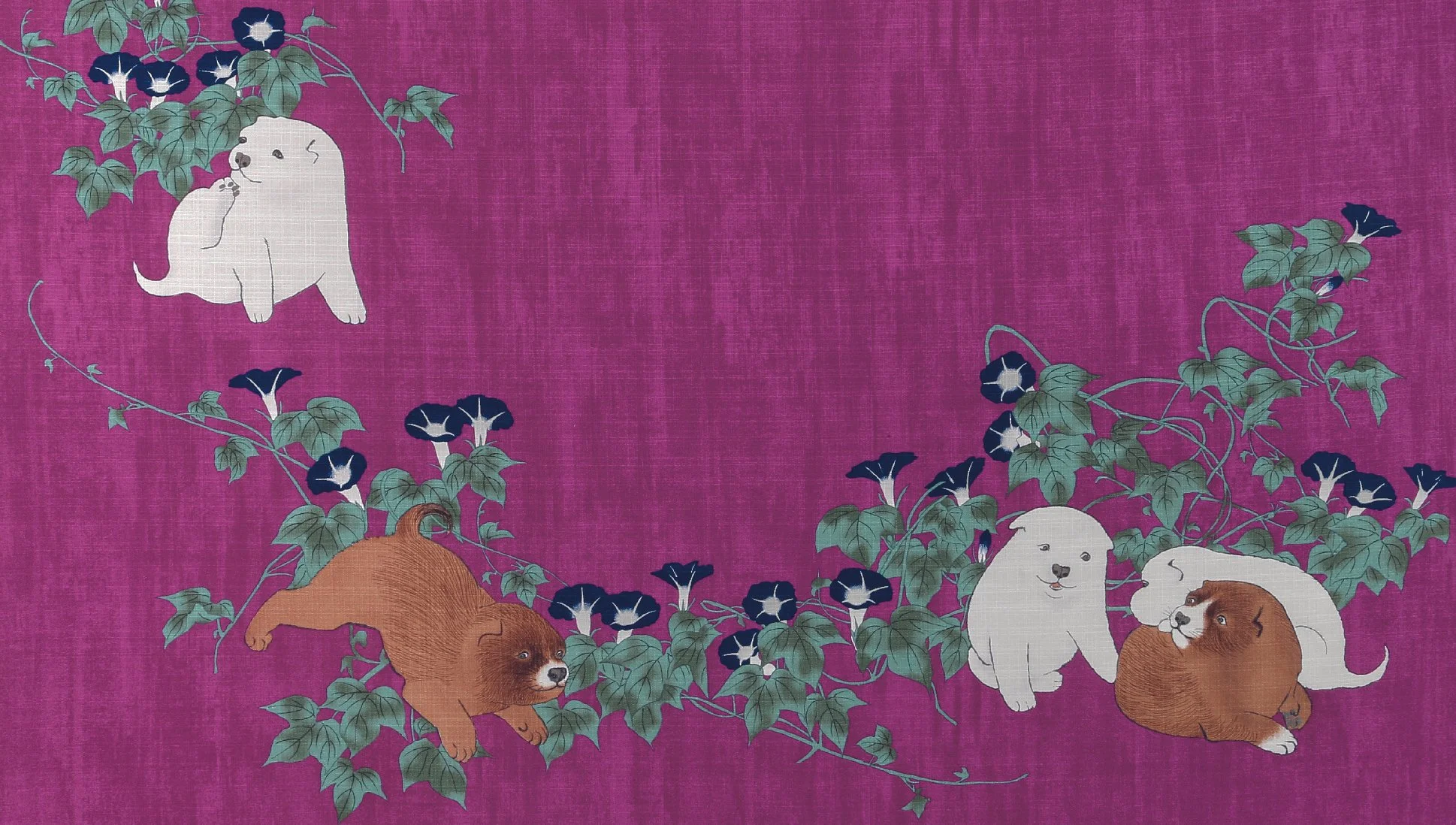
The Story of the Puppies with Morning Glory Pattern
Maruyama Ōkyo was one of the most celebrated painters of the Edo period and the founder of the Maruyama school, which continues to influence Japanese art to this day. His style is defined by a strong commitment to realism and direct observation, capturing subjects exactly as they appear in life. Thanks to his exceptional technical skill, he produced numerous masterpieces and was regarded as one of Kyoto’s most sought-after artists of his time.
Ōkyo is also known for his many depictions of dogs, especially puppies. These works portray a wide range of gestures and expressions, each one irresistibly charming and full of life.
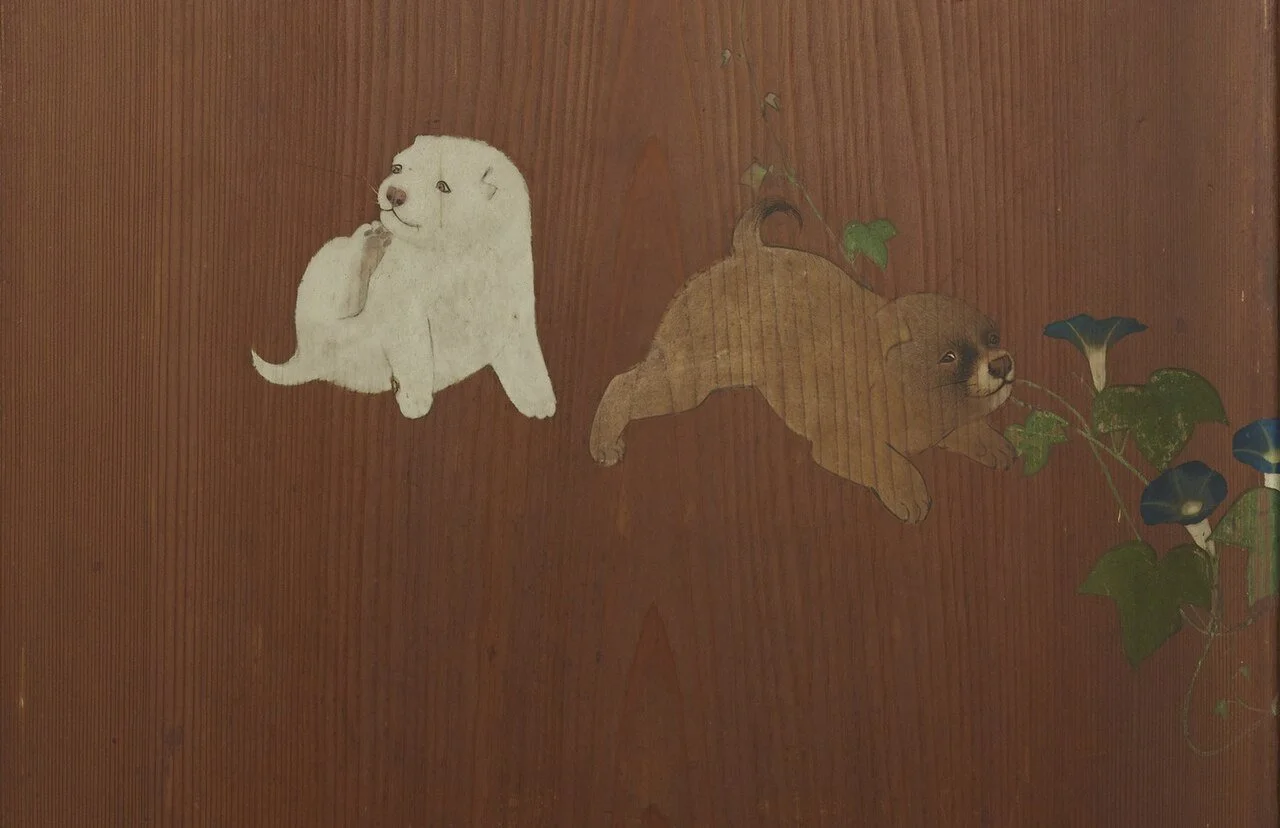
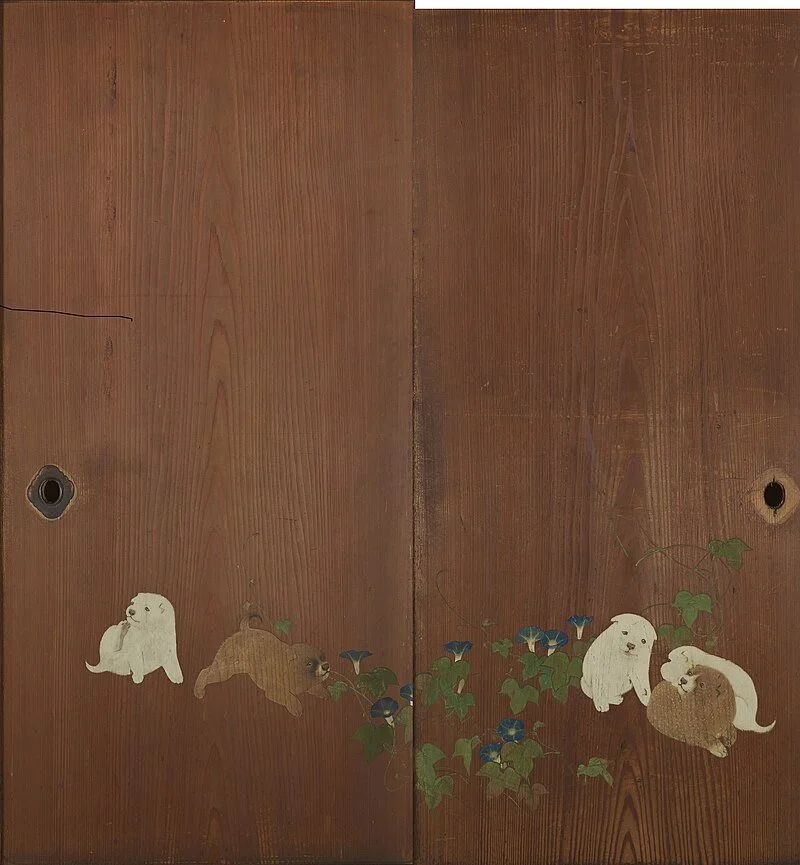
From Wikipedia : Puppies with Morning Glory
The piece featured here, Morning Glory and Puppies on Cedar Sliding Doors, stands out for its vivid realism and endearing subject matter. The delicate rendering of the puppies’ fur is particularly remarkable—each strand is drawn with incredibly fine lines, creating a soft, lifelike texture. Reproducing this tactile quality through Kyoto Yuzen dyeing required extensive experimentation, aiming to capture the same sense of softness in fabric form.
In Japanese symbolism, dogs are associated with safe childbirth and the prosperity of descendants, as they give birth easily and raise strong offspring. For this reason, dog motifs have traditionally been used on women’s and children’s garments. There is also a long-standing custom in Japan known as obi-iwai, in which pregnant women wrap a special belly band called an Iwata-obi on the “Day of the Dog” to pray for a safe delivery—a practice that continues today. Dogs are also believed to ward off evil due to their keen senses.
Morning glories, on the other hand, were originally valued for their medicinal properties, with their seeds used as herbal remedies. Over time, they became popular as ornamental plants, especially from the mid-Edo period onward. By the late Edo period, they were at the center of a widespread cultural craze. It is possible that Ōkyo, living during this era, incorporated this trend into his work.
Together, the combination of lively puppies and blooming morning glories creates a design rich in warmth and meaning—expressing wishes for health, protection, and the flourishing of life.