
Ivy and Peony
蔦と菊牡丹 - Tsuta to Kikubotan
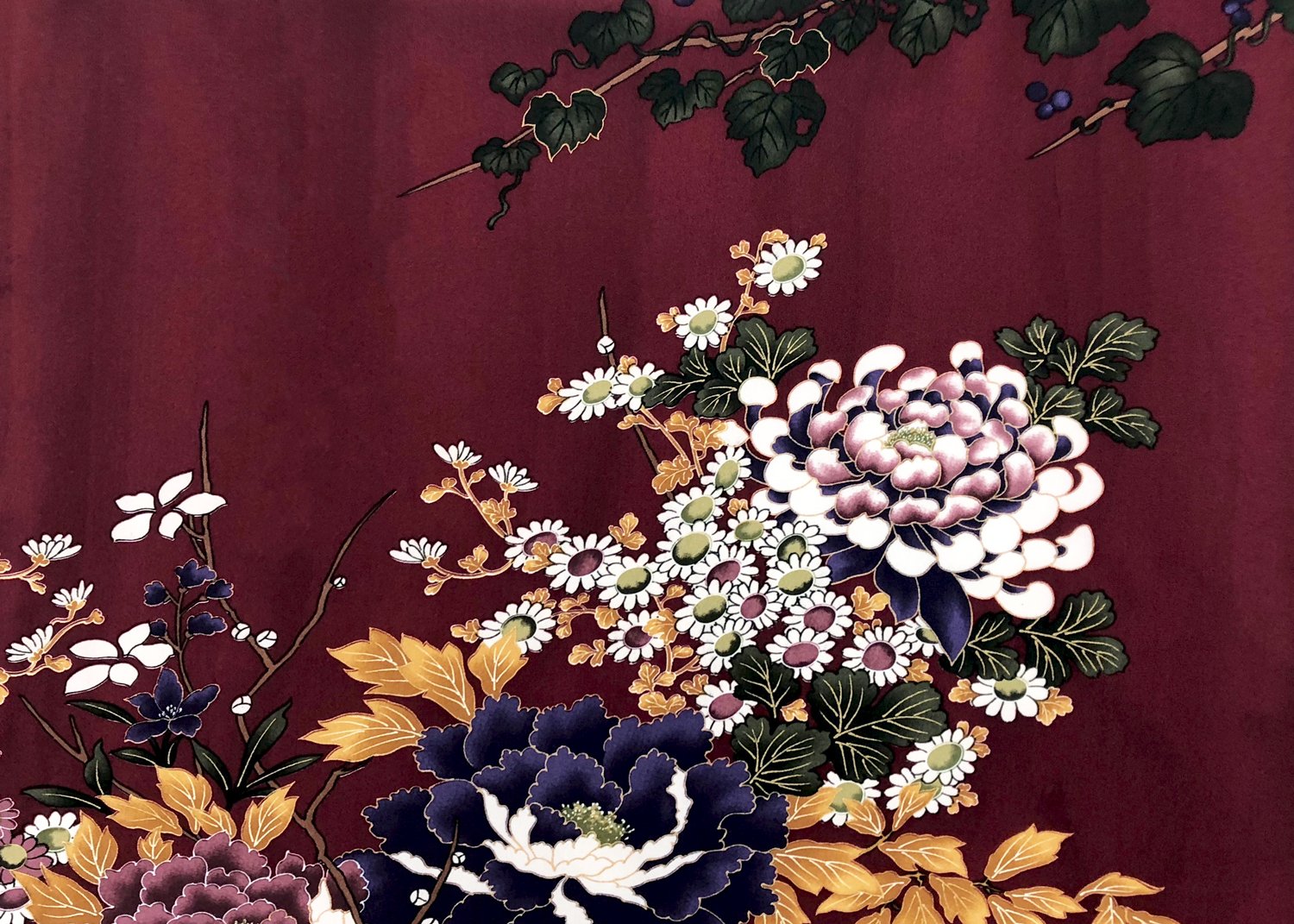
The Story of the Ivy and Peony Pattern
Ivy, with its graceful vine-like form and beautifully shaped leaves reminiscent of maple foliage, has long been admired for its elegance. It appears in picture scrolls from the Heian period and later began to be used as a textile motif during the Momoyama period.
Because ivy spreads vigorously, climbing and entwining itself around trees and structures, it has been regarded as an auspicious plant symbolizing strong vitality and enduring growth. For this reason, it was also adopted as a family crest. The character for ivy (蔦) combines elements meaning “grass,” which grows upon the earth, and “bird,” which soars through the sky—together evoking a sense of expansion and good fortune.
Ivy’s intertwining nature has also carried more intimate meanings. It is said that geisha favored ivy motifs, as the plant’s clinging, spreading form symbolized a lasting bond with their patrons. This imagery of attachment appears as well in the Noh play Teika, where, after the deaths of Princess Shikishi and Fujiwara no Teika, Teika’s lingering attachment is said to transform into ivy vines that cling to her grave—an evocative expression of love that refuses to fade.
Alongside the ivy in this design are chrysanthemums and peonies. Chrysanthemums, introduced to Japan during the Nara period for medicinal purposes, came to symbolize longevity and vitality. By the Heian period, they were appreciated ornamentally in court culture, appearing in seasonal events such as the Chrysanthemum Festival, and remain a defining flower of autumn in Japan.
Peonies, with their rich, full blossoms and radiant beauty, are known as the “king of flowers.” Also called the “flower of wealth and nobility,” they symbolize prosperity and the human aspiration for abundance.
Together, the ivy, chrysanthemums, and peonies form a composition reminiscent of a living painting—both elegant and expressive. Like the ivy itself, this pattern carries a quiet, captivating power, drawing the viewer in with its sense of movement, beauty, and enduring connection.