
Asanoha and Plum
破れ麻の葉に捻り梅 - Yabure asanoha ni hineri ume
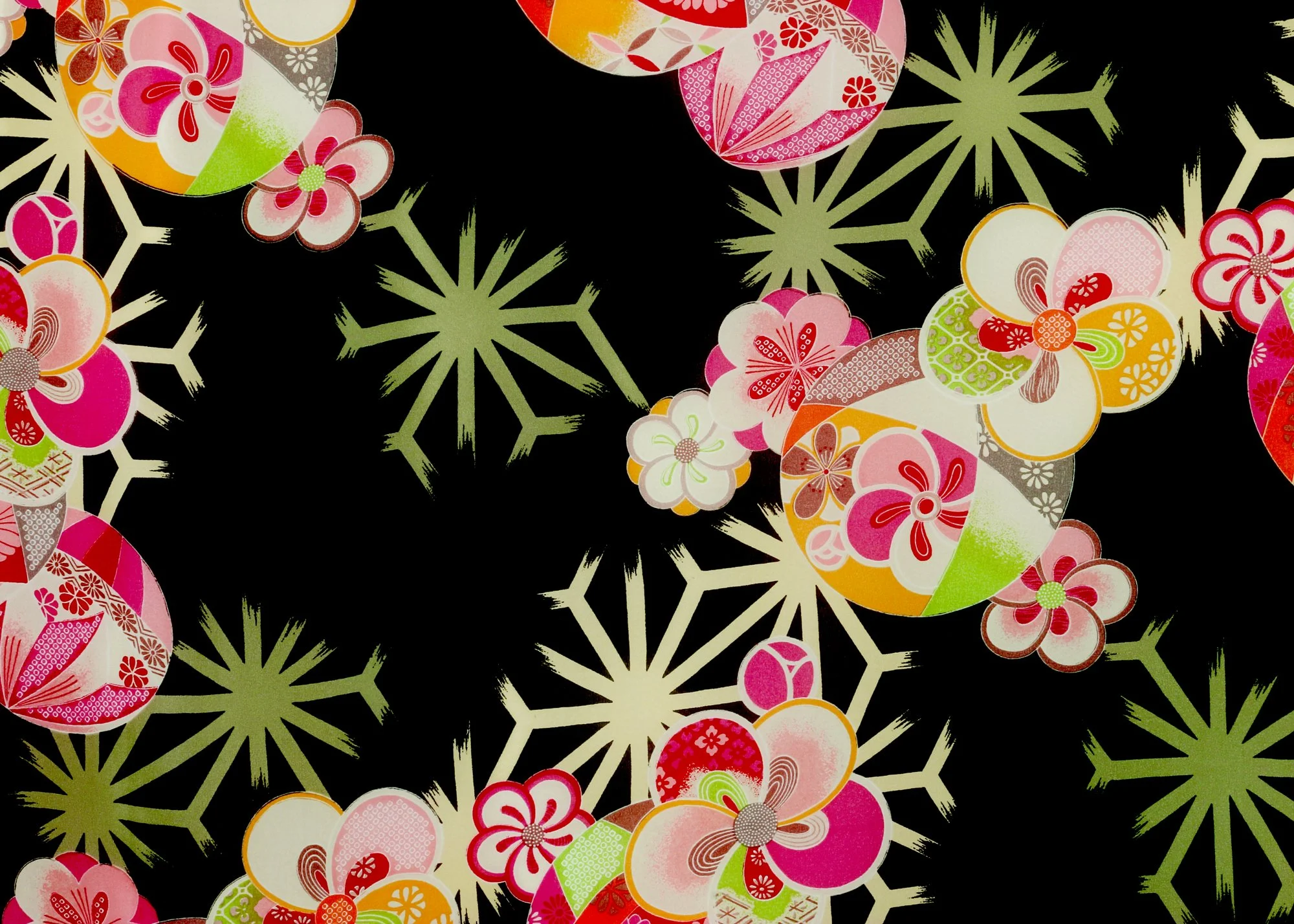
The Story of the Broken Asanoha & Twisted Plum Pattern
This pattern was widely used from the Taisho to early Showa period, often seen in women’s kimono linings, undergarments, and obi sashes. Though sometimes hidden from view, these designs carried quiet beauty and meaning close to the wearer.
At its core is the “Asanoha” (hemp leaf) pattern, a geometric design based on repeating hexagonal shapes. Its name comes from its resemblance to hemp leaves, a plant known for growing strong, straight, and quickly. Because of this, Asanoha has long symbolized healthy growth and was often used in garments for children. The motif itself dates back even further, with records of its use appearing as early as the Kamakura period.
In this design, however, the Asanoha is not presented as a continuous pattern. Instead, it appears in fragments—a “broken Asanoha”—with parts of the motif intentionally omitted. This creates a sense of movement and space, giving the pattern a more modern and dynamic impression while still rooted in tradition.
Complementing this is the plum blossom, a classic symbol of resilience and renewal. Traditionally paired with pine and bamboo as an auspicious motif, the plum here takes on a twisted, flowing form. This subtle distortion enhances the design’s contemporary feel, adding elegance with a touch of artistic freedom.
The result is more than a pattern — it is a quiet balance between tradition and modern expression, where structure meets movement, and heritage evolves into something new.