
Chintz Sarasa
更紗 - Sarasa
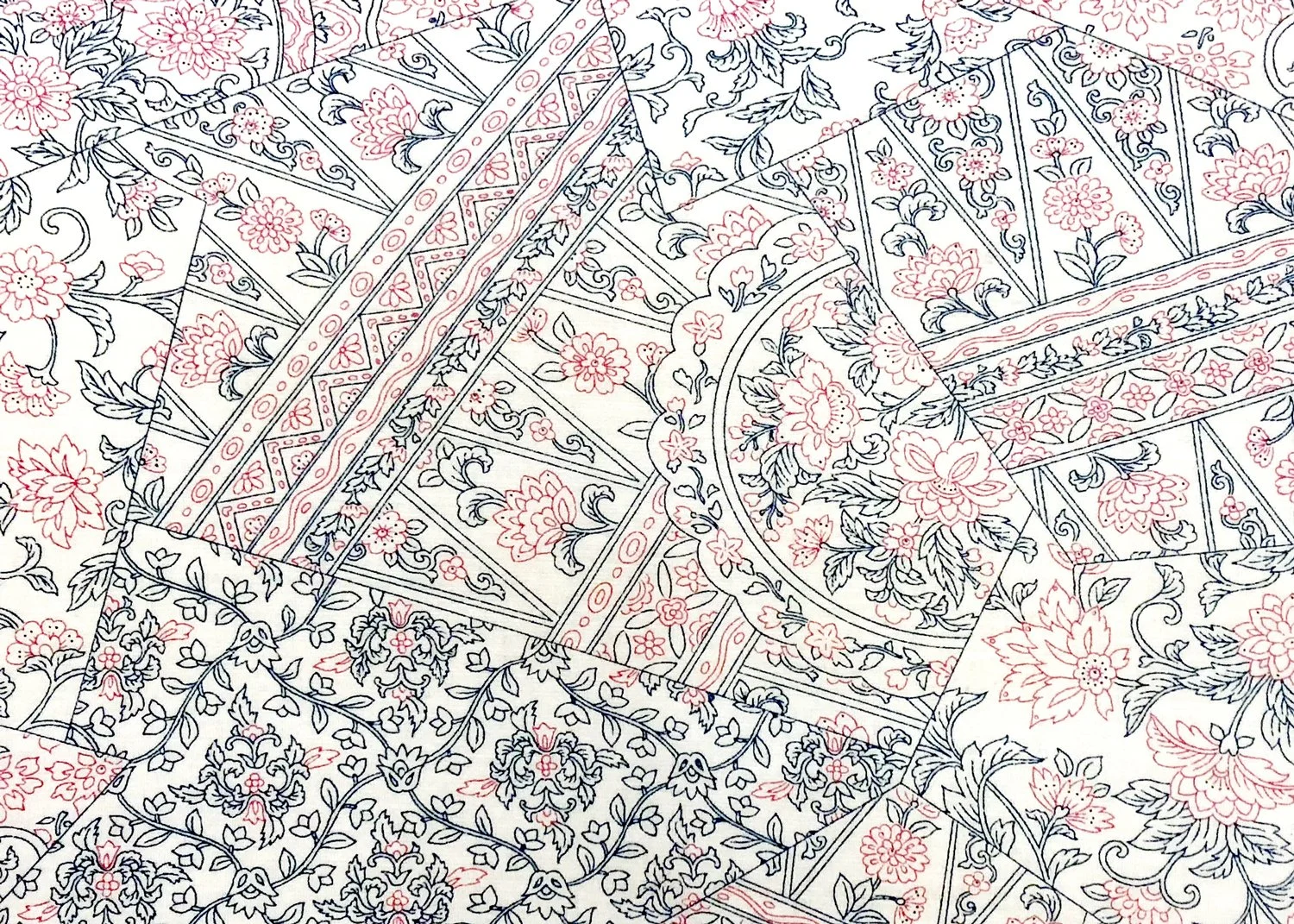
The Story of the Chintz Sarasa Pattern
The origin of the word sarasa is uncertain, with several theories suggesting roots in foreign languages. Today, it refers to plain-woven cotton fabric decorated through a variety of dyeing techniques.
In Japan, from the Muromachi period through the early Edo period, richly patterned cotton textiles imported from overseas were known as sarasa. These fabrics, adorned with exotic motifs—flowers, figures, birds, animals, trees, and geometric designs—were highly prized for their distinctive beauty. Among them, Oni-sarasa, favored by powerful daimyo and tea masters, was especially valued, featuring intricate handwoven cloth and woodblock-dyed patterns.
From the mid-Edo period onward, such designs inspired the creation of uniquely Japanese interpretations, giving rise to regional styles such as Sakai sarasa, Nabeshima sarasa, and Edo sarasa. Each developed its own character while preserving the richness and decorative spirit of the original textiles.
This particular pattern is a refined reproduction that focuses solely on the outlines of traditional sarasa motifs, emphasizing form and composition while evoking the elegance of the original designs.