
Checkered Pattern with Water Motif
市松に水模様 - Ichimatsu ni Mizumoyō
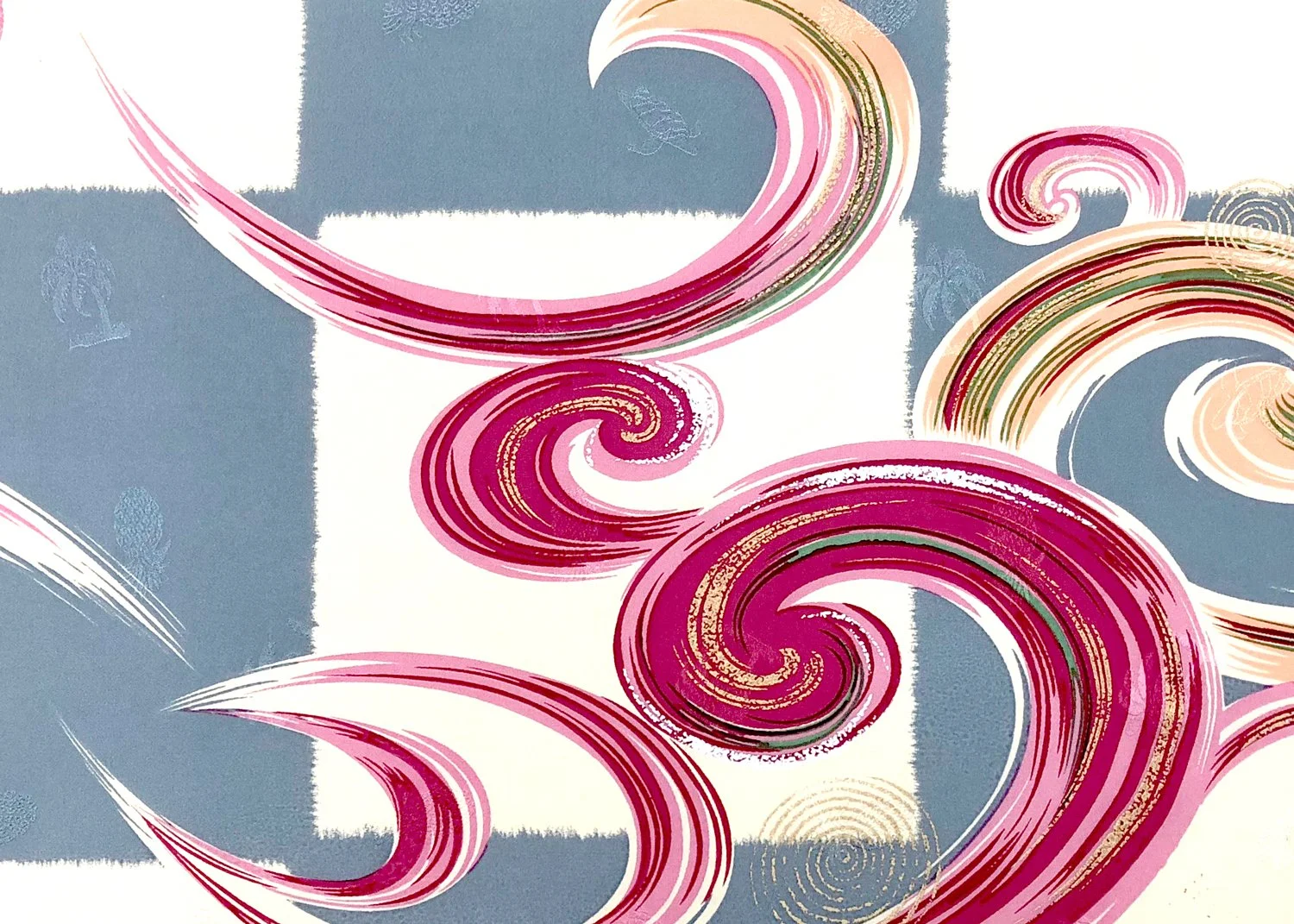
The Story of the Checkered Pattern with Water Motif
Water has always been an essential part of human life, deeply connected to nature, agriculture, and daily living. Because of this, it has been a beloved motif in design since ancient times. From gentle streams and flowing rivers to powerful waves and swirling currents, water appears in countless forms. It is often combined with other elements—such as seasonal flowers or classical imagery—creating patterns that carry rich cultural meaning.
Flowing water and endlessly crashing waves have long symbolized continuity, longevity, and the expansion of life. These qualities made water motifs especially auspicious, representing prosperity and the enduring growth of future generations. At the same time, water has been cherished as a seasonal symbol, often used in summer garments to evoke a sense of coolness and refreshment.
This particular pattern was created in the early Showa era, during a time when modern artistic influences began to merge with traditional Japanese design. While it incorporates the classic Ichimatsu (checkered) pattern and flowing water motif, it does so with a bold and innovative spirit. Large black-and-white checks create a striking visual rhythm, while dynamic brushstrokes of red and blue water add movement and energy.
The expressive use of strong, primary colors and free, almost unrestrained brushwork reflects the artistic atmosphere of the time. These elements give the pattern a modern and vibrant character, while still maintaining a connection to tradition.
The Ichimatsu pattern itself is one of the most iconic geometric designs in Japan. Consisting of alternating squares of contrasting colors, it has been used widely across generations. Its name comes from a Kabuki actor who popularized the pattern during the Edo period, and it has since become a symbol of continuity and timeless design.
From the Taisho to the Showa era, fashion became more accessible to the general public, allowing bold colors and expressive patterns to flourish. This design reflects that shift—capturing a moment when tradition met modernity, and when artistic expression became more daring and free.
Yet behind this sense of freedom, there was also a complex and changing world. The boldness and intensity of such designs can be seen as a reflection of their time—an era balancing between creative expansion and an uncertain future.
The result is more than a pattern — it is a vivid expression of movement, contrast, and the evolving spirit of its age.