
Sakura
さくら
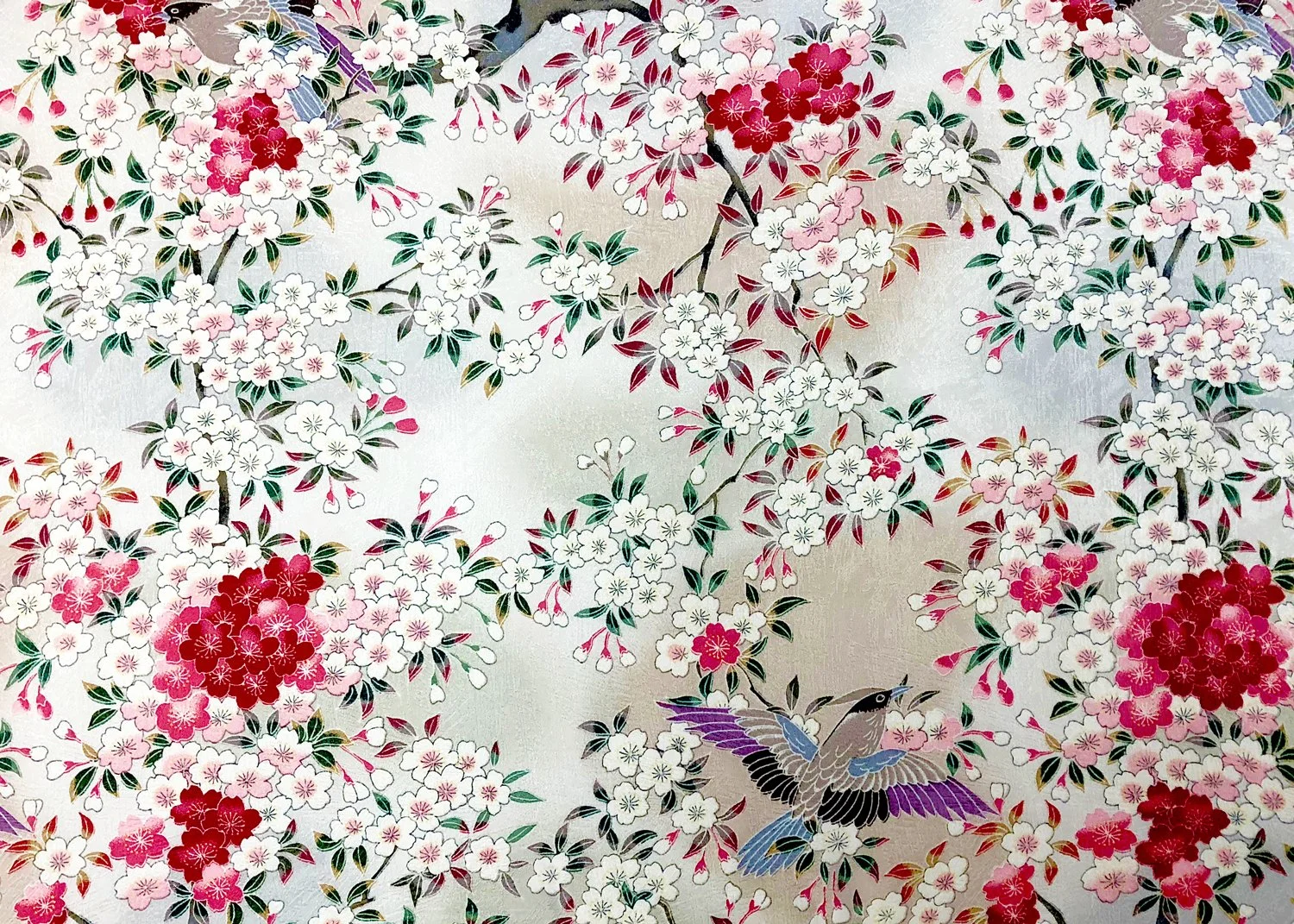
The Story of the Sakura Pattern
Cherry blossoms are regarded as Japan’s national flower and are among the most beloved symbols of the seasons. This design captures cherry blossoms in full bloom at the height of spring, accompanied by wild birds, evoking the refined atmosphere of traditional flower-and-bird paintings.
Expressions such as “flowers, birds, wind, and moon” and “snow, moon, and flowers” embody the seasonal beauty shaped by Japan’s rich natural landscape. Since ancient times, people have expressed their emotions through poetry and art, drawing inspiration from the ever-changing scenery of the four seasons.
In earlier times, when daily life depended closely on nature, the smooth transition of the seasons signified abundant harvests and peace. This deep sense of gratitude and appreciation for the natural cycle came to be reflected in artistic expressions celebrating the harmony of the natural world.
The realistic and expressive depictions of flowers and birds by the Kanō school during the Momoyama period and the Maruyama school in the Edo period captivated audiences and were later incorporated into yūzen dyeing designs. In the Meiji era, painters further contributed to textile design by creating detailed underdrawings, helping to establish the refined flower-and-bird motifs that are characteristic of yūzen today. Artists such as Kishi Chikudō, Imao Keinen, and Kōno Bairei played key roles in this development.
This pattern is a graceful flower-and-bird composition that conveys the timeless beauty of Japan, much like a finely painted work of art.