
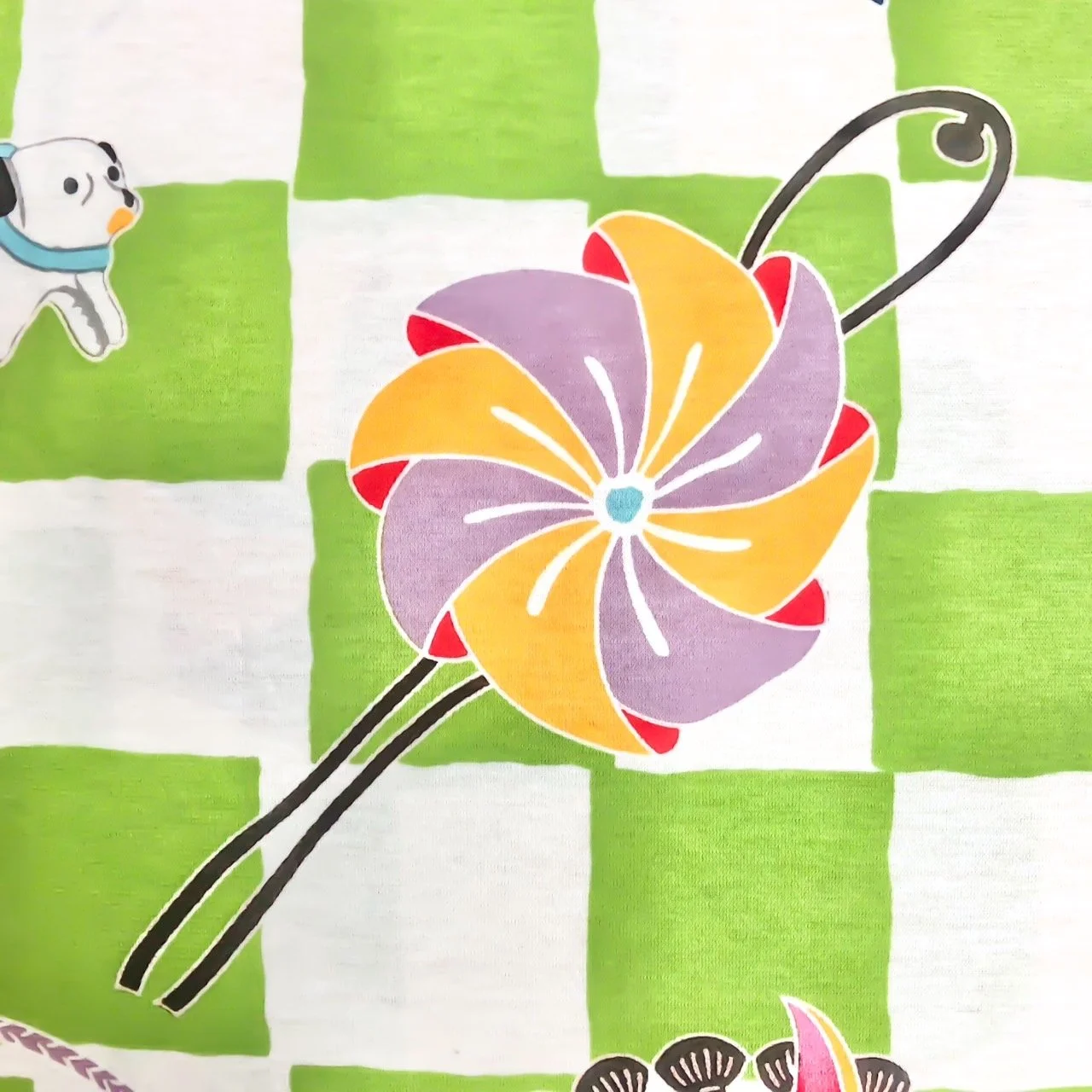
Checkered Pattern with Assorted Toys
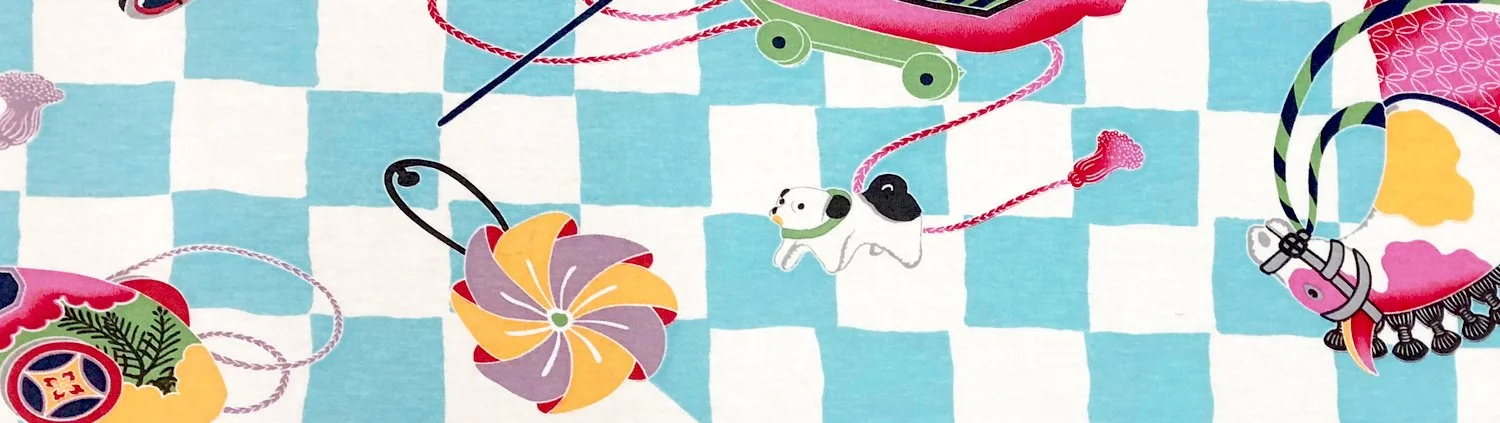
市松に玩具尽くし - Ichimatsu ni omocha tsukushi
The Story of the Ichimatsu Toy Pattern
Patterns inspired by children’s toys have long held a special place in Japanese design. While they often appeared on children’s kimonos, they were also quietly hidden in the linings of women’s garments and haori jackets—carrying gentle wishes close to the wearer.
Many of these toys were not originally made for play alone. Their origins can be traced back to rituals, seasonal events, and practices meant to ward off evil, invite good fortune, or even tell fortunes. Over time, they evolved into playful objects, while still preserving their deeper meaning.
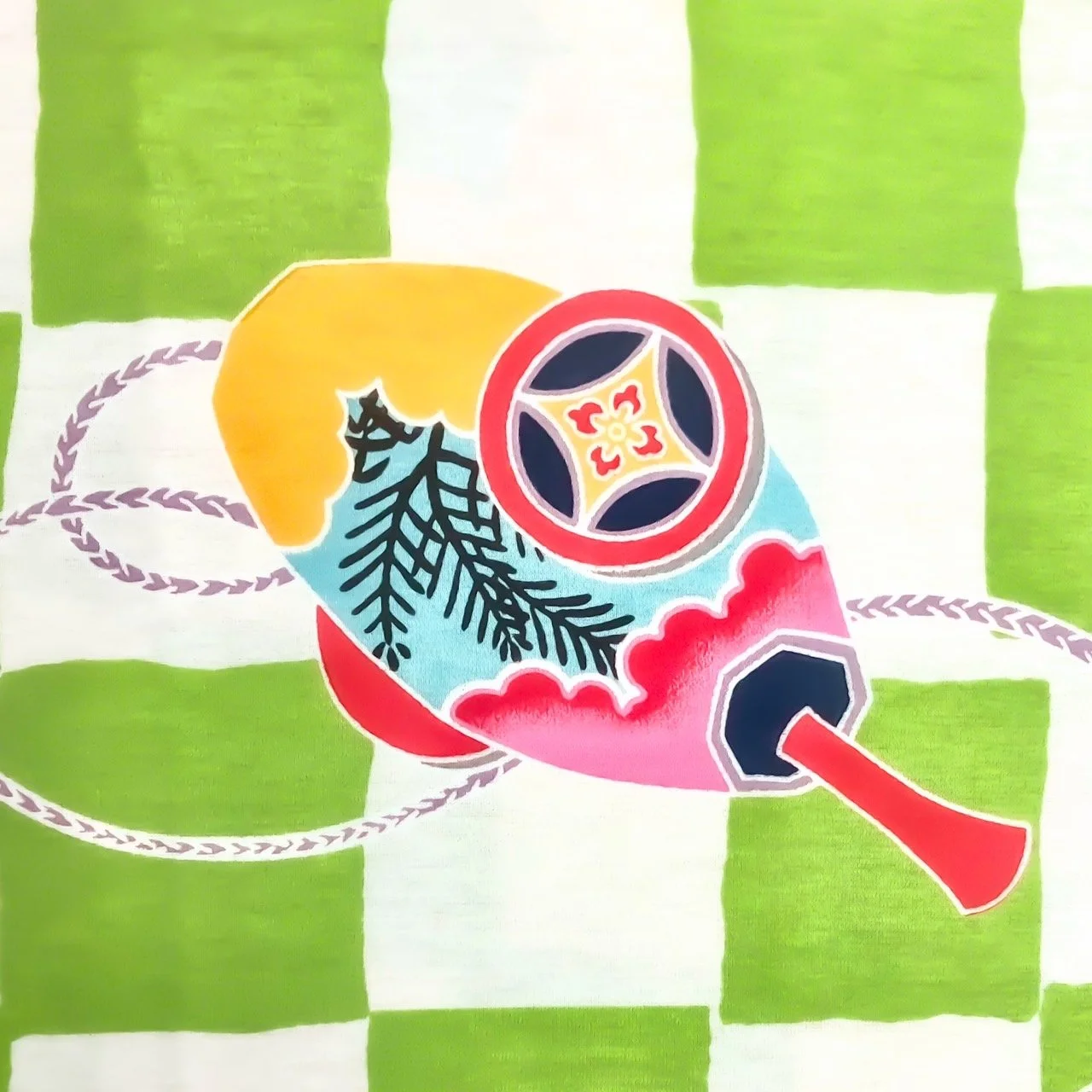
Among them are musical toys such as the denden daiko drum, flutes, and smseall wheeled rattles. The were used to create sound, believed to call upon divine presence, making them auspicious items associated with blessings and protection.
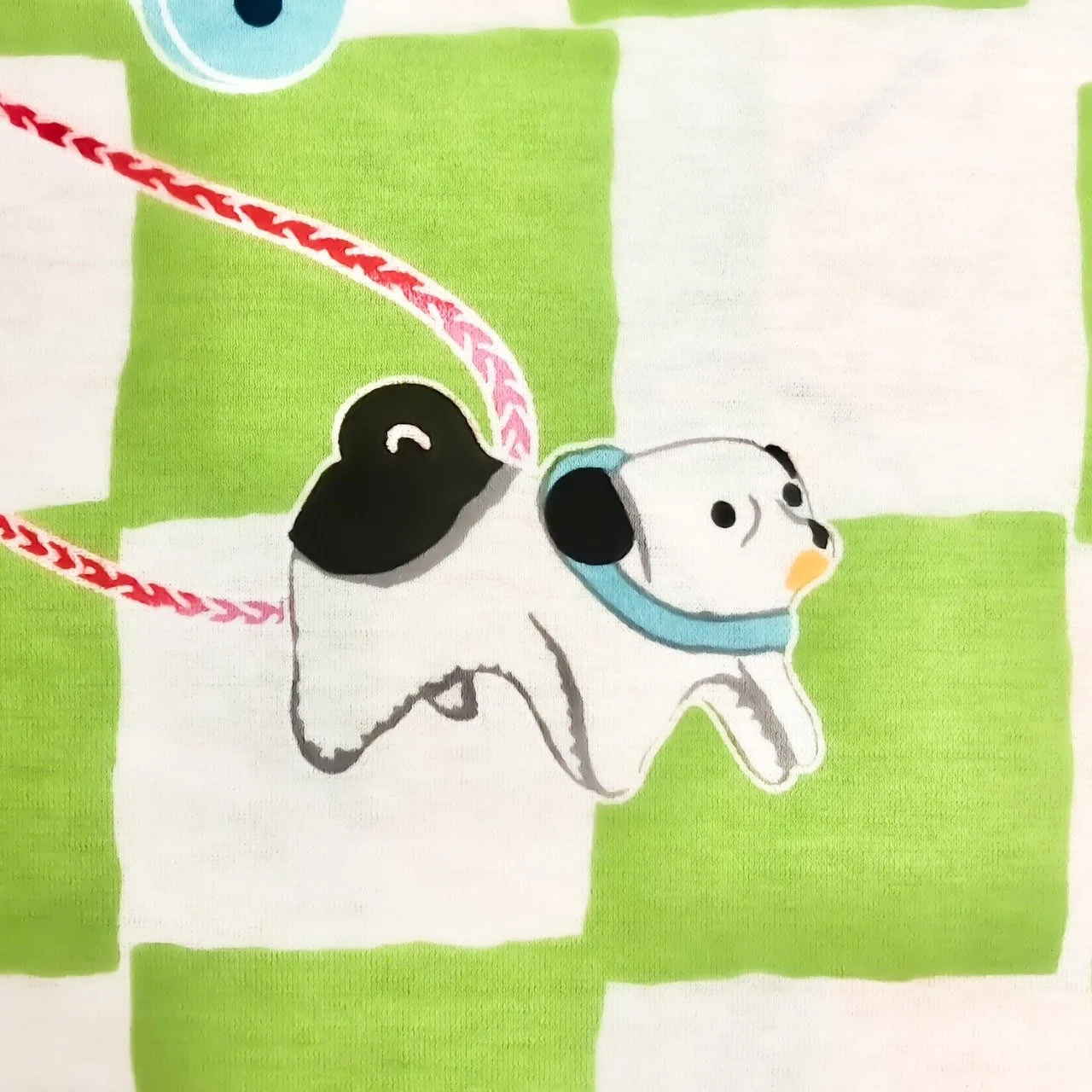
Dog figurines, often made from papier-mâché, were cherished as symbols of protection and healthy growth. In Kyoto, it was once customary to place these figures in birthing rooms, reflecting a long-standing wish for safe childbirth and the well-being of children.
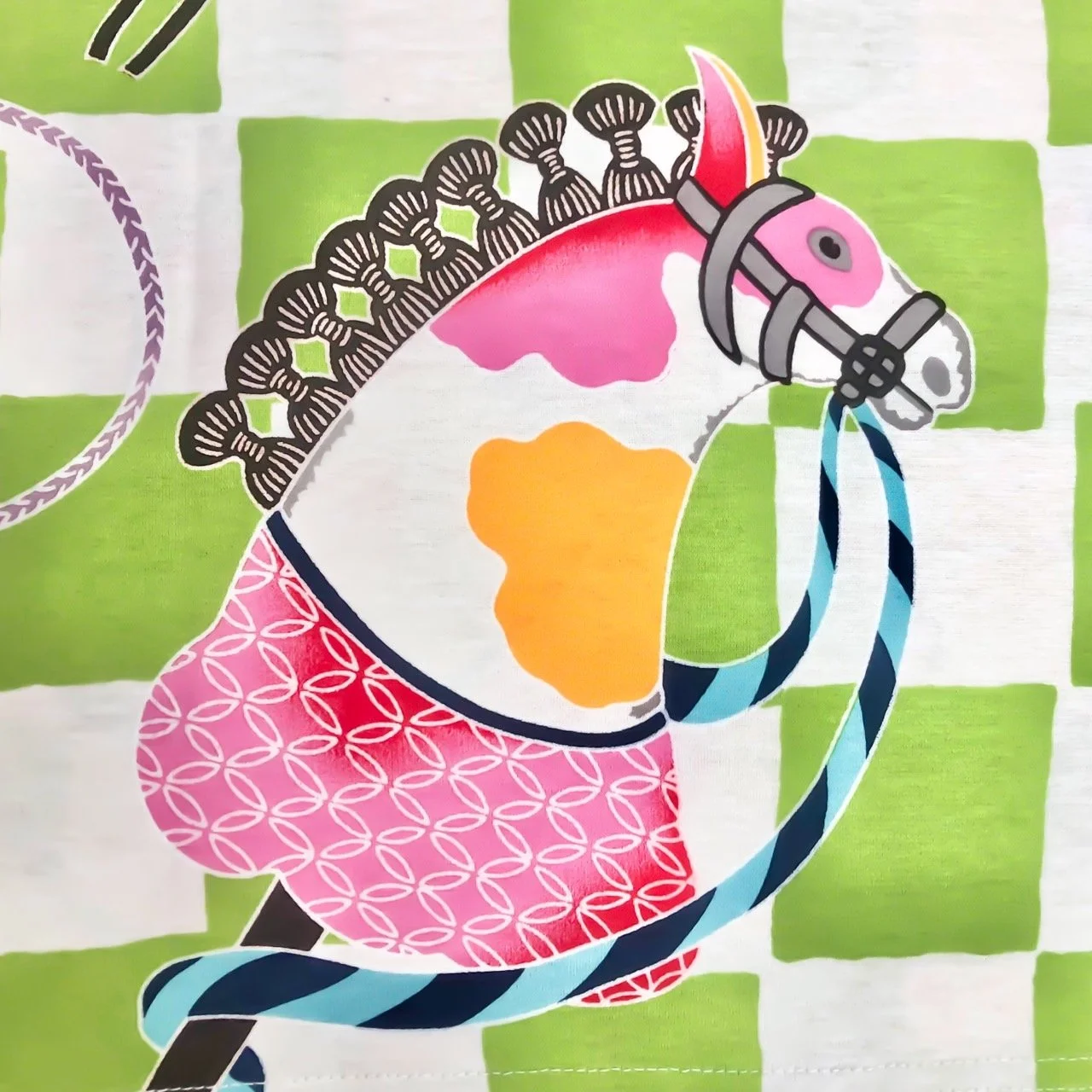
One of the most eye-catching motifs is the Harukoma, a toy horse. Made with a papier-mâché head, a bamboo frame, and small wheels, it allowed children to “ride” as they played. It was also featured in festive street performances, where performers sang and danced while riding these horses, bringing joy and liveliness to the streets.
Spinning tops, now commonly associated with New Year celebrations, were once used in formal ceremonies, adding a sense of tradition and ritual to their playful form.
Other toys, such as small wheeled boats, were likely pulled along by children. Boats themselves carry symbolic meaning, often associated with carrying treasure and bringing good fortune.
Windmills, too, appear in this pattern. From the mid to late Edo period, they were popular souvenirs from Kishimojin Shrine, a place known for prayers related to safe childbirth and raising children.
Beneath these playful motifs lies the Ichimatsu pattern—a repeating checkered design symbolizing continuity and stability. Its name comes from a Kabuki actor of the Edo period who favored this pattern, and it has since become a timeless motif representing permanence.
Though the toys depicted here may no longer be commonly seen, the feelings behind them remain unchanged. They carry the enduring wishes of parents—for protection, happiness, and the healthy growth of their children.
This pattern is more than a collection of playful forms — it is a quiet reflection of nostalgia, tradition, and timeless love.