
Iris and Swallow
菖蒲鉄線燕文様 - Ayame tessen tsubame monyō
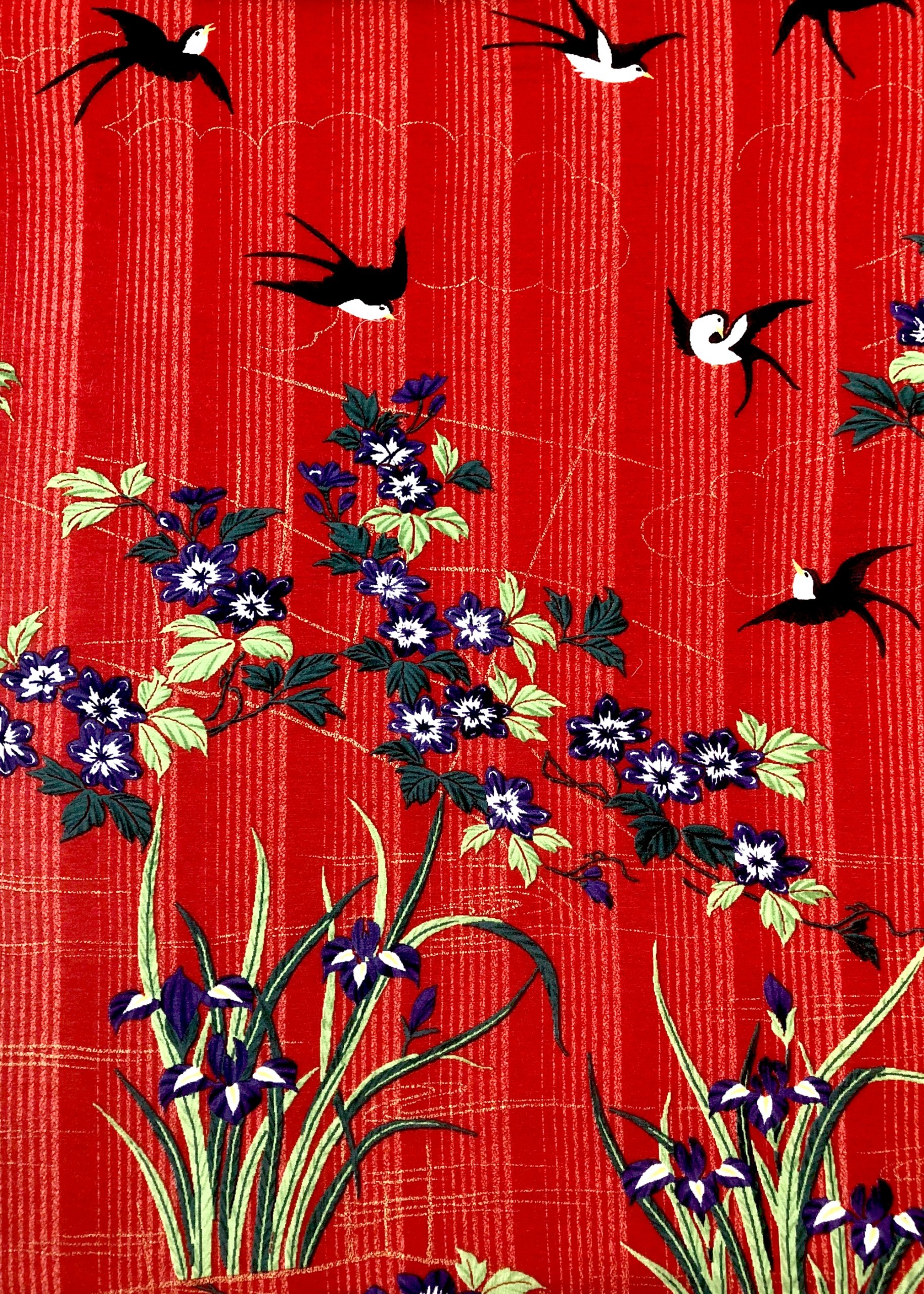
The Story of the Iris and Swallow Pattern
This design is a reproduction of a pattern from a kosode (short-sleeved kimono) said to have been worn by women of samurai families in the late Edo period.
Depicting swallows in flight among blooming irises and clematis, the pattern embodies sentiments deeply rooted in samurai culture. Irises carry layered meaning through their association with the word shōbu, which signifies both “martial spirit” and “victory,” making them a symbol of enduring success and strength. Clematis—more precisely known as tessenren—has resilient, vine-like stems, symbolizing the strong bonds within a family. Its endlessly extending growth may also suggest a wish for the continuation of the family lineage.
Swallows, arriving from the south in spring, are migratory birds known for returning to the same nesting place year after year. This faithful return resonated strongly with the samurai ideal of lineage and continuity. Together, these motifs express a quiet but powerful wish for strength, unity, and enduring legacy.
The design is set against a base of vertical stripes. The original kosode fabric was woven from a combination of wild silk and domesticated silk. When dyed, the natural oils in wild silk resisted the dye, creating lighter areas, while the more absorbent domestic silk produced deeper tones—resulting in a subtle striped effect. In this reproduction, that texture has been carefully recreated through Yuzen dyeing.
Swallows have long been the subject of folk beliefs across Japan. Many proverbs reflect their close connection to daily life and nature:
When swallows fly low, rain is near.
When they soar high and actively, clear weather is expected.
When they pass overhead, winds may follow.
A swallow nesting in one’s home is said to bring good fortune.
If swallows abandon a nest, misfortune may come.
Destroying a swallow’s nest is believed to invite bad luck.
There is also a traditional folktale that speaks to their symbolic meaning. In the story of “The Filial Sparrow,” a swallow and a sparrow are sisters. When they learn their parents are near death, the sparrow flies to them immediately, arriving in time to be at their side. The swallow, however, pauses to prepare herself, changing clothes and applying makeup, and arrives too late. Moved by the sparrow’s devotion, the gods grant her a life sustained by grains, ensuring she will never go hungry, while the swallow is left to survive on insects alone.
Through such stories and symbols, this pattern conveys more than beauty—it reflects values of devotion, family, and the passage of seasons. It is a design that carries the quiet spirit of the samurai, expressed through nature’s enduring forms.