
Genji Guruma
源氏車
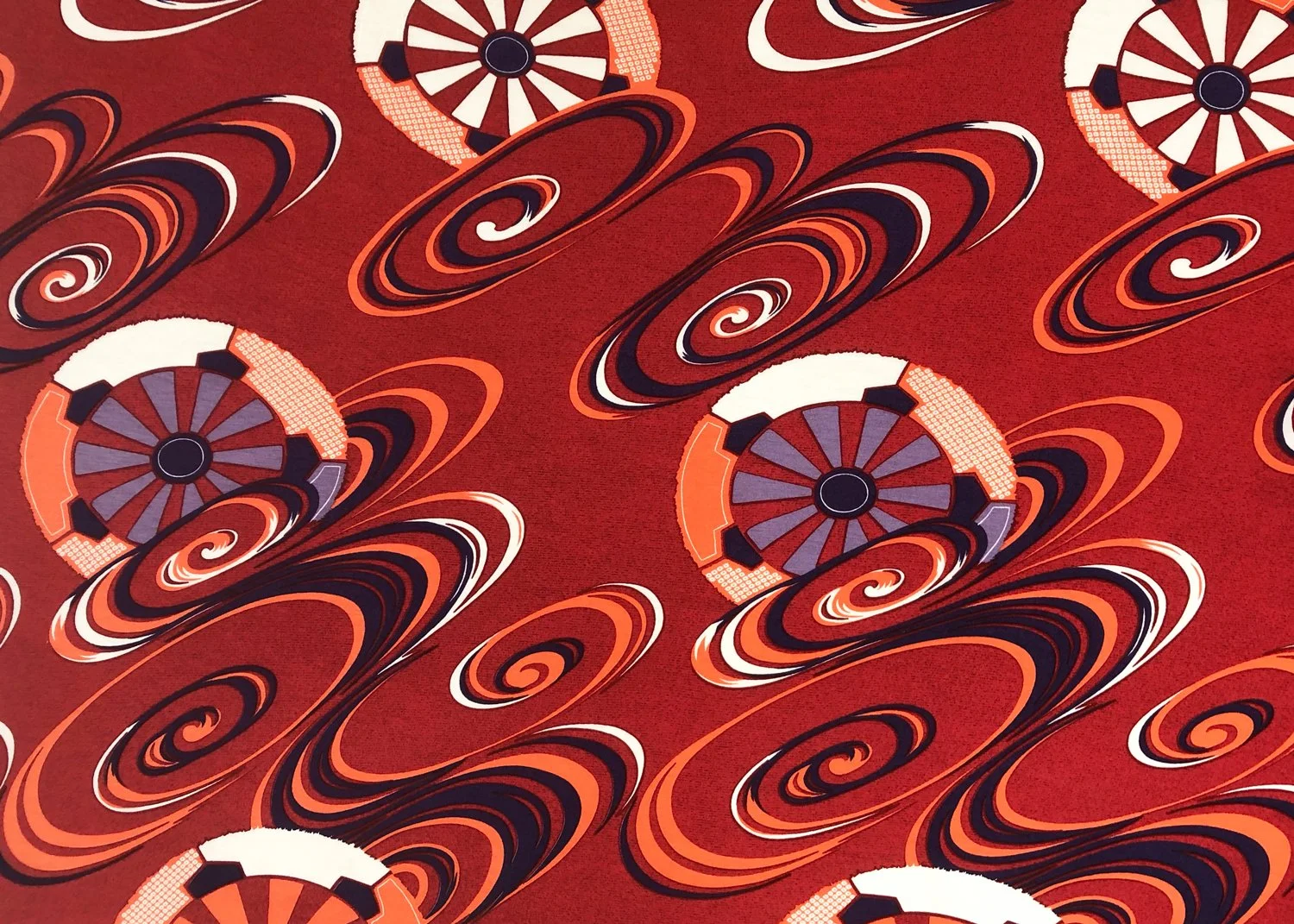
The Story of the Genji Guruma Pattern
This design is featured on a cool summer kimono.
The Gosho-guruma is an ox-drawn carriage used by aristocrats during the Heian period. Its elegant form, along with the refined lifestyle of court nobility, has made it a popular motif in kimono design. It is also known as the Genji-guruma, as it evokes the world of The Tale of Genji, one of the most representative literary works of the Heian era. In this form, the design often focuses on the carriage wheels, expressing the aesthetic of the period.
These wheels are frequently depicted alongside water, as they were traditionally stored in water to prevent the wood from drying out.
The flowing water pattern seen here is called Kanze-mizu. This design incorporates swirling currents into flowing water and is said to have been named after Kanze Tayu, the head of the Kanze school of Noh theater, who used it as a signature motif.
Furthermore, during the Edo period, the Kabuki actor Sawamura Sojuro IV—then known as Gennosuke—wore a costume featuring the Kanze-mizu pattern in his role as “Komamonoya Yashichi,” which helped popularize the design.
In this piece, the graceful water motif, typically expressed through soft curves, is arranged diagonally, creating a modern and refreshing impression.