
Snake Eye Umbrella
蛇の目傘 - Janomegasa
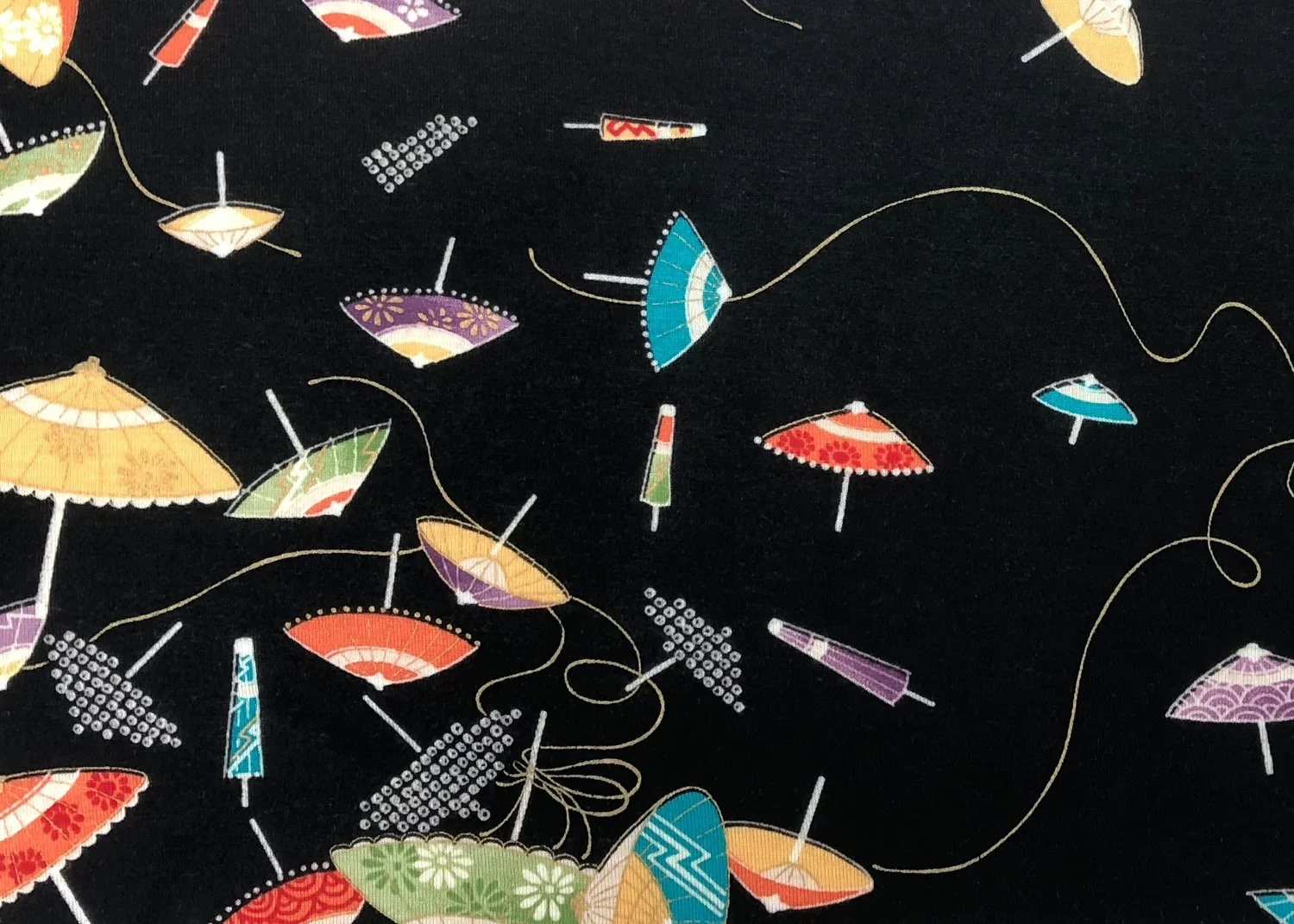
The Story of the Snake Eye Umbrella Pattern
This charming umbrella design, adorned with floral motifs, is a relatively recent creation. The flowing lines of the cords attached to the umbrellas create a gentle rhythm, while the variation in pattern density adds depth and visual interest—one of the enduring fascinations of kimono design.
In Japanese, while kasa can refer to a hat worn on the head, it also denotes a handheld umbrella, such as a sashigasa. Umbrellas have long been associated with protection and status, symbolizing wealth and nobility. In classical imagery, figures such as Prince Shōtoku or the Buddha are often depicted standing beneath large umbrellas held by attendants, emphasizing their elevated position.
Smaller umbrellas, including janome-gasa and bangasa, were once practical items for sheltering from the rain. However, they were not easily affordable for ordinary people, and owning one could indicate a certain level of wealth. Flower-adorned umbrellas were also believed to attract spirits, and in some traditions, they were used in rituals to draw in and dispel negative forces by discarding the umbrella afterward.
From the mid-Edo period onward, these umbrellas began to be stylized and incorporated into kimono patterns. Their distinctive form—especially the dynamic motion of opening and closing—made them a compelling design motif.
Umbrellas are considered auspicious, as their expanding shape symbolizes growth, prosperity, and protection. This idea is echoed in the Kyōgen play Suehiro, whose name means “spreading open.” In the story, a servant is instructed by his master to purchase a suehiro (a folding fan), described as “something that expands.” Unable to find one, he is persuaded by a merchant to buy a worn umbrella instead—mistaking it for the desired object because of its expanding form.