
Mukai Tsurubishi
向い鶴菱
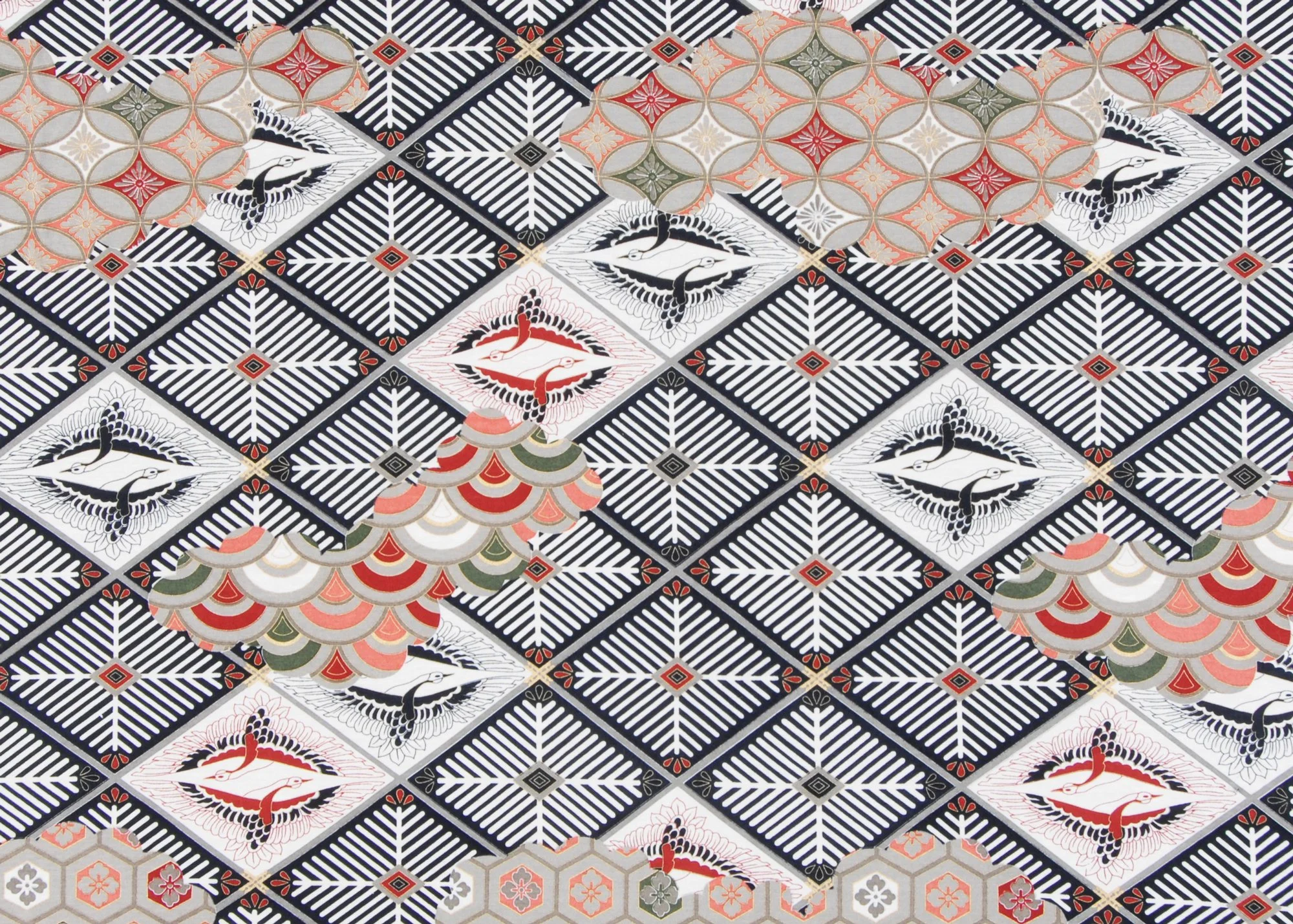
The Story of the Mukai Tsurubishi Pattern
In traditional Japanese design, a composition in which identical motifs are arranged facing each other is known as a “facing” pattern. This structure is often seen in family crests and textile designs.
For example, as in this dyed piece, two cranes are arranged in a diamond shape, their long necks crossing as they turn toward one another. This design is known as “Facing Crane Diamond.”
The two cranes are typically depicted with one opening its beak and the other closing it, symbolizing a harmonious, perfectly attuned pair—much like a devoted couple moving in unison.
This type of connected “Facing Crane Diamond” pattern, alongside other geometric linking patterns, appears in the richly woven costumes used in classical Noh theater. It has long been regarded as a refined and formal background design, suitable for ceremonial and celebratory occasions.
Since ancient times, the crane—symbolizing longevity—has often been depicted together with the pine tree, another emblem of enduring life. Such imagery expresses wishes for lasting youth, harmony, and a long, prosperous partnership.
This theme is similar to the well-known “growing old together” motif, celebrating a couple who remain side by side into old age, their hair turning white together—a symbol of lifelong devotion and shared destiny.
The history of crane-and-pine motifs dates back to the Heian period. One early example features cranes holding small pine branches in their beaks. This design evolved from earlier decorative bird motifs introduced to Japan in ancient times, where birds such as phoenixes or mandarin ducks were depicted carrying floral garlands.
Over time, these imported designs were adapted into a uniquely Japanese aesthetic, eventually becoming the crane-and-pine motif known today.
Based on compositions reminiscent of decorated temple ceilings, this crane-and-pine design is further enriched with softly shaped cloud forms. Within these clouds, traditional auspicious patterns—such as wave motifs, hexagonal designs inspired by turtle shells, and interlocking circular forms—are incorporated, enhancing the overall sense of harmony and good fortune.