
Plum tree with Bush clover
格子に梅樹秋草 - Koshu ni Baiju
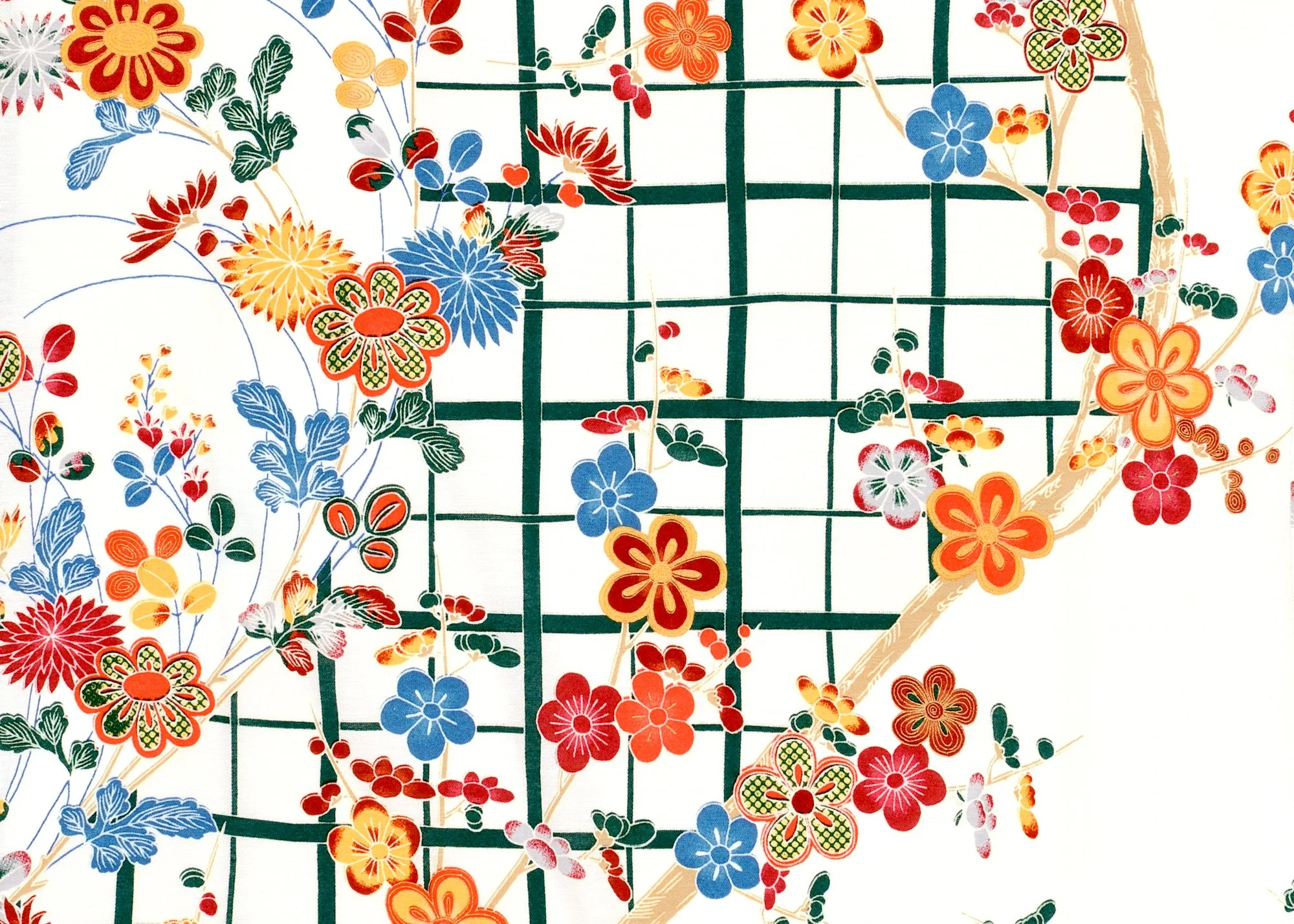
The Story of the Plum tree with Bush clover Pattern
This design is inspired by a summer kosode, a type of kimono that developed around the mid-Edo period. Unlike earlier garments with large sleeves, the kosode is characterized by its narrower sleeves and forms the foundation of modern kimono.
The original piece was a katabira—a lightweight garment worn in summer to absorb perspiration—featuring a graceful composition of plum trees rising from the hem. These are paired with a lattice motif representing a rustic fence of bamboo or brushwood, intertwined with seasonal flowers such as chrysanthemums and bush clover. Katabira were typically made of silk or hemp, with white considered the most formal color, and over time the term came to refer specifically to single-layer summer garments made of hemp.
By incorporating autumn flowers such as chrysanthemums and bush clover, this pattern evokes a subtle sense of seasonal transition and coolness, reflecting the refined sensitivity to nature found in Japanese aesthetics.
The plum tree has long been admired in Japan for its resilience and elegance. Blooming early in the lingering cold of winter, it symbolizes perseverance and quiet beauty, and has been celebrated since ancient times, notably in the Manyoshu.
The chrysanthemum, one of Japan’s most iconic flowers, is cherished as an auspicious symbol of longevity and enduring vitality. It is often depicted alongside fences, a motif that became popular during the Heian period.
Bush clover (hagi), a plant that blooms in autumn fields and mountains, is also frequently referenced in the Manyoshu as one of the seven flowers of autumn. Its delicate form evokes the gentle feeling of a cool breeze passing through an open field.
Together, these elements create a design that is both graceful and refreshing, expressing the quiet beauty of the seasons through a timeless textile tradition.