
Flying Crane
飛鶴文 - Hikakumon
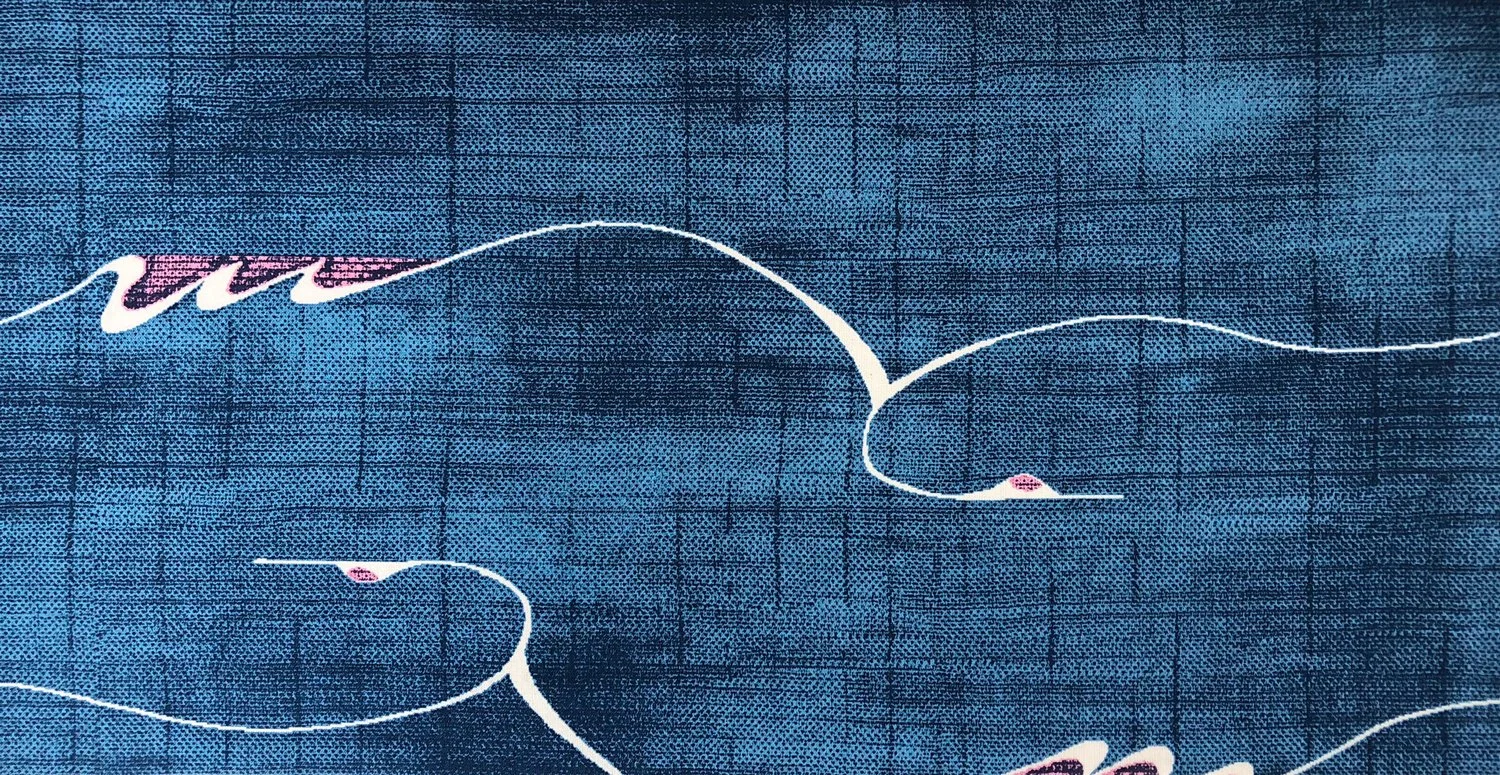
The Story of the Flying Crane Pattern
The crane, with its pure white wings in flight and its graceful, dignified stance, has long been regarded as a sacred bird—often seen as a messenger of the gods. In Japan, influenced by ancient continental thought, the crane is believed to inhabit the mythical land of Horai, an eternal spring paradise where cranes soar through the sky and turtles swim in the sea. It is said to carry immortals between heaven and earth and to live for a thousand years, making it an auspicious symbol of longevity. For this reason, crane motifs have been widely used in kimono and various forms of decorative art since ancient times.
Among these, designs depicting cranes in flight are known as hikaku-mon (flying crane patterns). Cranes are known to perform graceful movements—dancing, leaping, and flying together in pairs or groups—not only during courtship but throughout their lives. Their elegant forms soaring through the sky have inspired countless designs, admired for both their beauty and lively charm.
Simple and modern compositions like this one are often seen in kimono from the Meiji to Taishō periods, influenced by the flowing style of Art Nouveau, which flourished in Europe in the late 19th century. At the time, Japanese ukiyo-e prints and decorative arts had a profound impact on European artists, while Japan, in turn, embraced new aesthetics that moved away from strict realism. Emphasis shifted toward bold outlines, fluid curves, and expressive forms.
In this pattern, the crane is boldly simplified, its dynamic movement expressed through rhythmic, flowing lines. It is a modern and innovative interpretation of a traditional motif—carrying with it the timeless wish for health, vitality, and long life, just like the crane itself.