
Chayatsuji
茶屋辻
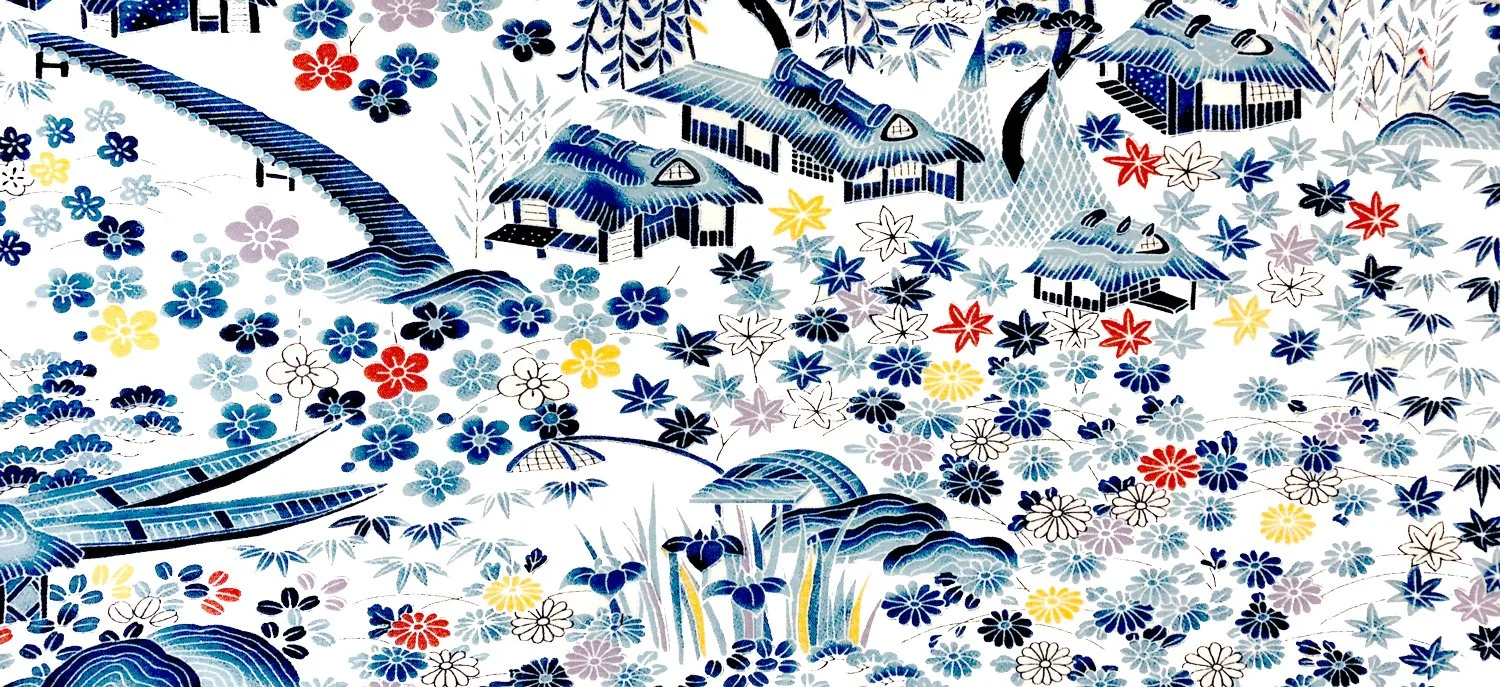
The Story of the Chayatsuji Pattern
In the early Edo period—slightly before the development of Yuzen dyeing—the katabira was a summer garment worn by women of the Tokugawa family’s Ōoku (inner chambers) and the three main Tokugawa branches from May through September. Its use was strictly limited, and ordinary people were prohibited from wearing it.
The katabira is a lightweight, single-layer garment made from fine hemp cloth. Originally intended as an underlayer beneath formal attire, it gradually came to be worn as an outer garment during the hot summer months of the Edo period.
The Chaya-tsuji style is a highly refined indigo dyeing technique, said to have been created by Chaya Shirojiro. It features elegant landscape compositions that combine pavilions, plants, and flowing water. Many of these designs draw upon classical and courtly literature—such as Noh plays and The Tale of Genji—and were considered symbols of education and cultural sophistication among the elite.
Originally, Chaya-tsuji patterns were rendered in indigo on a white ground, emphasizing subtlety and refinement. From the mid-Edo period onward, embroidery with colored threads was introduced, bringing greater richness and complexity to the designs. Over time, multicolored variations became more common.
Since the Meiji era, Chaya-tsuji has been embraced more widely by the general public as a motif associated with elegance and high status. It later evolved into intricate depictions of cool seaside and waterside scenery, and even today, it remains closely associated with summer, often appearing on silk garments and accessories.
With its graceful landscapes and refreshing visual tone, the Chaya-tsuji pattern offers a sense of coolness and serenity—an ideal companion for navigating the heat and humidity of modern life with elegance and ease.