
Thousand Cranes
千羽鶴 - Senbazuru
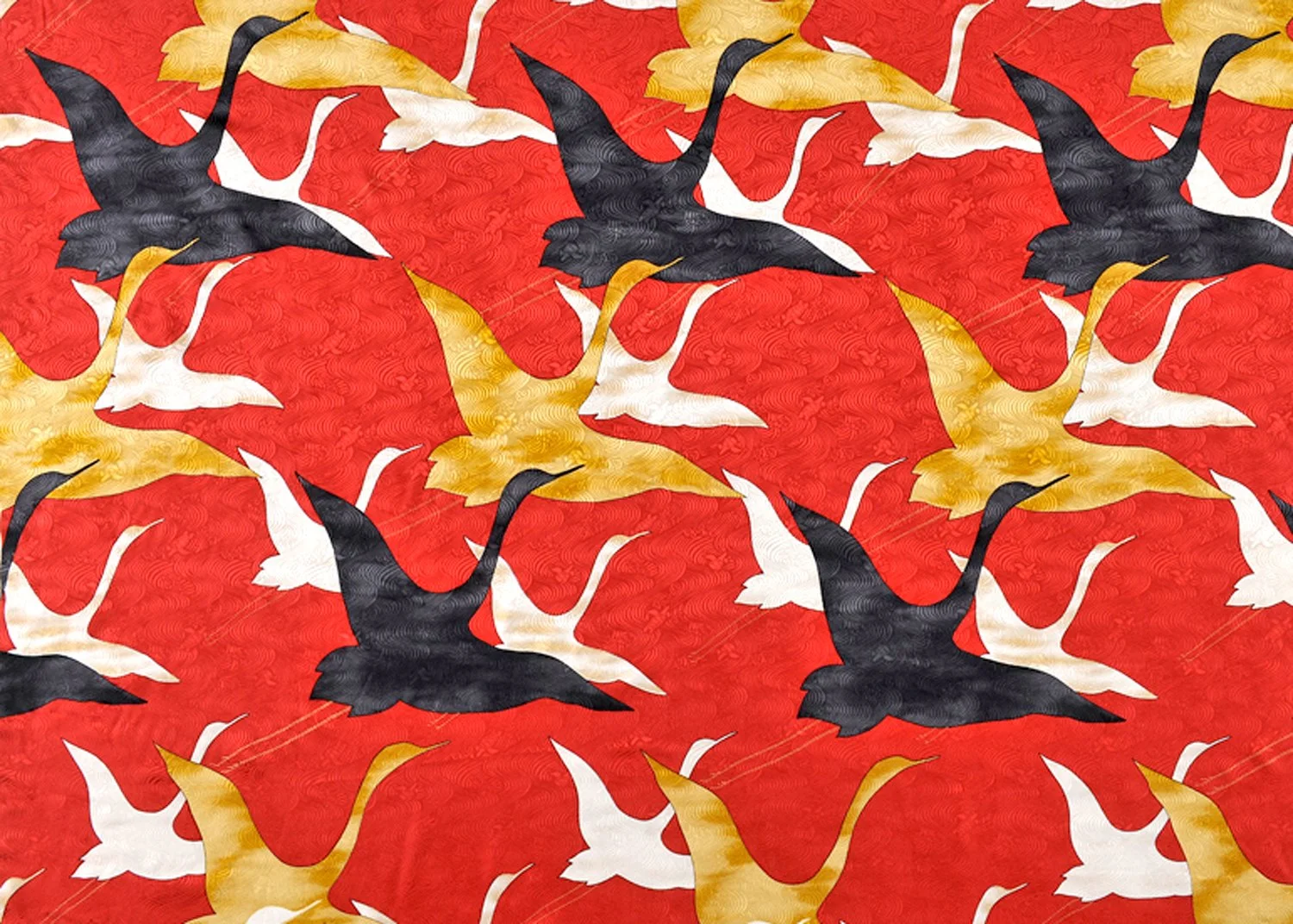
The Story of the Thousand Cranes Pattern
This design, depicting a flock of cranes spreading their wings and soaring through the sky, draws inspiration from the collaborative masterpiece Thirty-Six Immortal Poets with Crane Sketches by Hon'ami Kōetsu and Tawaraya Sōtatsu. It was later reinterpreted by a designer of the Shōwa era, who sought to honor the aesthetic legacy of these revered figures.
The original Thirty-Six Immortal Poets with Crane Sketches is an impressive handscroll measuring over 13 meters in length. In this work, Sōtatsu painted a dynamic flock of cranes crossing the open sea using luminous gold and silver pigments, while Kōetsu scattered waka poems by the legendary poets across the composition. Sōtatsu’s imagery unfolds with a striking sense of rhythm and narrative: cranes descend upon a sandy shore, spread their wings, and ascend into the sky. They glide across the sea, dip low, then suddenly rise in unison, soaring high before finally reaching the opposite shore to rest. Rendered in shimmering silhouettes, the cranes evoke a feeling of richness, openness, and vitality.
Kōetsu’s calligraphy—by one of the three great masters of the Kan’ei era—complements this movement with equal generosity and elegance. Together, their collaboration represents a refined fusion of painting and poetry, embodying the sophisticated aesthetic sensibilities of cultured townspeople in the early Edo period.
Inspired by this masterpiece, the present design captures cranes in mid-flight, rendered in graceful silhouettes that rhythmically express their motion through the sky. Cranes, admired for their beauty both in stillness and in flight, have long been cherished motifs in kimono design and decorative arts. As expressed in the saying, “Cranes live for a thousand years, turtles for ten thousand,” they are auspicious symbols of longevity and good fortune.
A crane in flight is also said to represent a person of exceptional character—someone who rises above the ordinary. Its call is believed to reach the heavens, symbolizing the far-reaching reputation of a wise ruler or virtuous individual. Under such leadership, peace and prosperity prevail, and people live in harmony.
This design of cranes soaring gracefully through the sky embodies a heartfelt wish for such an era—one of peace, dignity, and enduring happiness—to come again.