
Cherry blossom Blizzard
桜吹雪 - Sakura Fubuki
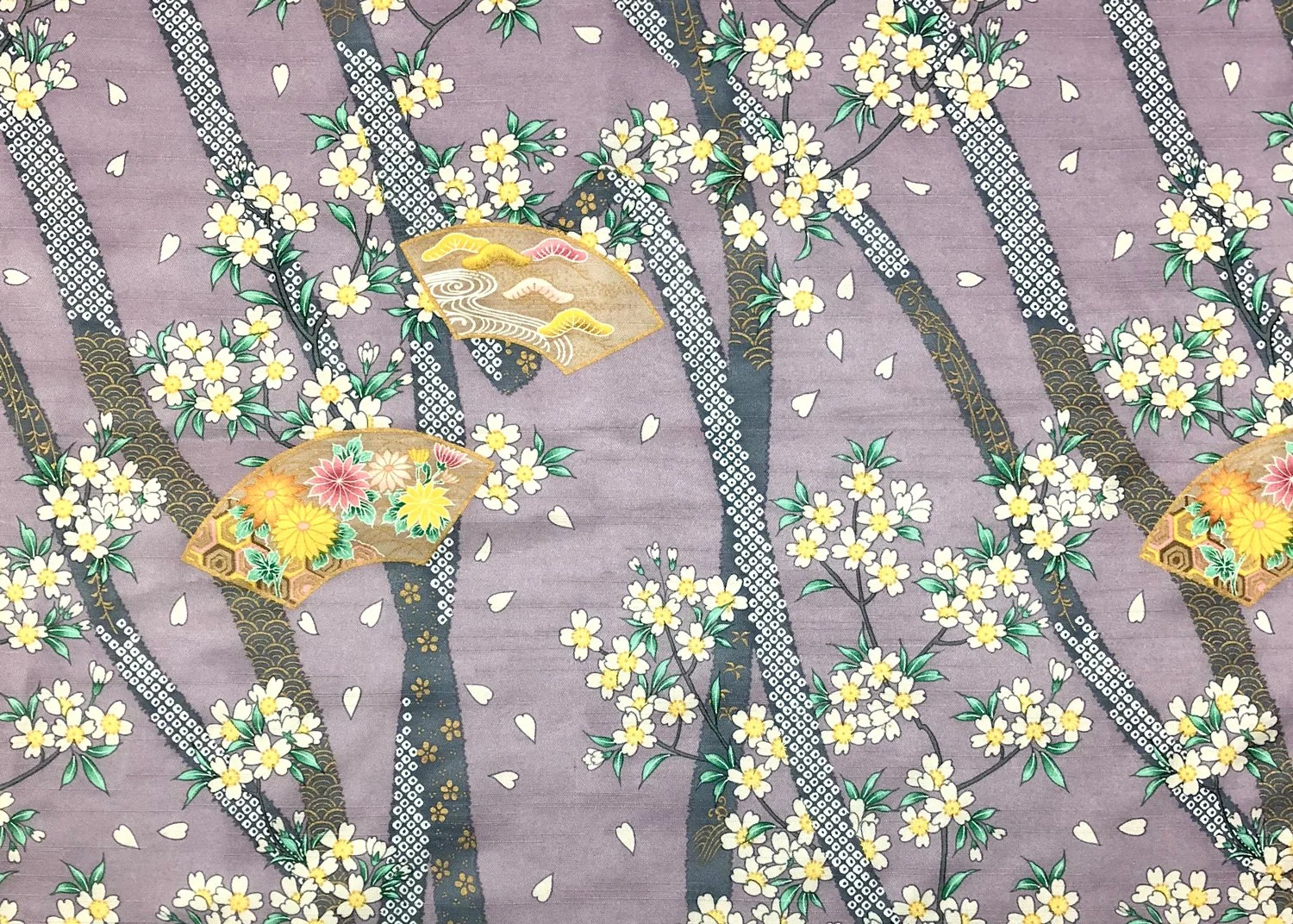
The Story of the Cherry blossom Blizzard Pattern
During the Heian period, the aristocracy began to favor cherry blossom banquets, gradually replacing the earlier custom of admiring plum blossoms. As the beauty of native cherry blossoms came to be fully appreciated, they emerged as the defining flower of spring in Japan—so beloved that people would say, “When one speaks of flowers, one thinks of cherry blossoms.”
The scene depicted in this design captures petals drifting through the air, expressing both the brilliance of blossoms in full bloom and the gentle sadness of their passing. It is a moment that evokes a quiet sense of nostalgia, deeply rooted in the Japanese appreciation of fleeting beauty.
The fan-shaped papers that dance among the falling blossoms are known as jigami, the decorative paper surfaces of folding fans. Their widening shape is called suehirogari—symbolizing growth and expansion—and has long been considered auspicious. These jigami are adorned with elegant combinations of traditional motifs, such as chrysanthemum with tortoiseshell, peony with shippo (interlocking circles symbolizing harmony), and pine with flowing water, each carrying its own auspicious meaning.
Flowing gracefully among the blossoms and fans are slender, ribbon-like forms inspired by noshi—decorative elements derived from thinly stretched and dried abalone. Once used as a precious food offering, noshi later became a ceremonial symbol of longevity and good fortune, often attached to gifts. Today, their stylized form remains a familiar auspicious motif, especially in formal kimono such as furisode and obi.
In this design, the noshi lines delicately suggest the movement of the wind, carrying cherry blossoms across the fan surfaces. Together, these elements evoke the refined elegance of Heian courtly gatherings and capture a timeless scene—one that reflects the enduring beauty and poetic sensitivity of the Japanese spring.