
Kirikane
切金文様 - Kirikana monyo
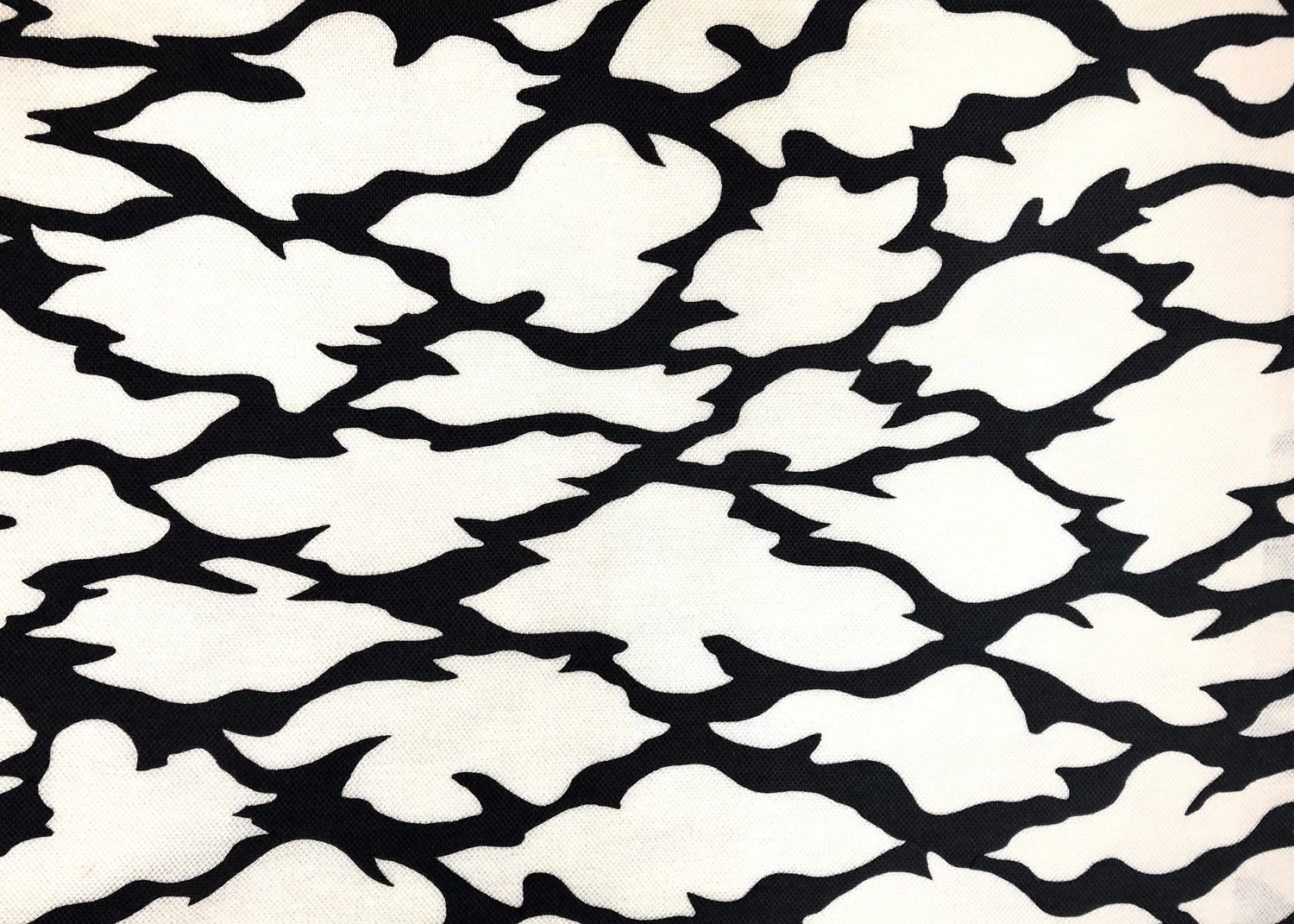
The Story of the Kirikane Pattern
This piece features a design inspired by a Noh costume known as a kake-hitatare, formerly owned by Matasaburo Oe, the seventh head of the Oe family and a Noh actor of the Kanze school. The design has been recreated using Kyoto Yuzen dyeing by Pagong.
A hitatare is a traditional garment worn by samurai men, and kake-hitatare refers to a more informal way of wearing the upper layer of this attire. The pattern seen here is known as kirikane-monyō, a design style that has been frequently used in Noh costumes since the Edo period.
Its bold, geometric composition expresses a sense of masculine strength and presence. While the term kirikane generally refers to a technique involving the application of gold and silver foil, in the context of Noh costumes it has come to refer to the pattern itself. Many details of this style remain unclear, but the term kirikane is a distinctive designation specific to Noh costume tradition.
Matasaburo Oe, the original owner of this costume, is the head of the Oe family, and “Matasaburo” is a hereditary name passed down within the family. The Noh costumes and related cultural assets owned by the Oe family, along with the Oe Noh Theater, are carefully preserved and maintained personally by Mr. Matasaburo, and continue to be handed down to future generations.