
Mandarin Duck
おしどり - Oshidori
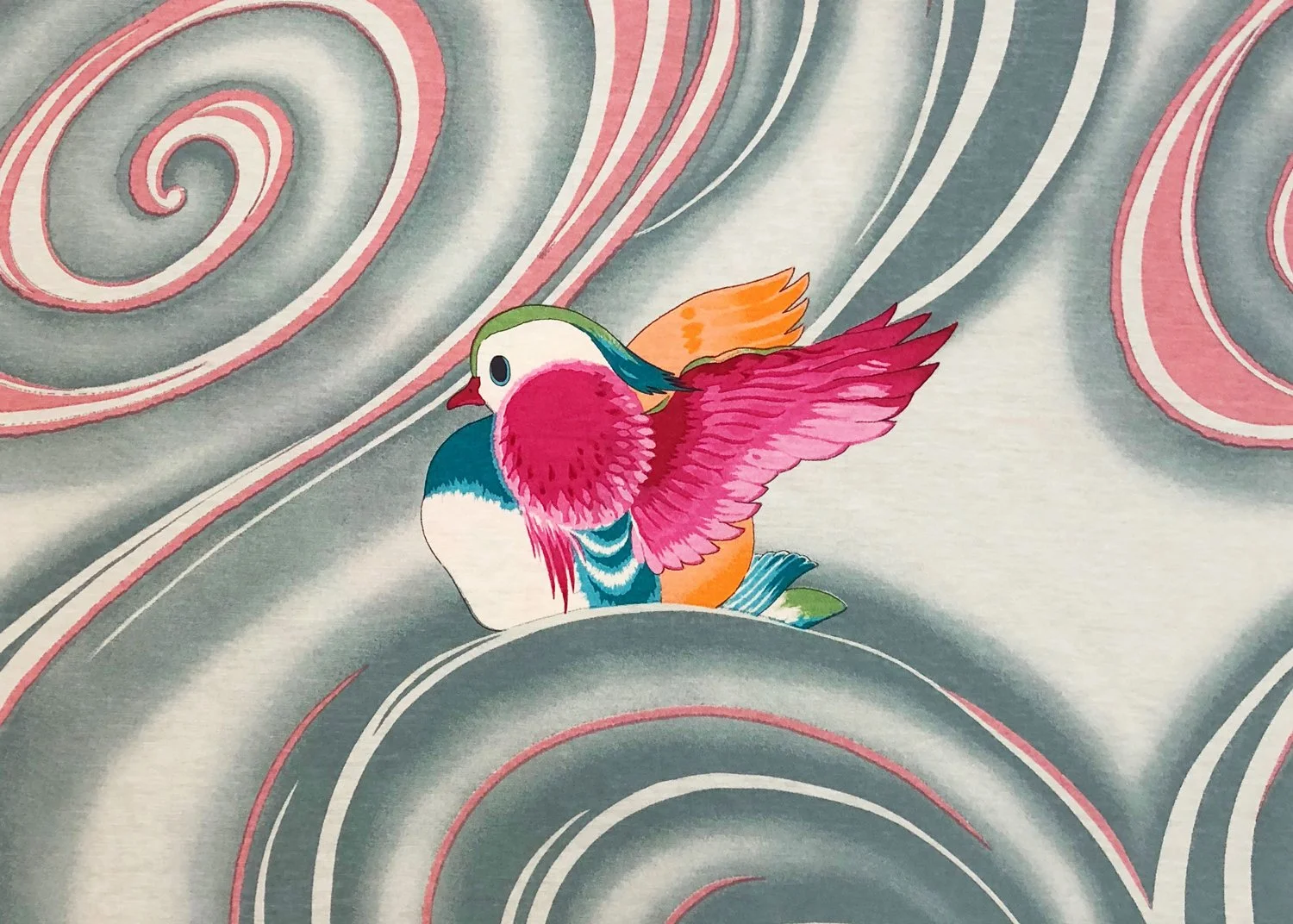
The Story of the Mandarin Duck Pattern
The mandarin duck pattern expresses harmony, devotion, and quiet elegance through the graceful pairing of two birds moving together across water. Often seen as a symbol of enduring love, the motif reflects the deep bond between partners, capturing a sense of closeness and emotional connection in its composition. The term itself carries the nuance of something precious and irreplaceable, adding a layer of tenderness to the design.
In this pattern, the male mandarin duck is depicted with striking beauty—adorned with a crown-like crest and distinctive, fan-shaped feathers that resemble ginkgo leaves. His plumage becomes especially vivid during the winter season, bringing rich color and visual contrast to the composition. The female, more subdued in tone, complements the male’s brilliance, creating a natural balance between softness and vibrancy.
Flowing water elements weave through the design, often rendered with bold, sweeping lines that suggest movement and energy. These water patterns enhance the sense of life within the scene, as if the ducks are gently gliding through rippling currents. The interplay between the stillness of the birds and the motion of the water creates a dynamic yet harmonious rhythm.
Originating from the early Showa period, this design reflects the expressive style of kata-yuzen dyeing, known for its vivid colors and strong visual impact. The combination of bright hues and dramatic composition gives the pattern a lively, almost painterly quality, while still retaining a sense of elegance.
Overall, the mandarin duck pattern is more than a depiction of nature—it is a poetic expression of love, balance, and beauty, brought to life through bold design and refined detail.