
Flower Umbrella
花傘 - Hanagasa
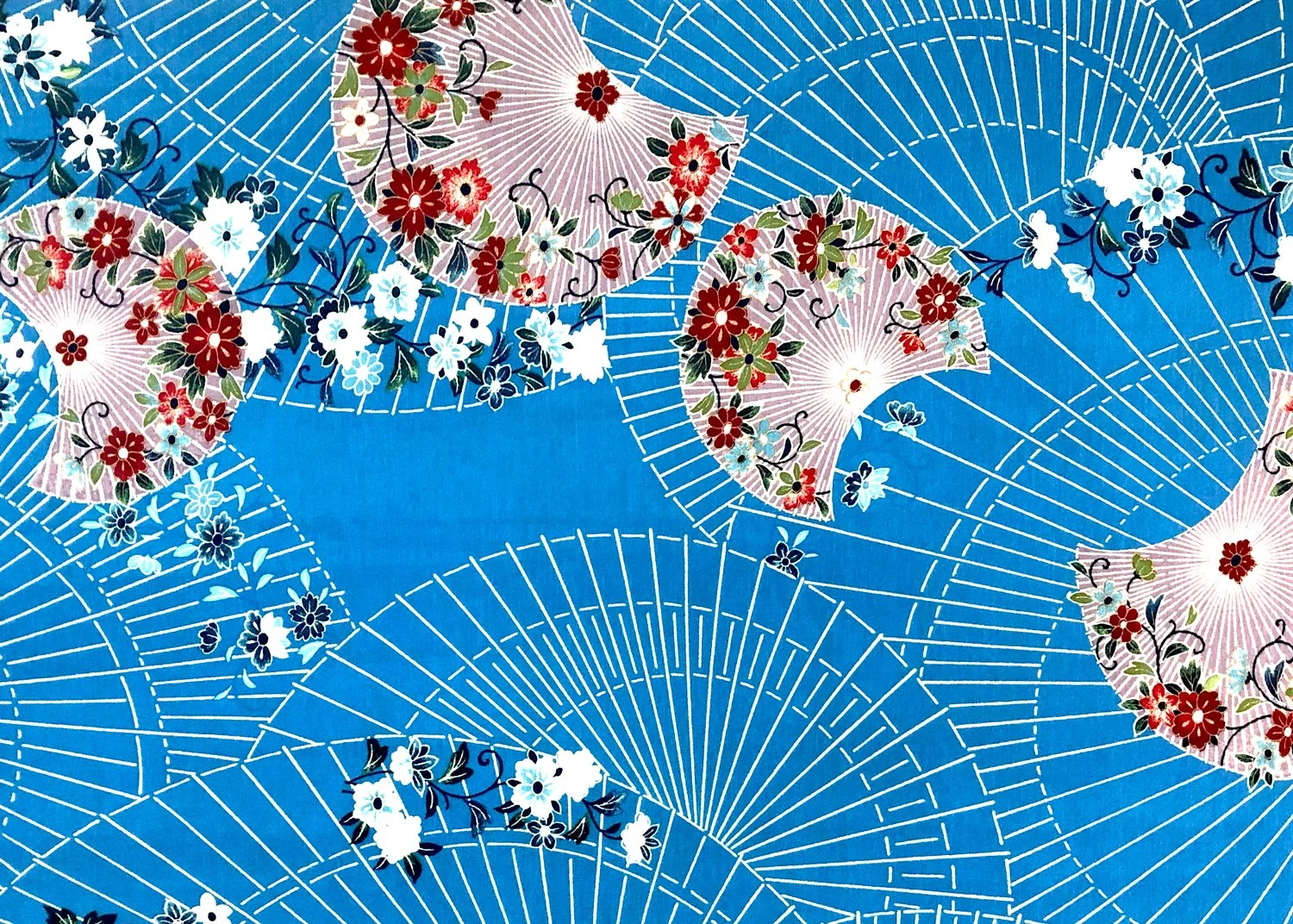
The Story of the Flower Umbrella Pattern
This relatively modern pattern features charming umbrellas decorated with karabana (stylized floral motifs), reimagined in a contemporary design.
In Japanese, headwear is called kasa, while handheld coverings are referred to as kasa or sashi-gasa (umbrellas). Traditionally, umbrellas were used to shield and protect noble figures, and for that reason alone, they came to symbolize status and prosperity. We often see depictions of Prince Shōtoku or Gautama Buddha standing beneath large, long-handled umbrellas held by attendants—signifying the presence of someone of high rank beneath them.
Large, openable umbrellas were introduced to Japan in the early Momoyama period and were used as sunshades for the elite. Decorative hanagasa (flower umbrellas) were believed to invite divine spirits. In some rituals, they were even used to attract and carry away evil spirits, which were then discarded along with the umbrella. Even today, festivals featuring flower umbrellas are held throughout Japan.
Smaller umbrellas, such as janome-gasa (snake-eye umbrellas) and bangasa, were practical items for protection against rain. However, in earlier times, they were not accessible to common people, and owning one signified a certain level of wealth. It was not until the mid-Edo period that umbrellas became more widely available, eventually appearing as motifs in kimono design.
The act of opening and closing an umbrella, along with its expanding shape, made it an appealing subject for decorative patterns. Its widening form is associated with suehiro—a symbol of growth and good fortune—and it has long been regarded as an auspicious motif that offers protection and shelter.
There is also a humorous story from the traditional performing art of Suehiro. In this tale, a servant is ordered by his master to buy a suehiro (a folding fan), described as “something with ribs that spreads open.” Not knowing what it is, the servant goes to town in search of it but cannot find one. Eventually, a merchant persuades him to buy a broken umbrella. Seeing that it has ribs and can be opened, the servant concludes that it must indeed be a suehiro—and proudly brings it home.