
Peacock and Water Lily
孔雀と睡蓮 - Kujaku to Suiren
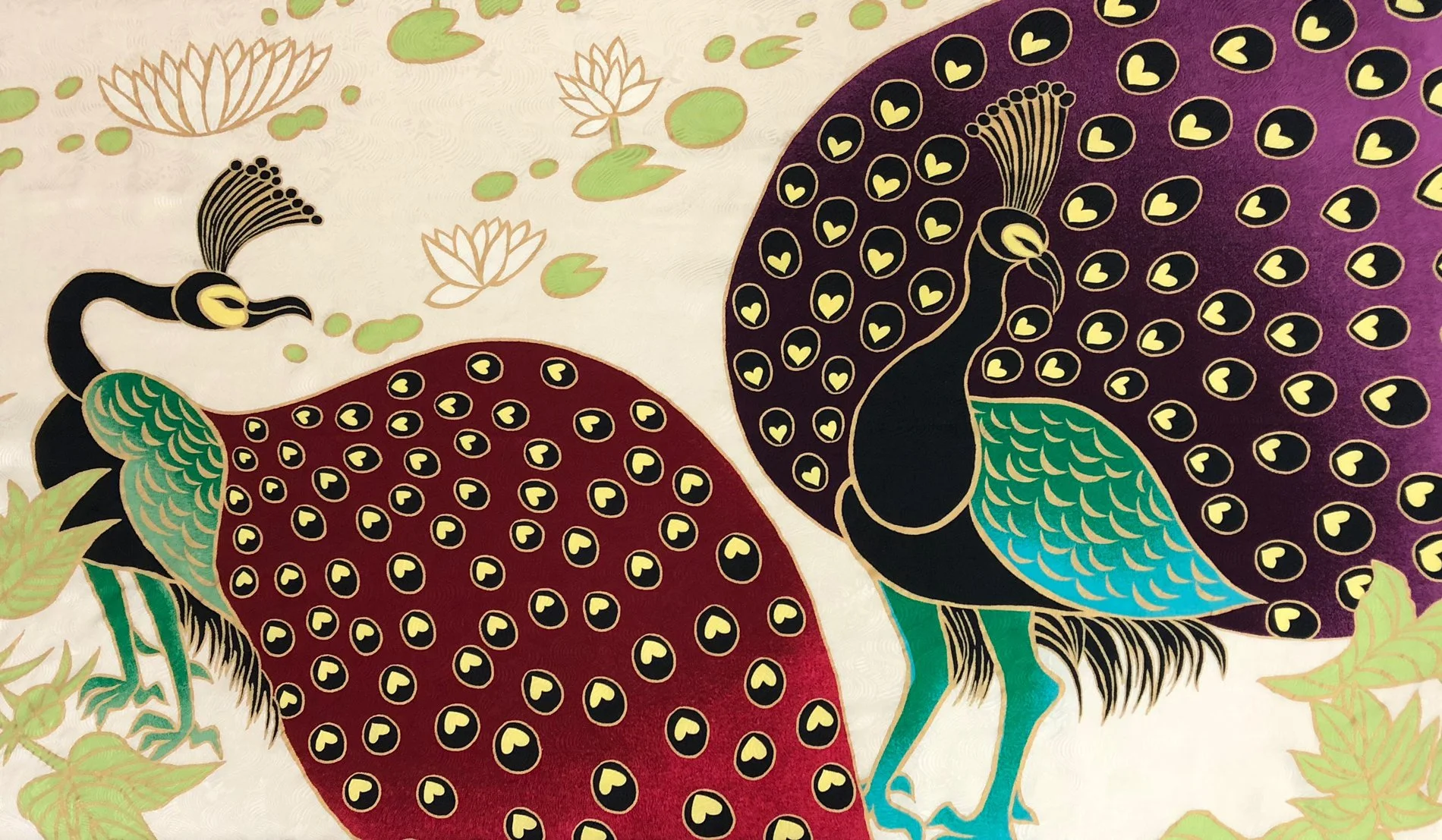
The Story of the Peacock and Water Lily Pattern
Following the 2016 collection, works by Hideki Kimura once again appear as Yuzen textile designs by Pagong. This piece is based on a mural created in March 2008 for the walls of a renowned Cantonese restaurant in Kyoto’s Gion district.
The peacock has long been admired and used as a decorative motif across many cultures due to its striking beauty. In traditional Japanese decorative arts, it has been regarded as an auspicious symbol representing beauty, dignity, and prosperity, and is often used in celebratory garments such as bridal uchikake and formal kimono.
The water lily (suiren) blooms from May to July. Its life cycle is marked by a rhythm in which the flower opens and closes over the course of three days, repeating this cycle three times before withering. Because its blossoms open during the day and close in the afternoon, resembling a sleeping motion, it was named “suiren,” meaning “sleeping lotus.” With its cyclical blooming pattern and radiating form, the water lily has long been associated with natural rhythm, purity, and quiet spiritual beauty. It is also connected with meanings such as “faith.”
The sacred water lily and the auspicious peacock come together in a highly celebratory composition. The bold and expressive design characteristic of Hideki Kimura expands the world of Pagong’s Kyoto Yuzen dyeing, bringing a powerful contemporary interpretation to traditional aesthetics.