
Peony
牡丹 - Botan
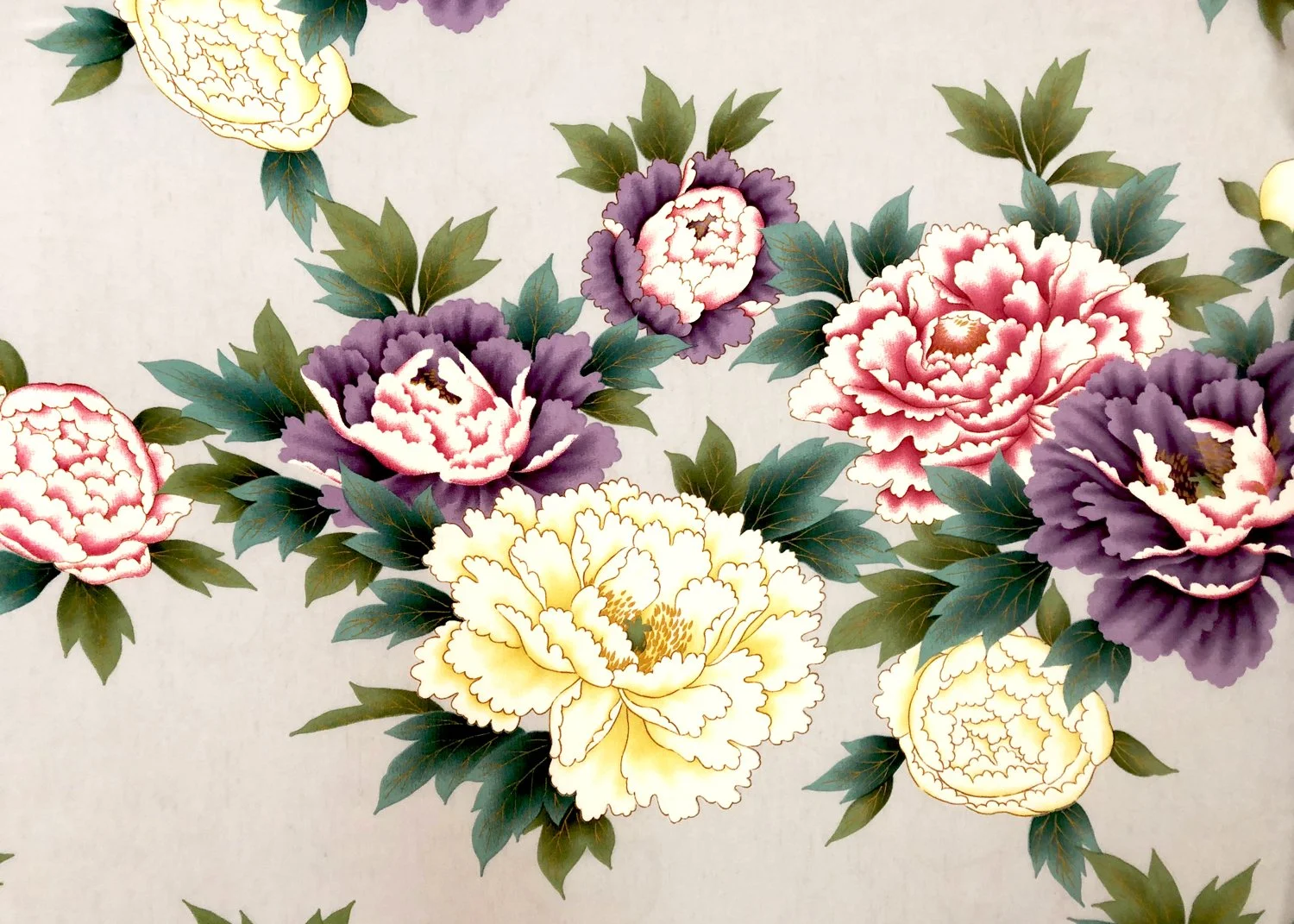
The Story of the Peony Pattern
The peony has long been admired for its magnificent, richly layered blossoms and is often referred to as the “king of flowers,” symbolizing beauty, wealth, and nobility. Its lush, full petals and graceful presence have made it a timeless favorite across cultures.
In Japan, peonies were introduced in ancient times for medicinal purposes and later came to be cultivated for their ornamental beauty in courtly and temple settings. References to peonies can even be found in classical literature such as The Pillow Book, showing how deeply they were appreciated among the aristocracy.
Over time, the cultivation of peonies spread, and by the Edo period they had become familiar and beloved flowers among the general public. As a result, they began to appear widely in decorative arts, including kimono patterns and ceramics.
In kimono design, artistic expression gradually evolved from stylized forms to more painterly and realistic representations. In this pattern, the peony is depicted with remarkable detail, highlighting the delicate layering of its petals and its natural elegance.
Celebrated as a symbol of prosperity, grace, and refined beauty, the peony motif brings a sense of richness and timeless charm. Wearing such a design allows one to carry the enduring elegance of this beloved flower into everyday life.