
Pine and Crane
松鶴に菊模様 - Shokaku ni kikumoyo
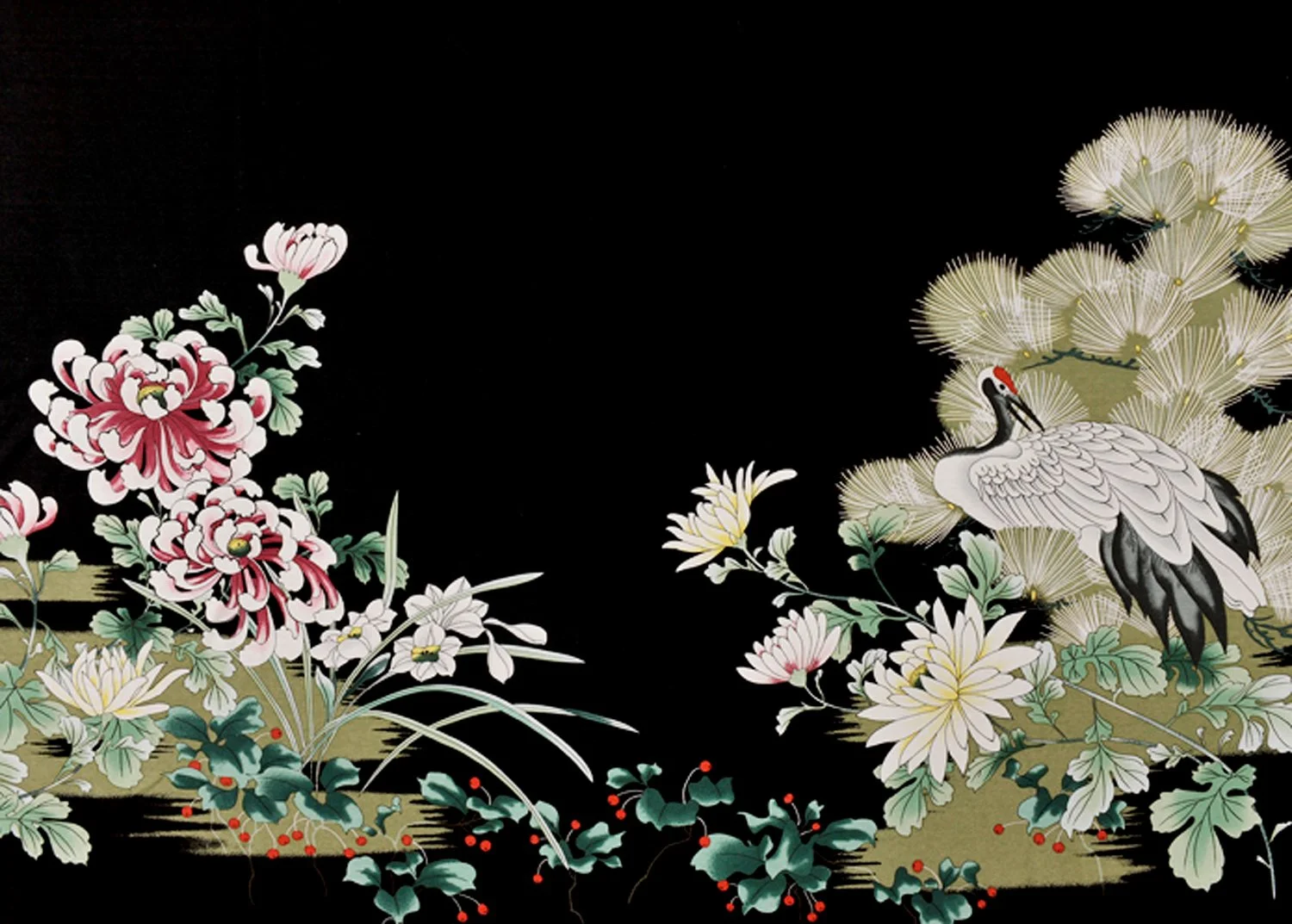
The Story of the Pine and Crane Pattern
This pattern is a reproduction of a formal kimono from the early Shōwa period. The design depicts a crane perched on a pine tree along a sandy beach, richly adorned with auspicious motifs celebrating joyous occasions.
Cranes have long been featured in decorative arts as symbols of longevity, and they are also associated with marital harmony, as they are believed to mate for life. Pine trees, evergreen and capable of living for centuries, likewise represent longevity and enduring vitality. They have traditionally been regarded as sacred trees in which deities reside, and even today, they play important roles in rituals and ceremonial settings.
The pairing of pine and crane—known as the pine and crane motif—embodies wishes for long life, eternal youth, and a harmonious union.
The sandy shoreline is expressed through the suhama pattern, a stylized depiction of land formed by the gentle accumulation of sand, viewed from above. This motif is often associated with the legendary realm of immortality, Mount Penglai, believed to connect heaven and earth. Since the Heian period, suhama has been used as a decorative element in celebratory settings, further enhancing its auspicious meaning.
Together, these motifs create a design rich in symbolism, expressing wishes for longevity, prosperity, and enduring happiness.
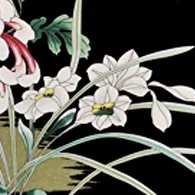
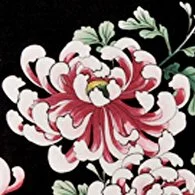
Chrysanthemum
Narcissus
Coralberry
This design features daffodils—auspicious flowers associated with the New Year—alongside manryō (Japanese laurel) and chrysanthemums, which symbolize longevity. Together, these elements create a bright and celebratory pattern suited for joyful occasions.
Rich in meaning, the design expresses a heartfelt wish for a couple’s new beginning to be filled with happiness and good fortune. In this way, the Japanese tradition of conveying emotions and thoughtfulness through clothing and patterns continues to live on today.