
Pine and Snow ring
松と雪輪 - Matsu to Yukiwa
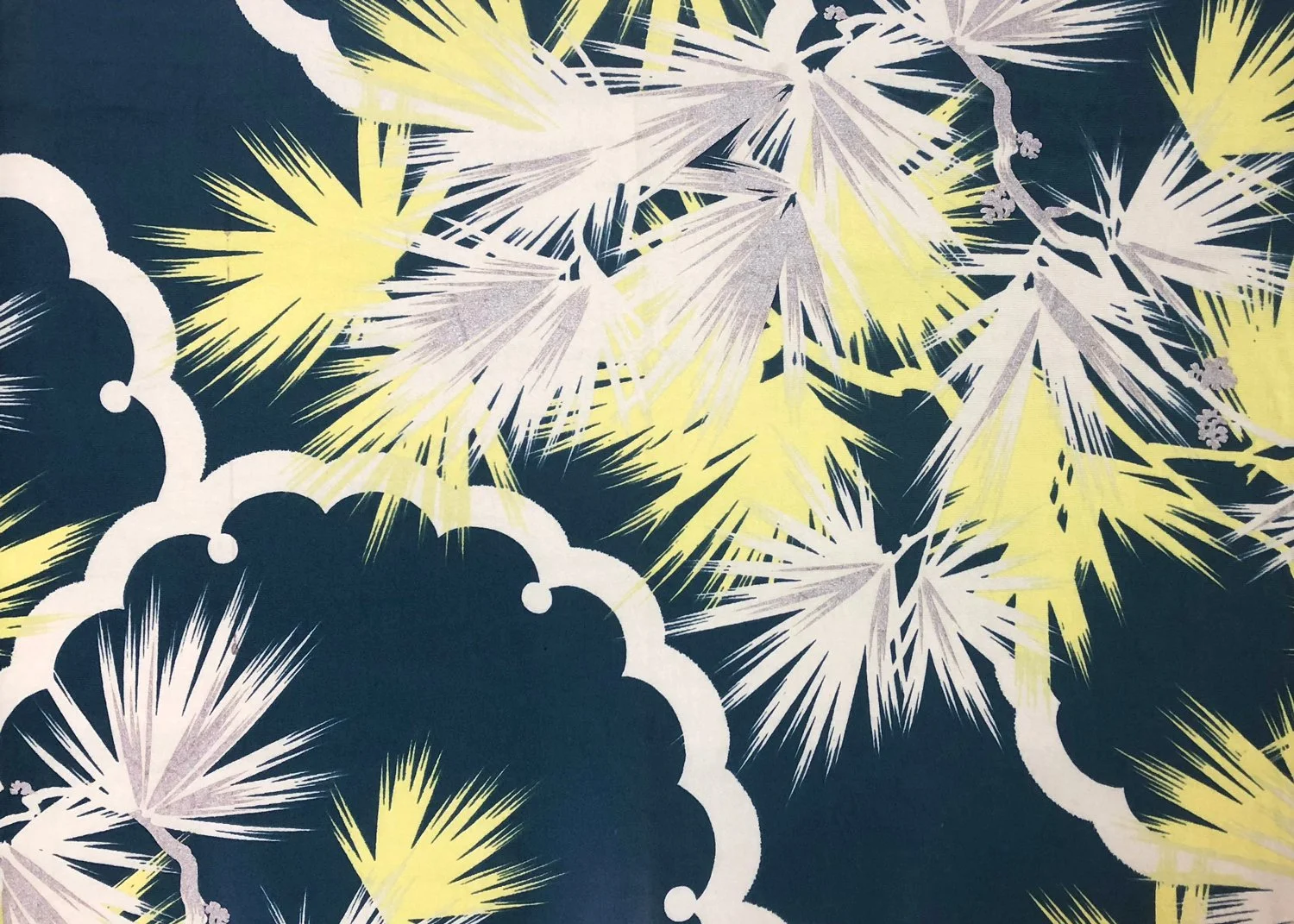
The Story of the Pine and Snow ring Pattern
The pine tree is said to live for a thousand years and remains lush and green throughout all four seasons. For this reason, it is also called “tokiwagi” (evergreen tree) and is considered one of the most representative auspicious motifs.
Its enduring vitality—remaining green even through harsh winters—has long been admired as a symbol of resilience and integrity. Together with bamboo and plum, it forms the well-known “Three Friends of Winter,” celebrated for their strength and elegance in adversity.
In Japan, the pine also became associated with ancient beliefs in an ideal paradise where beings enjoy longevity and harmony, further strengthening its meaning as a symbol of long life and good fortune.
The yukiwa (snow-circle) motif is inspired by softly fallen snow resting on tree branches and was developed as a decorative pattern around the Momoyama period. For an agricultural society, snow held special significance, as it promised an abundance of water when it melted in spring, leading to rich harvests and prosperity.
What makes this design particularly striking is its dynamic depiction of pine. While the motifs themselves are traditional, the bold brushwork reflects the modernist spirit of the early Showa period. The strong use of vivid colors and expressive, energetic lines evokes the influence of early 20th-century artistic movements such as Fauvism and Expressionism, blending tradition with a fresh and powerful visual style.