
We introducing our new Sakura limited collection

Color / Water blue and Multi-color Care Instruction
Japanese name/ Sakura
-About-
Sakura, or cherry blossoms, are Japan’s national flower in the hearts of the people. Every spring, throngs of Japanese people and visitors make efforts to see this well-loved flower, a tradition known as “hanami”, a flower-viewing and picnic event to enjoy the blossoms.
Widely celebrated in Japanese literature, poetry, and art, sakura carry layered meanings. For example, because they bloom briefly, the blossoms are often seen as a metaphor for the ephemeral beauty of living. The brilliant blooming season is powerful, glorious, and intoxicating, but short-lived, a visual reminder that our lives, too, are fleeting.
The joyful tradition of hanami is an old and ongoing tradition, and can be traced back centuries in Japanese culture. The eighth century chronicle Nihon Shoki records hanami festivals being held as early as the third century AD.
The style of this painting is from the Maruyama school of the Edo era (1603-1868).
・ 100% Silk
・One-Size-Fits-All
・Made in Japan
・Dry-wash
・Currency : US Dollar (USD)

Color /Pink and Multi-color Care Instruction
Japanese name/さくら (Sakura)
-About-
Sakura, or cherry blossoms, are Japan’s national flower in the hearts of the people. Every spring, throngs of Japanese people and visitors make efforts to see this well-loved flower, a tradition known as “hanami”, a flower-viewing and picnic event to enjoy the blossoms.
Widely celebrated in Japanese literature, poetry, and art, sakura carry layered meanings. For example, because they bloom briefly, the blossoms are often seen as a metaphor for the ephemeral beauty of living. The brilliant blooming season is powerful, glorious, and intoxicating, but short-lived, a visual reminder that our lives, too, are fleeting.
The joyful tradition of hanami is an old and ongoing tradition, and can be traced back centuries in Japanese culture. The eighth century chronicle Nihon Shoki records hanami festivals being held as early as the third century AD.
The style of this painting is from the Maruyama school of the Edo era (1603-1868).
・Size:17 x 16 x 2 inch
・Material:cotton 100%
・Made in Japan
・Currency : US Dollar (USD)
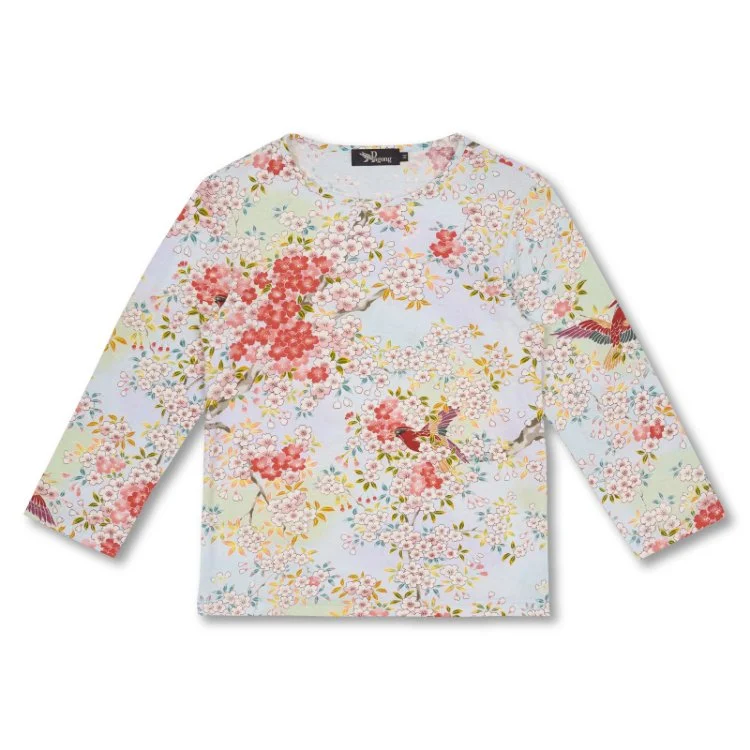
Japanese name/ Sakura
-About-
Sakura, or cherry blossoms, are Japan’s national flower in the hearts of the people. Every spring, throngs of Japanese people and visitors make efforts to see this well-loved flower, a tradition known as “hanami”, a flower-viewing and picnic event to enjoy the blossoms.
Widely celebrated in Japanese literature, poetry, and art, sakura carry layered meanings. For example, because they bloom briefly, the blossoms are often seen as a metaphor for the ephemeral beauty of living. The brilliant blooming season is powerful, glorious, and intoxicating, but short-lived, a visual reminder that our lives, too, are fleeting.
The joyful tradition of hanami is an old and ongoing tradition, and can be traced back centuries in Japanese culture. The eighth century chronicle Nihon Shoki records hanami festivals being held as early as the third century AD.
The style of this painting is from the Maruyama school of the Edo era (1603-1868).
・100% Premium Cotton
・Made in Japan
・Hand-wash
・Currency : US Dollar (USD)
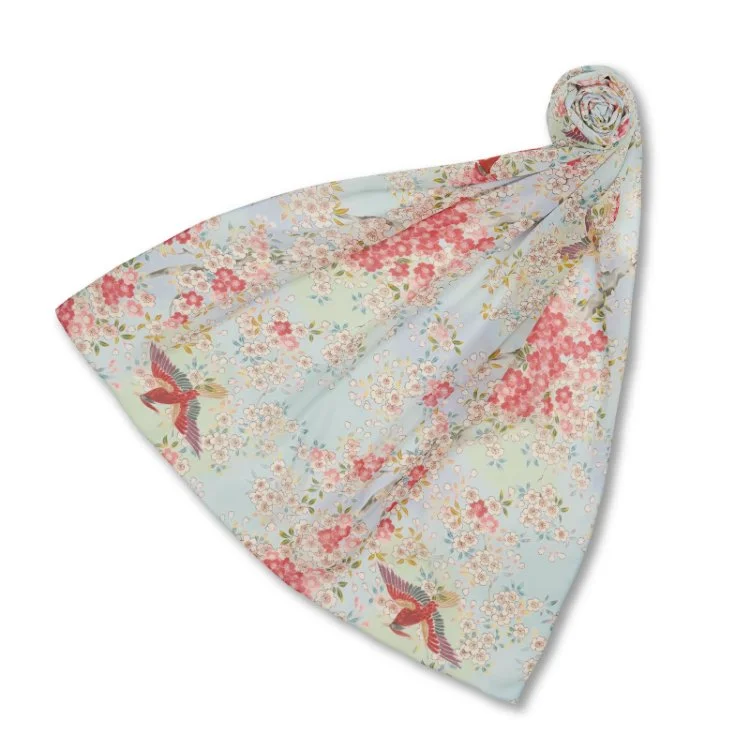
Color / Water blue and Multi-color Care Instruction
Japanese name/ さくら (Sakura)
-About-
Sakura, or cherry blossoms, are Japan’s national flower in the hearts of the people. Every spring, throngs of Japanese people and visitors make efforts to see this well-loved flower, a tradition known as “hanami”, a flower-viewing and picnic event to enjoy the blossoms.
Widely celebrated in Japanese literature, poetry, and art, sakura carry layered meanings. For example, because they bloom briefly, the blossoms are often seen as a metaphor for the ephemeral beauty of living. The brilliant blooming season is powerful, glorious, and intoxicating, but short-lived, a visual reminder that our lives, too, are fleeting.
The joyful tradition of hanami is an old and ongoing tradition, and can be traced back centuries in Japanese culture. The eighth century chronicle Nihon Shoki records hanami festivals being held as early as the third century AD.
The style of this painting is from the Maruyama school of the Edo era (1603-1868).
・Size 75 x 41 (inches)
・100% Silk
・Made in Japan
・Dry-clean
・Currency : US Dollar (USD)
Sakura Season is here
Limited Collection
Our new Water-Blue Sakura Limited Collection has arrived, inspired by the gentle sky tones of spring and the graceful beauty of cherry blossoms in bloom.
This special collection features:
Short Silk Gown
Quarter Sleeve Tee
Silk Scarf
Tote Bag
Each piece is thoughtfully designed to bring lightness, elegance, and seasonal charm to your wardrobe.
And of course, we have not forgotten our beloved Sakura classics — selected Sakura items have been re-issued for this special season.
Let this year’s Sakura season bloom beautifully in your wardrobe 🌸
Re-issued Products
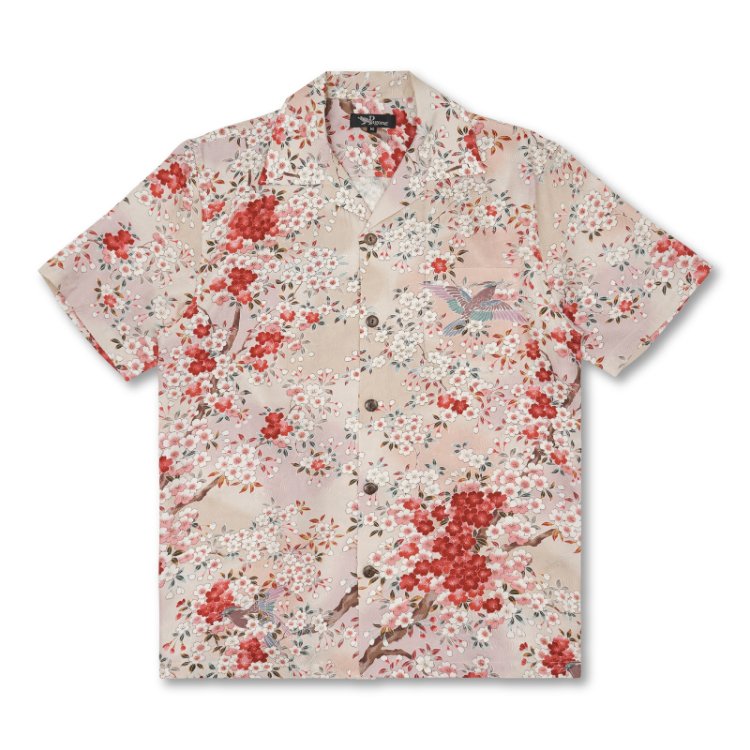
Color / Pink Size Chart
Japanese name/ Sakura
-About-
Sakura, or cherry blossoms, are Japan’s national flower in the hearts of the people. Every spring, throngs of Japanese people and visitors make efforts to see this well-loved flower, a tradition known as “hanami”, a flower-viewing and picnic event to enjoy the blossoms.
Widely celebrated in Japanese literature, poetry, and art, sakura carry layered meanings. For example, because they bloom briefly, the blossoms are often seen as a metaphor for the ephemeral beauty of living. The brilliant blooming season is powerful, glorious, and intoxicating, but short-lived, a visual reminder that our lives, too, are fleeting.
The joyful tradition of hanami is an old and ongoing tradition, and can be traced back centuries in Japanese culture. The eighth century chronicle Nihon Shoki records hanami festivals being held as early as the third century AD.
The style of this painting is from the Maruyama school of the Edo era (1603-1868).
・Currency : US Dollar (USD). ・100% Silk (Custom-woven Jacquard)
・Made in Japan
・Classic-fit Aloha shirt
・Coconut buttons
・Dry-clean
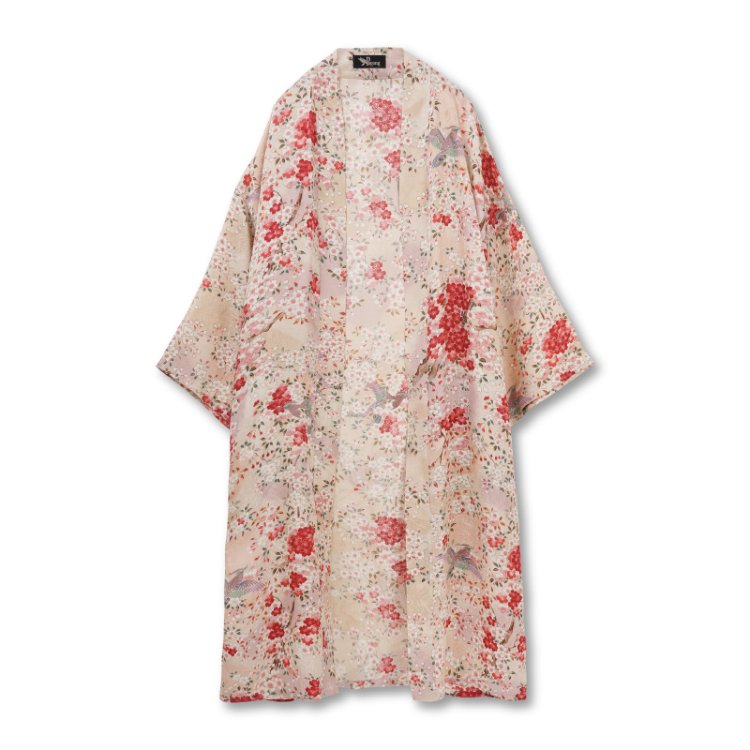
Color / Pink Care Instruction
Japanese name/さくら (Sakura)
-About-
Sakura, or cherry blossoms, are Japan’s national flower in the hearts of the people. Every spring, throngs of Japanese people and visitors make efforts to see this well-loved flower, a tradition known as “hanami”, a flower-viewing and picnic event to enjoy the blossoms.
Widely celebrated in Japanese literature, poetry, and art, sakura carry layered meanings. For example, because they bloom briefly, the blossoms are often seen as a metaphor for the ephemeral beauty of living. The brilliant blooming season is powerful, glorious, and intoxicating, but short-lived, a visual reminder that our lives, too, are fleeting.
The joyful tradition of hanami is an old and ongoing tradition, and can be traced back centuries in Japanese culture. The eighth century chronicle Nihon Shoki records hanami festivals being held as early as the third century AD.
The style of this painting is from the Maruyama school of the Edo era (1603-1868).
・ 100% Silk
・One-Size-Fits-All
・Made in Japan
・Dry-wash
・Currency : US Dollar (USD)
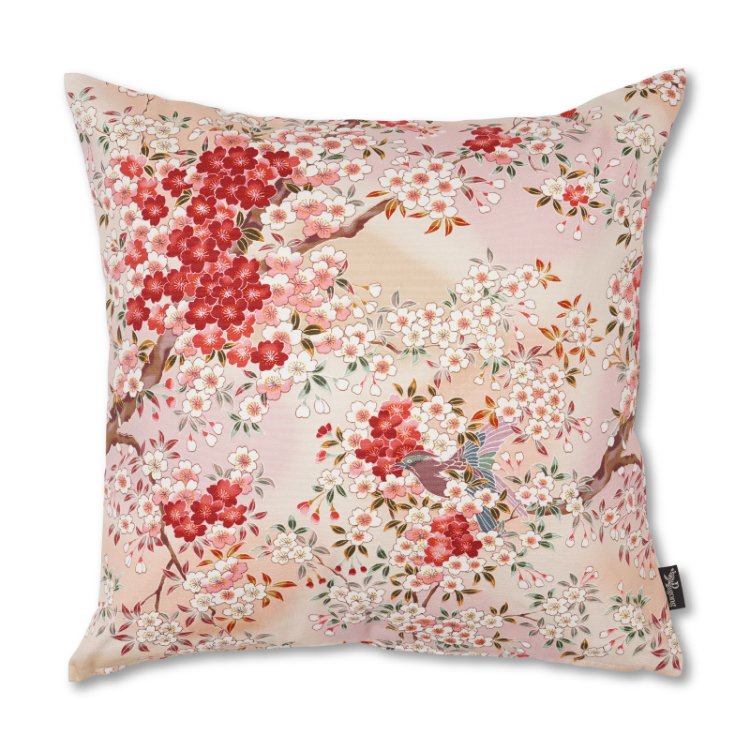
Color / Pink Care Instruction
Japanese name/さくら (Sakura)
-About-
Sakura, or cherry blossoms, are Japan’s national flower in the hearts of the people. Every spring, throngs of Japanese people and visitors make efforts to see this well-loved flower, a tradition known as “hanami”, a flower-viewing and picnic event to enjoy the blossoms.
Widely celebrated in Japanese literature, poetry, and art, sakura carry layered meanings. For example, because they bloom briefly, the blossoms are often seen as a metaphor for the ephemeral beauty of living. The brilliant blooming season is powerful, glorious, and intoxicating, but short-lived, a visual reminder that our lives, too, are fleeting.
The joyful tradition of hanami is an old and ongoing tradition, and can be traced back centuries in Japanese culture. The eighth century chronicle Nihon Shoki records hanami festivals being held as early as the third century AD.
The style of this painting is from the Maruyama school of the Edo era (1603-1868).
・Currency : US Dollar (USD)
・100% Premium Cotton
・Made in Japan
・Size: 17.7 x 17.7 (inches)
・Please note : Inner cushion is not included.
・Currency : US Dollar (USD)
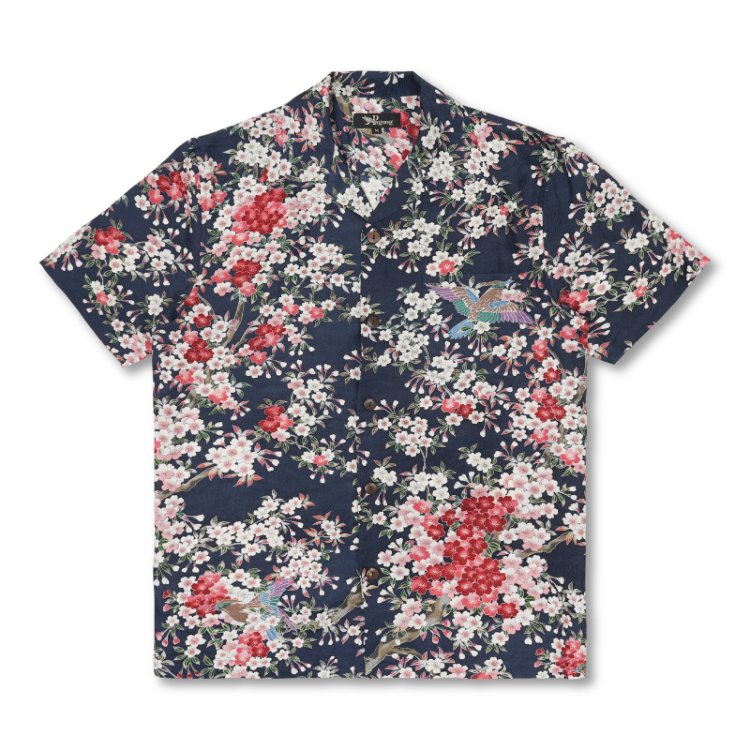
Color / Navy Size Chart
Japanese name/ Sakura
-About-
Sakura, or cherry blossoms, are Japan’s national flower in the hearts of the people. Every spring, throngs of Japanese people and visitors make efforts to see this well-loved flower, a tradition known as “hanami”, a flower-viewing and picnic event to enjoy the blossoms.
Widely celebrated in Japanese literature, poetry, and art, sakura carry layered meanings. For example, because they bloom briefly, the blossoms are often seen as a metaphor for the ephemeral beauty of living. The brilliant blooming season is powerful, glorious, and intoxicating, but short-lived, a visual reminder that our lives, too, are fleeting.
The joyful tradition of hanami is an old and ongoing tradition, and can be traced back centuries in Japanese culture. The eighth century chronicle Nihon Shoki records hanami festivals being held as early as the third century AD.
The style of this painting is from the Maruyama school of the Edo era (1603-1868).
・Currency : US Dollar (USD). ・100% Silk (Custom-woven Jacquard)
・Made in Japan
・Classic-fit Aloha shirt
・Coconut buttons
・Dry-clean
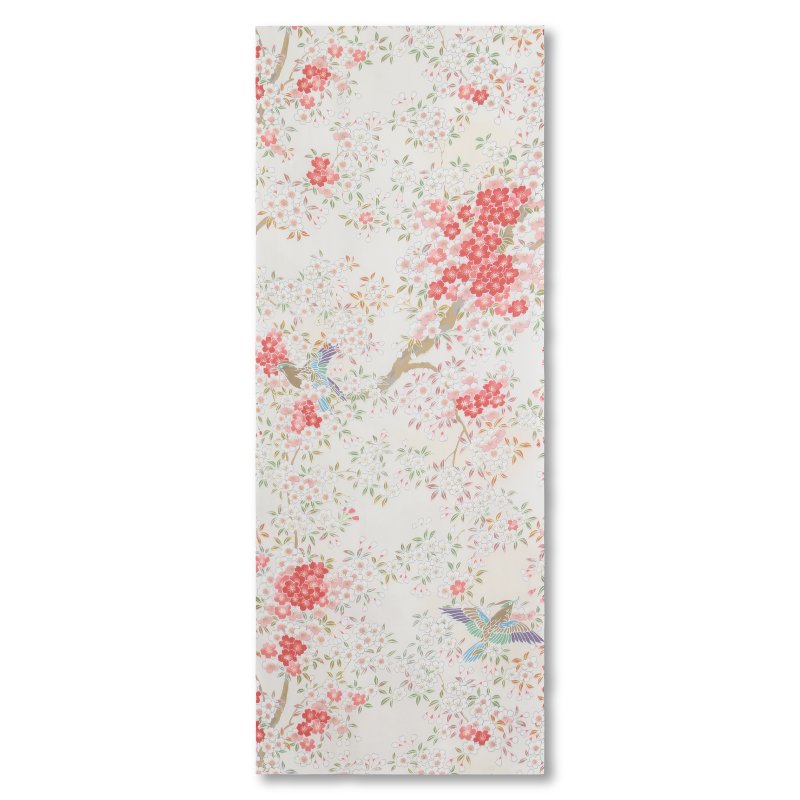
Japanese name/さくら
-About-
Sakura, or cherry blossoms, are Japan’s national flower in the hearts of the people. Every spring, throngs of Japanese people and visitors make efforts to see this well-loved flower, a tradition known as “hanami”, a flower-viewing and picnic event to enjoy the blossoms.Widely celebrated in Japanese literature, poetry, and art, sakura carry layered meanings. For example, because they bloom briefly, the blossoms are often seen as a metaphor for the ephemeral beauty of living. The brilliant blooming season is powerful, glorious, and intoxicating, but short-lived, a visual reminder that our lives, too, are fleeting.The joyful tradition of hanami is an old and ongoing tradition, and can be traced back centuries in Japanese culture. The eighth century chronicle Nihon Shoki records hanami festivals being held as early as the third century AD.The style of this painting is from the Maruyama school of the Edo era (1603-1868).
・100% Cotton
・35 x 14 inches
・Dyeing method-Kyo-Yuzen
・Wash separately
・Do not soak, line-dry.
・Made in Japan
・Currency : US Dollar (USD)
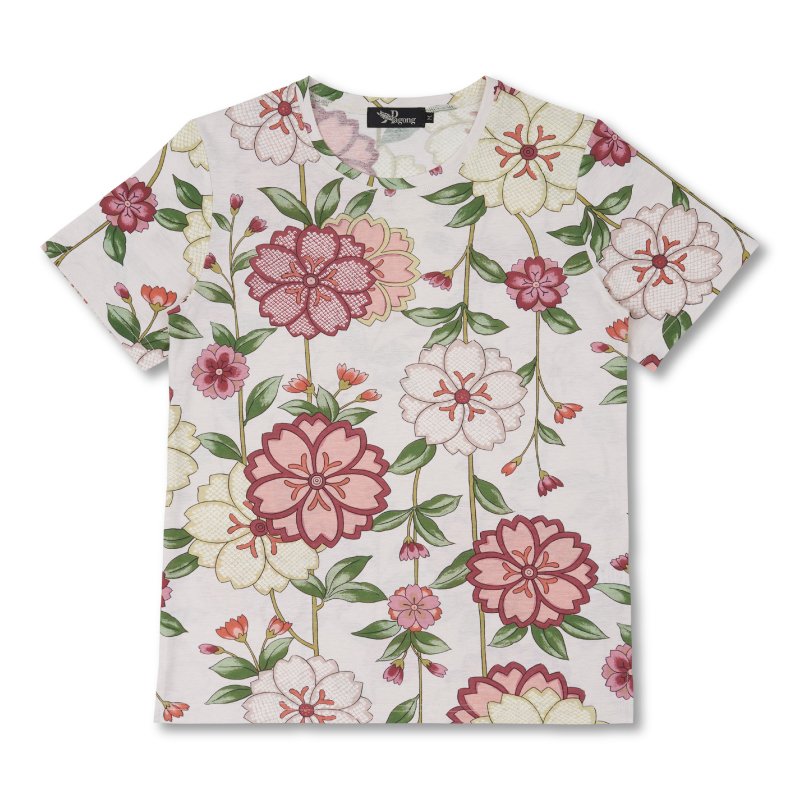
Color / Water Pink and Multi-color Care Instruction
Japanese name / ぼたんざくら Botanzakura
・100% Premium Cotton
・Made in Japan
・Hand-wash
・Hang to dry
・Currency : US Dollar (USD)
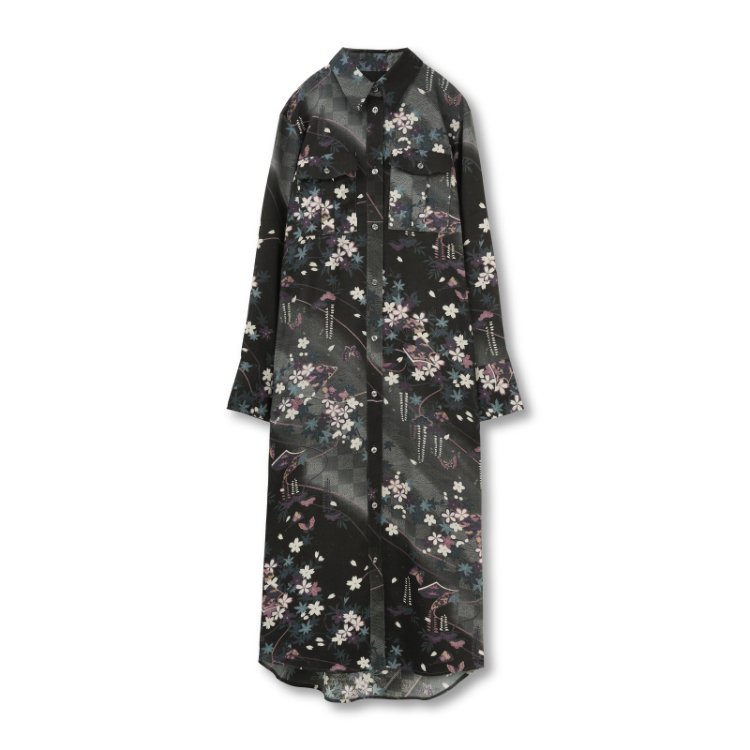
Color /Dark Purple and Multi-color Care Instruction
Japanese name/桜ぼかし Sakura Bokashi
-About-
Sakura, or cherry blossoms, are Japan’s national flower in the hearts of the people. Every spring, throngs of Japanese people and visitors make efforts to see this well-loved flower, a tradition known as “hanami”, a flower-viewing and picnic event to enjoy the blossoms.
Widely celebrated in Japanese literature, poetry, and art, sakura carry layered meanings. For example, because they bloom briefly, the blossoms are often seen as a metaphor for the ephemeral beauty of living. The brilliant blooming season is powerful, glorious, and intoxicating, but short-lived, a visual reminder that our lives, too, are fleeting.
The joyful tradition of hanami is an old and ongoing tradition, and can be traced back centuries in Japanese culture. The eighth century chronicle Nihon Shoki records hanami festivals being held as early as the third century AD.
・Polyester 90% Wool 10%
・Made in Japan
・Dry-clean
・Model (5 feet, 3 inches)
・Currency : US Dollar (USD)

Color/ Beige Care Instruction
Japanese name/ 桜ぼかし (Sakurabokashi)
-About-
Sakura, or cherry blossoms, are Japan’s national flower in the hearts of the people. Every spring, throngs of Japanese people and visitors make efforts to see this well-loved flower, a tradition known as “hanami”, a flower-viewing and picnic event to enjoy the blossoms.
Widely celebrated in Japanese literature, poetry, and art, sakura carry layered meanings. For example, because they bloom briefly, the blossoms are often seen as a metaphor for the ephemeral beauty of living. The brilliant blooming season is powerful, glorious, and intoxicating, but short-lived, a visual reminder that our lives, too, are fleeting.
The joyful tradition of hanami is an old and ongoing tradition, and can be traced back centuries in Japanese culture. The eighth century chronicle Nihon Shoki records hanami festivals being held as early as the third century AD.
・Made in Kyoto
・Kyo-Yuzen dye method
・Hand-wash
・Currency : US Dollar (USD)

Color / Grey and Multi-color Care Instruction
Japanese name/ さくら (Sakura)
Sakura, or cherry blossoms, are Japan’s national flower in the hearts of the people. Every spring, throngs of Japanese people and visitors make efforts to see this well-loved flower, a tradition known as “hanami”, a flower-viewing and picnic event to enjoy the blossoms!
This joyful tradition of hanami is an old and ongoing tradition, and can be traced back centuries in Japanese culture. The eighth century chronicle Nihon Shoki records hanami festivals being held as early as the third century AD.
Sakura can be seen widely celebrated in Japanese literature, poetry, and art as well, and carry multi-layered meanings. Since their brilliant blooming season is powerful, glorious, and intoxicating, but short-lived, they are often seen as a metaphor for the ephemeral beauty of living, a visual reminder that our lives, too, are fleeting.
・Polyester 100%
・Made in Japan
・Hand-wash
Currency : US Dollar (USD)

Color / Blue Size Chart Care Instruction
Japanese name/ 桜ぼかし (Sakurabokashi)
-About-
Sakura, or cherry blossoms, are Japan’s national flower in the hearts of the people. Every spring, throngs of Japanese people and visitors make efforts to see this well-loved flower, a tradition known as “hanami”, a flower-viewing and picnic event to enjoy the blossoms.
Widely celebrated in Japanese literature, poetry, and art, sakura carry layered meanings. For example, because they bloom briefly, the blossoms are often seen as a metaphor for the ephemeral beauty of living. The brilliant blooming season is powerful, glorious, and intoxicating, but short-lived, a visual reminder that our lives, too, are fleeting.
The joyful tradition of hanami is an old and ongoing tradition, and can be traced back centuries in Japanese culture. The eighth century chronicle Nihon Shoki records hanami festivals being held as early as the third century AD.
・Currency : US Dollar (USD)
・100% Polyester (Quick Dry)
・Made in Japan
・Classic-style Aloha shirt
・Coconut buttons
・Hand-wash
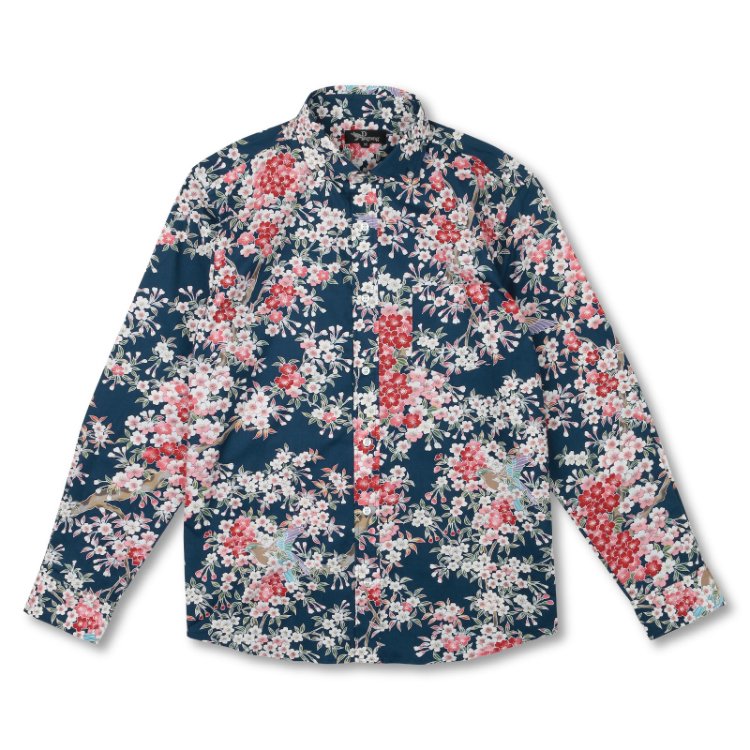
Color / Navy and Multi-color Care Instruction
Japanese name/ さくら ( Sakura )
・98% Cotton 2% Polyurethane
・Made in Japan
・Dye technique-Kyo-Yuzen
・Urban style
・Hand-wash
・Model (6 feet)
・Currency : US Dollar (USD)
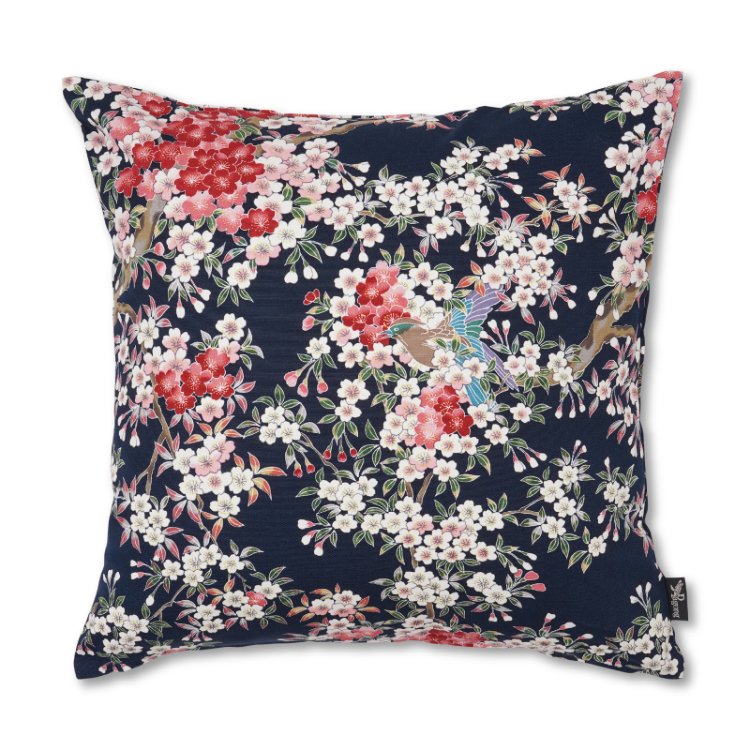
Color / Navy Care Instruction
Japanese name/さくら (Sakura)
-About-
Sakura, or cherry blossoms, are Japan’s national flower in the hearts of the people. Every spring, throngs of Japanese people and visitors make efforts to see this well-loved flower, a tradition known as “hanami”, a flower-viewing and picnic event to enjoy the blossoms.
Widely celebrated in Japanese literature, poetry, and art, sakura carry layered meanings. For example, because they bloom briefly, the blossoms are often seen as a metaphor for the ephemeral beauty of living. The brilliant blooming season is powerful, glorious, and intoxicating, but short-lived, a visual reminder that our lives, too, are fleeting.
The joyful tradition of hanami is an old and ongoing tradition, and can be traced back centuries in Japanese culture. The eighth century chronicle Nihon Shoki records hanami festivals being held as early as the third century AD.
The style of this painting is from the Maruyama school of the Edo era (1603-1868).
・Currency : US Dollar (USD)
・100% Premium Cotton
・Made in Japan
・Size: 17.7 x 17.7 (inches)
・Please note : Inner cushion is not included.
・Currency : US Dollar (USD)