
Puppy with Train
子犬と汽車 - Koinu to Kisha
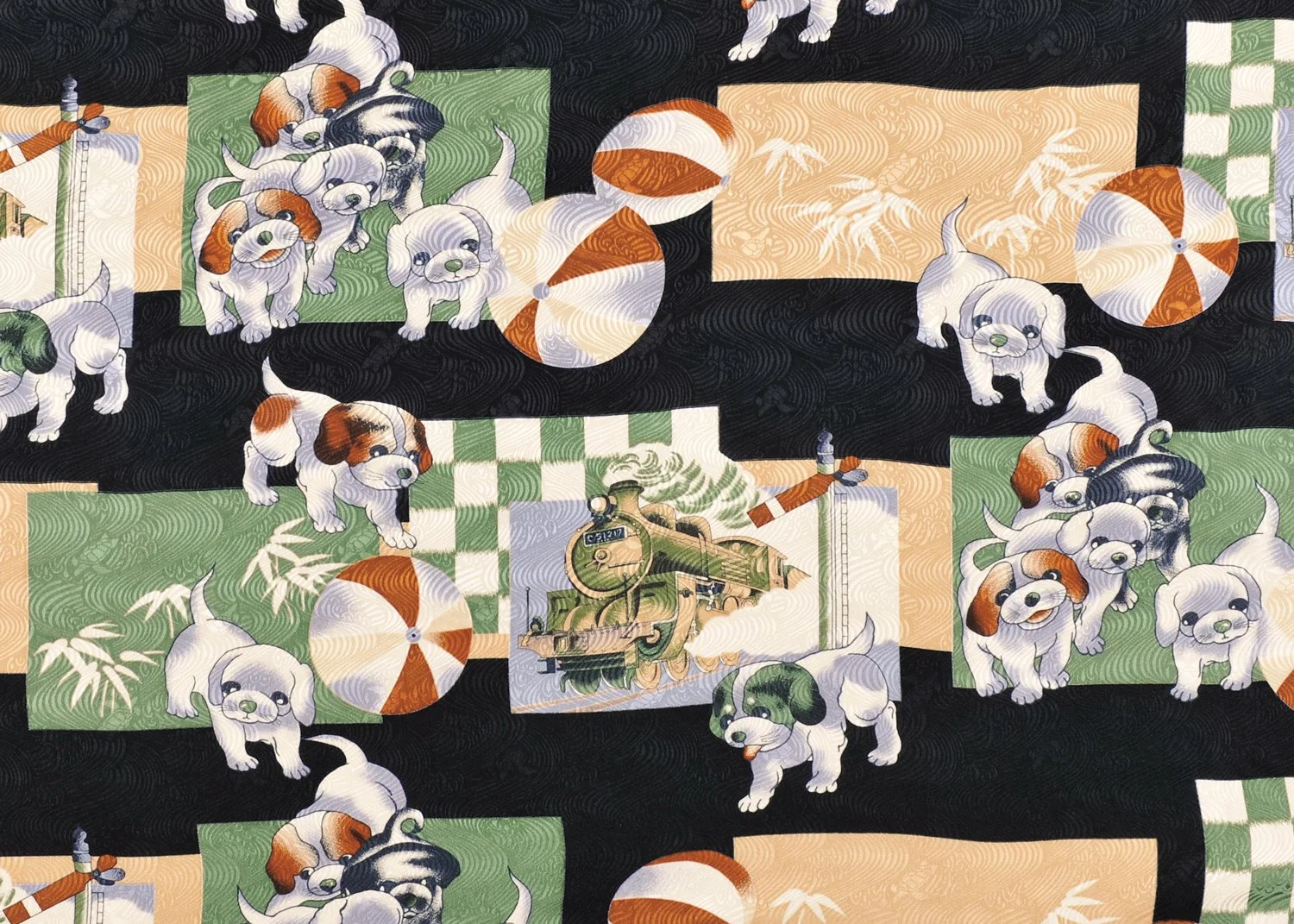
The Story of the Puppy with Train Pattern
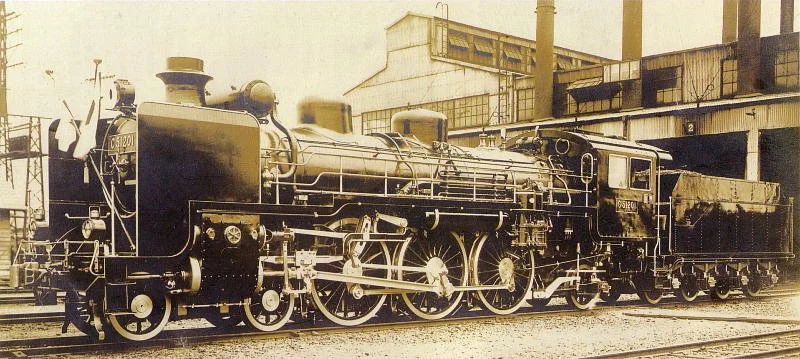
From Wikipedia: File:JGR C51 Steam Locomotive.jpg
Alongside the train, lively puppies are depicted. In Japan, dogs have long been regarded as auspicious animals associated with safe childbirth and the healthy growth of children, due to their vitality and ability to bear many offspring. As such, they have frequently appeared in designs for both women’s and children’s garments, symbolizing prosperity and protection.
At first glance, this pattern may simply appear to depict dogs and a train, but it carries deeper meanings. The image of a dog playing with a ball draws inspiration from the traditional motif of the “embroidered ball,” symbolizing vitality and the wish for a child to grow strong and succeed in life.
Additionally, the combination of dog and bamboo motifs subtly forms a visual play on the character for “laughter.” This idea originates from hanjie, a type of riddle game popular during the Edo period. It conveys a heartfelt wish that children will grow up cheerful, resilient, and full of life—like young bamboo that grows straight and strong.
While vividly capturing the spirit of its time, this design is layered with auspicious symbols, expressing enduring hopes for the healthy growth and bright future of children. Across generations, the feelings of parents remain unchanged, and this pattern beautifully embodies those timeless wishes.
In the early Showa period, boys’ kimono patterns were known as bonchi-gara, characterized by modern designs that reflected contemporary trends, popular culture, and even Western influences of the time. This particular pattern features a steam locomotive affectionately nicknamed “Shigoichi,” which served as a main engine on major railway lines from the late Taisho period to the early Showa era. Trains like this symbolized progress and excitement, capturing the imagination of children as dreamlike vehicles of a new age.