
Raijin and Fuijin
波に風神雷神 - Nami ni fūshinraishin
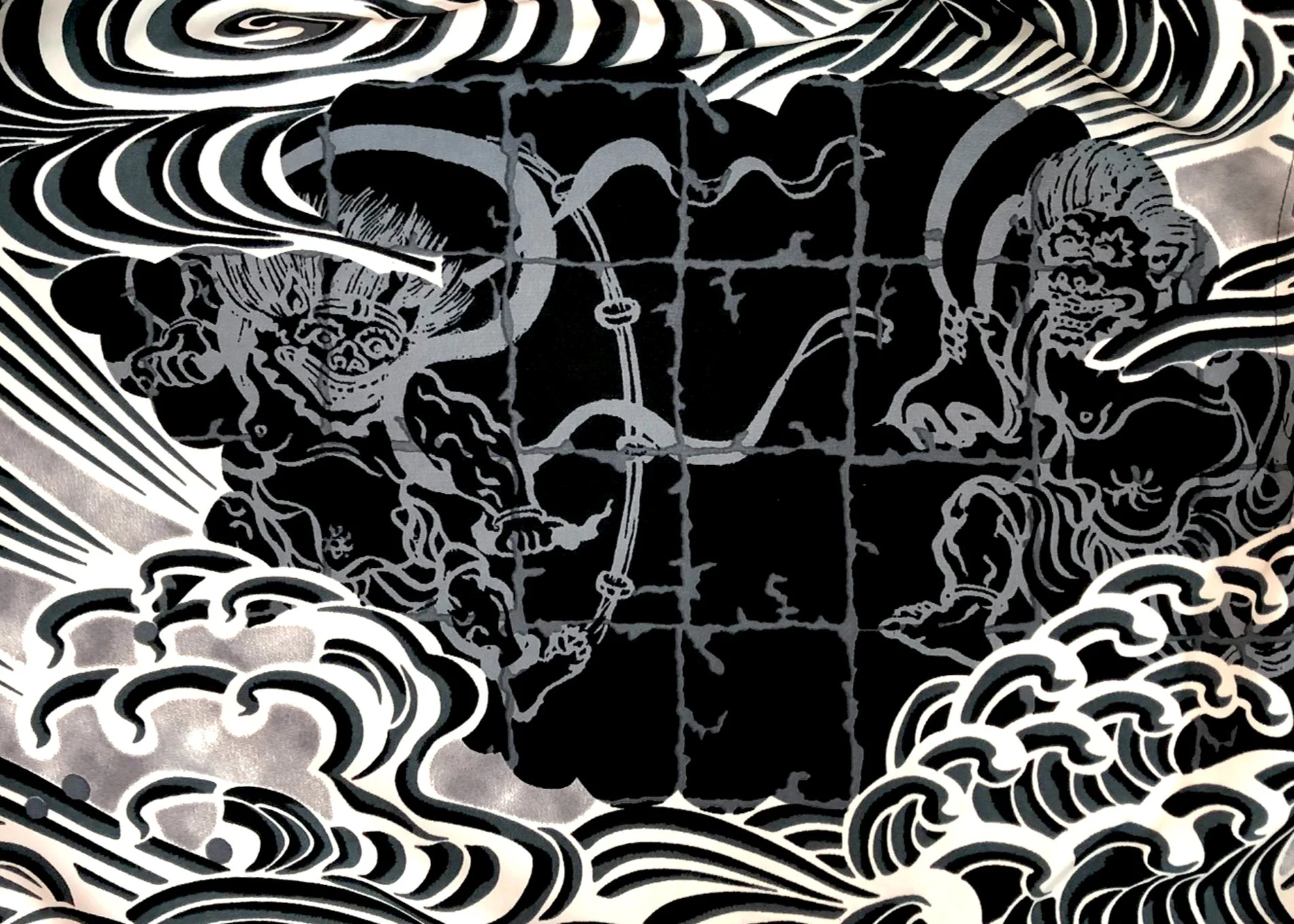
The Story of the Raijin and Fuijin Pattern
This pattern is a collaboration between a design from Pagong’s archive and the iconic motif of the Wind and Thunder Gods Screen, a masterpiece of the Rinpa school.
The Wind and Thunder Gods Screen was first painted in the early Edo period by Tawaraya Sōtatsu, a founding figure of the Rinpa tradition. It was later reinterpreted in the mid-Edo period by Ogata Kōrin, from whom the name “Rinpa” is derived. In the late Edo period, Sakai Hōitsu—considered the founder of the Edo Rinpa school—created his own version inspired by Kōrin’s work, which was further echoed by his disciple Suzuki Kiitsu.
This enduring motif, passed down through generations of Rinpa artists, has been reimagined in Pagong’s unique style. Based on the Wind and Thunder Gods Screen by Ogata Kōrin (with permission from the Tokyo National Museum), Pagong’s staff created their own interpretation of the wind and thunder deities. These figures are paired with Pagong’s popular “Wave” pattern, inspired by the wave imagery often seen in Rinpa folding screens.

From Wikipedia Korin Fujin Raijin.jpg
The wind and thunder gods themselves were originally introduced to Japan from China along with Buddhism. Sōtatsu is said to have modeled his depiction on the statues of these deities at Sanjūsangen-dō in Kyoto. The Wind God carries a large sack from which he releases the winds, while the Thunder God beats drums that produce thunder and lightning.
Wind brings both life-giving rain and destructive storms, while thunder—often referred to as the “voice of the gods”—has long inspired both reverence and awe. By venerating these powerful natural forces, people sought to align themselves with their energy and protection.
Pagong’s wave pattern is based on a design of waves painted on a gold-leaf folding screen. While waves, endlessly rising and falling, traditionally symbolize continuity and good fortune, this design also emphasizes their sculptural beauty. The seams of the gold leaf are incorporated into the pattern, adding visual interest and depth. The result is a design that captures both the bold strength and dynamic movement of waves, along with the refined aesthetic of a gold screen.
By combining the blessings of the wind and thunder gods with the enduring symbolism of waves, this pattern expresses a wish for a life filled with lasting happiness and prosperity.
The Rinpa school, beginning with figures such as Hon'ami Kōetsu and Tawaraya Sōtatsu, and later represented by artists like Ogata Kōrin and Sakai Hōitsu, emerged in Kyoto during the late Momoyama period. It flourished through the cultural and economic vitality of wealthy townspeople with a spirit of innovation.
Rinpa was not limited to painting—it extended into various forms of decorative art, including textiles, lacquerware, ceramics, folding screens, and fans, deeply influencing everyday life. Unlike traditional artistic lineages, Rinpa artists were not bound by blood relations or a single period. Instead, they were connected through admiration and reinterpretation of earlier masters, forming a lineage that transcends time.