
Rising Wave
波頭 - Hato
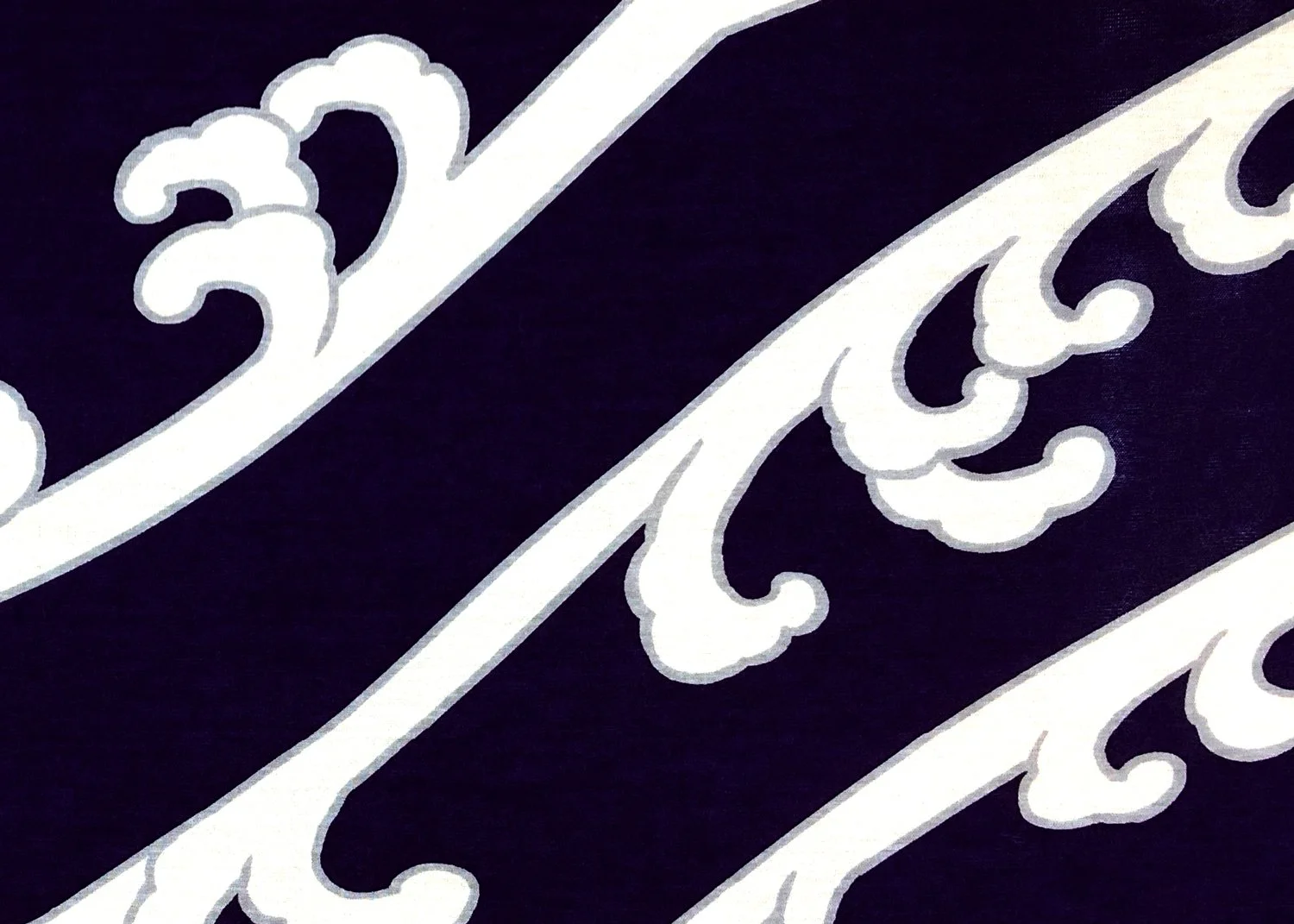
The Story of the Rising Wave Pattern
In Japan, an island nation surrounded by the sea, wave motifs have been beloved since ancient times. The ever-changing movement of waves—their constant ebb and flow—has long been admired for its beauty and expressed through a wide variety of patterns. Among them, the “wave crest pattern,” also known as the “standing wave” or “rough wave” pattern, captures the dynamic and powerful form of rising waves.
Such wave motifs were especially favored by warlords of the Sengoku period, as the motion of advancing and retreating waves was seen as reminiscent of battlefield strategy. They were often incorporated into family crests, military banners, and armor. Associated with sea and water deities, these patterns were believed to bring good fortune in battle, as well as wealth and prosperity. Waves depicted in a fierce, surging form were also thought to possess the power to sweep away misfortune.
Other well-known wave patterns include Seigaiha and Namimaru, whose continuous, repeating designs symbolize eternity, longevity, and the unbroken flow of life.
This particular “Wave Crest” pattern, with its bold and simplified depiction of waves, conveys a strong sense of movement and energy. The flowing, uninterrupted lines evoke a feeling of endless continuity—an image of enduring strength and timeless vitality.
Wearing this pattern is said to embody the spirit and power of the waves, as if carrying their energy with you into the future.