
Rooster in the Snow
雪中雄鶏図 - Setchū ondori-zu
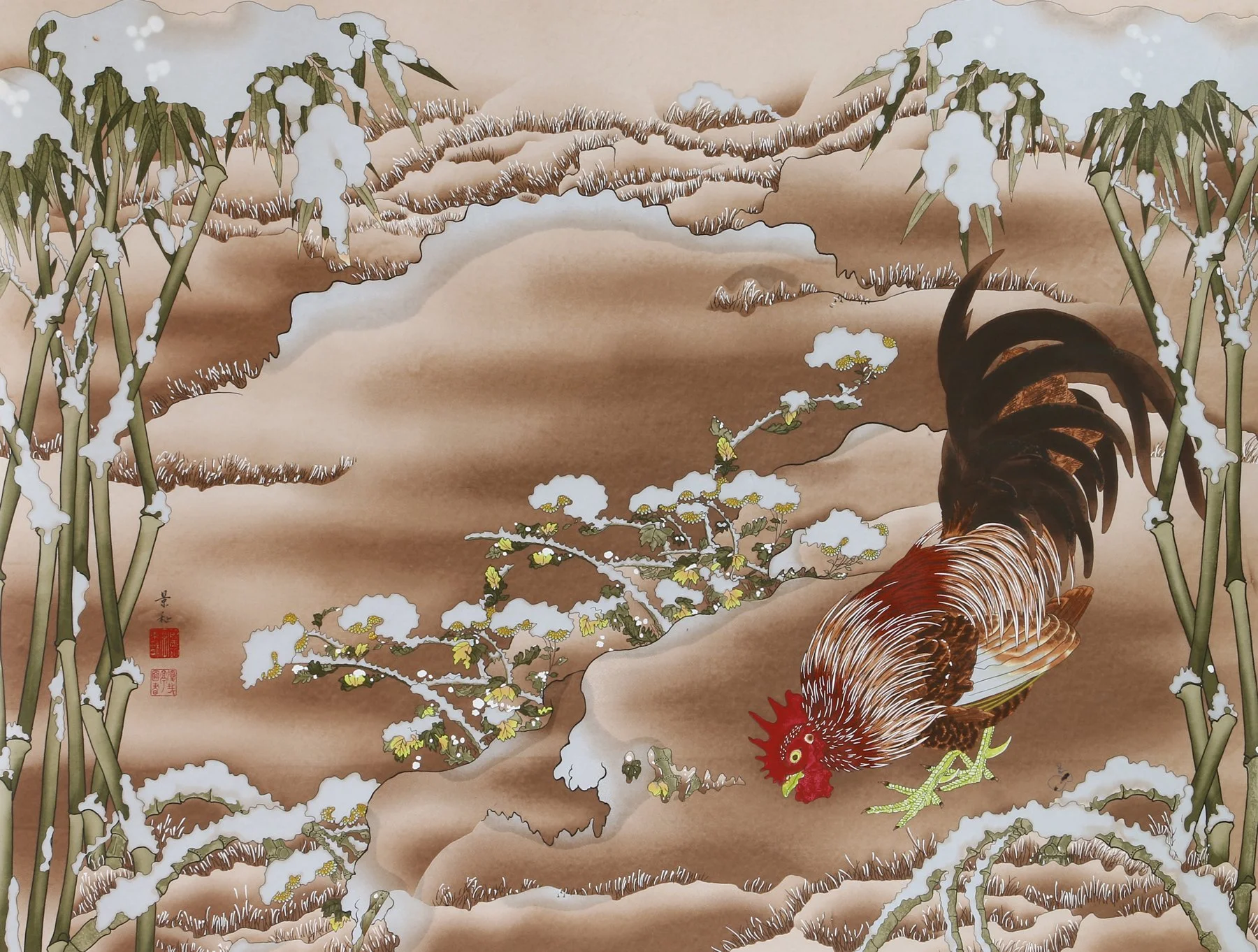
The Story of the Rooster in the Snow Pattern
Ito Jakuchu (1716–1800) was a painter active in Kyoto during the mid-Edo period.
Born as the eldest son of the Masuya greengrocer in Nishikikoji, he inherited the family business at the age of 23 and took the name Ito Genzaemon IV. At 40, he passed the business to his younger brother and retired, dedicating his life entirely to painting.
Jakuchu first studied under Kano school painters and later explored classical ink painting traditions, but eventually became deeply devoted to direct observation from life. It is said that he kept dozens of chickens in his garden and spent years carefully studying and sketching them in detail. Through this practice, he became widely known as the “painter of chickens.”
“Rooster in the Snow” is considered one of his early works, created before he retired from business and before adopting the name Jakuchu, signed under his earlier name “Keiwa.”
A rooster is shown pecking for food in a snowy landscape. In traditional thought, the chicken has long been regarded as a symbol of virtue and moral strength, embodying five essential qualities:
— Courage in facing challenges
— Intelligence and awareness
— Responsibility and trustworthiness
— Compassion in sharing
— Discipline and consistency in daily rhythm
These qualities were used in classical teachings to describe an ideal character, reflecting both strength and integrity.
Surrounding the rooster are bamboo and chrysanthemums, motifs associated with noble character. Bamboo represents resilience and upright strength, remaining green through harsh conditions. Chrysanthemums bloom in autumn and winter, symbolizing dignity and refinement even in adversity.
In this work, however, the bamboo does not grow in a perfectly straight line. Instead, it bends and breaks at the joints, rising in unexpected zigzag forms. This deliberate departure from realism creates a surreal and poetic atmosphere unique to Jakuchu’s vision.
The original painting “Rooster in the Snow” is housed in the Hosomi Museum in Kyoto. With the museum’s cooperation, it has been recreated using Yuzen dyeing. The soft depiction of snow and the meticulous rendering of the rooster’s feathers reveal the early foundations of Jakuchu’s later masterpiece, Colorful Realm of Living Beings.