
Sailor
水兵さん - Suihei san
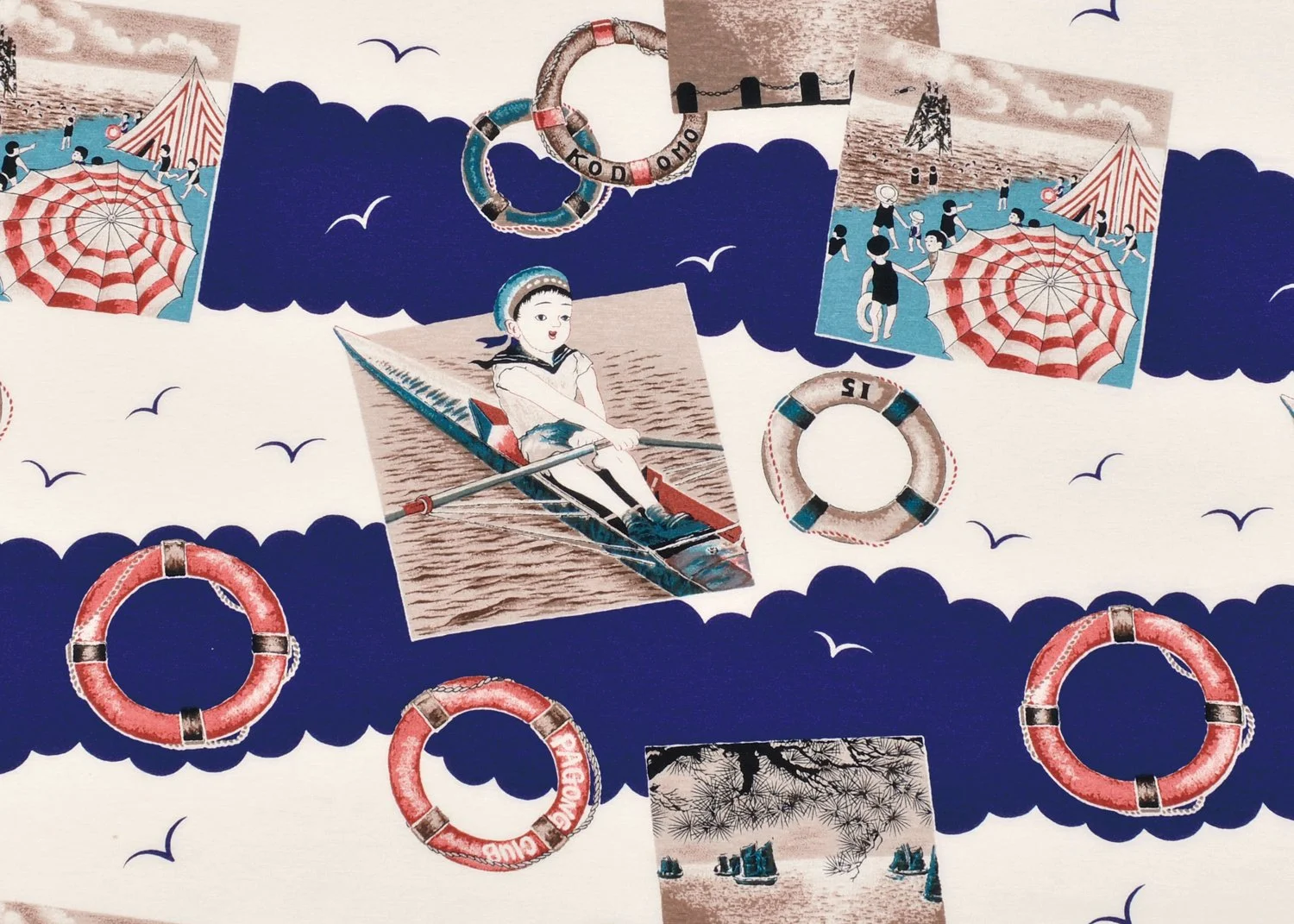
The Story of the Sailor Pattern
This pattern was created during the Taisho era for boys’ kimonos. It was produced using a technique known as roller etching print, which flourished as a major industry in Osaka at the time. This period saw the rise of designs for everyday wear among ordinary people, characterized by bold, graphic appeal and influenced by contemporary trends, including elements of Western culture.
Following the Meiji era—a time focused on strengthening the nation—the Taishō era brought relative stability and a growing interest in cultural life. Children, seen as the future of society, gained increasing importance. During this time, children’s literature and picture books flourished, and exhibitions dedicated to children began to appear. This pattern was created within that context, specifically for young boys.
The design depicts a lively seaside scene, with people enjoying swimming at the beach. In the Kansai region, areas such as Sakai and the coast stretching from Ashiya to Suma were being developed as resort destinations for the affluent, and seaside leisure gradually became popular as a summer activity.
Swimming for recreation is a relatively modern custom. In earlier times, people would visit the water’s edge during occasions such as the Jōshi Festival to perform purification rituals—washing away impurities and misfortune—and to gather shellfish, rather than for play.
Notably, the boy depicted in the boat is dressed in modern Western-style clothing, reflecting the lifestyle of wealthy families at the time. The design offers a fascinating glimpse into the aspirations of ordinary people and captures the spirit of a society transitioning into a new era.