
Sanbaso
三番叟
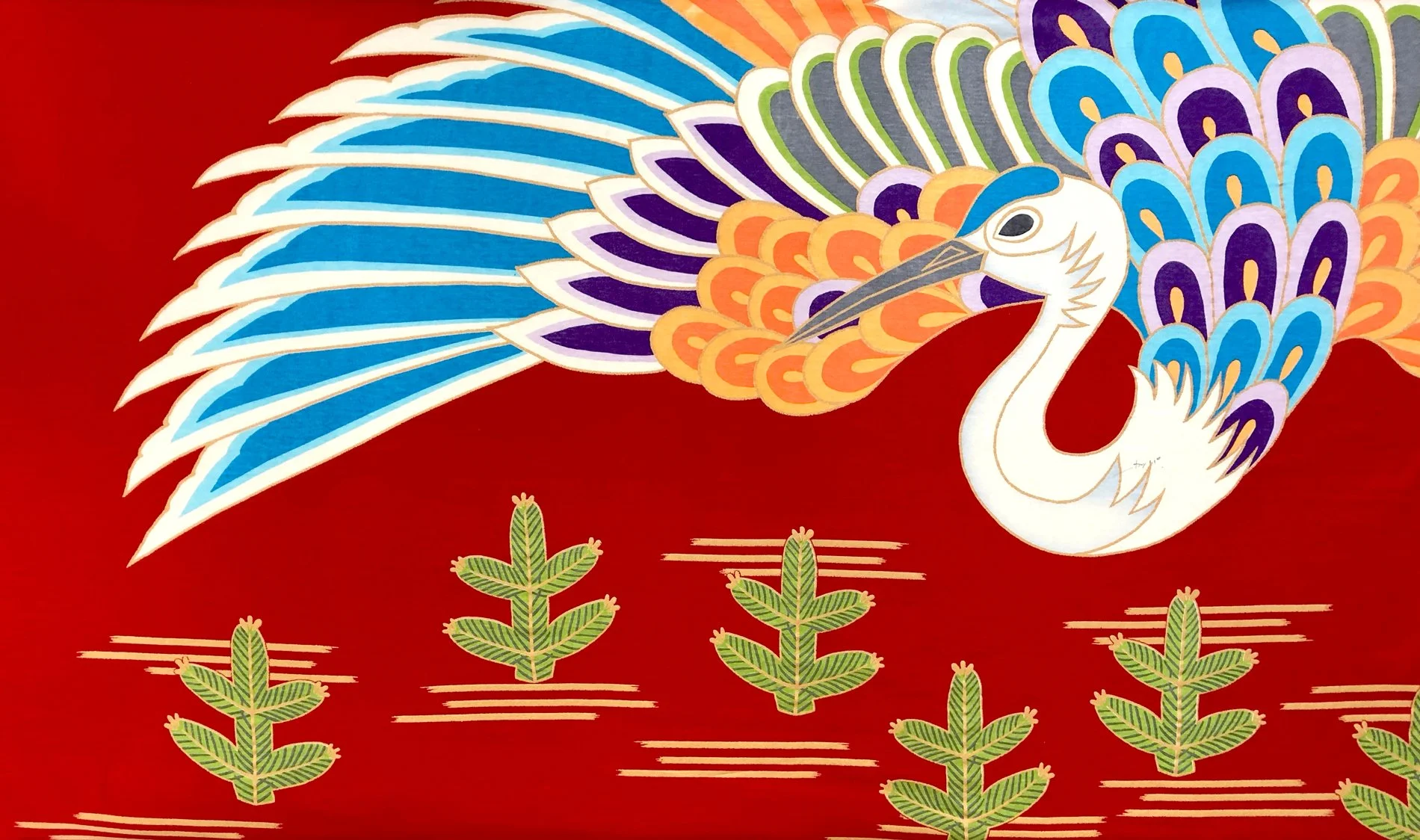
The Story of the Sanbaso Pattern
Sanbasō is a ceremonial performance that celebrates peace and abundant harvests, traditionally performed on auspicious occasions such as New Year’s Day, roof-raising ceremonies, and theater openings.
Its origins are said to lie in Okina Sarugaku, a form of performance that predates the establishment of Noh theater. Today, it is performed within the Noh play Okina, and has also been adapted into Kabuki. The name Sanbasō is believed to come from the fact that it is the third character to appear and dance in the performance, following “Senzai” and “Okina.” There is also a tradition that these three figures represent the deities of Sumiyoshi Shrine.
The costume of Sanbasō is characterized by a large crane depicted on the back, and the expansive wings create a powerful and dynamic visual impression.
In Japan, the crane has long been cherished as a symbol of elegance, gentleness, and noble longevity. Beyond its graceful form, its annual migration across the seas has given it a sacred and auspicious presence in Japanese culture since ancient times.
As a motif, the crane represents good fortune and auspiciousness. When combined with symbols such as the tortoise, pine, bamboo, and plum blossoms, it forms patterns that express joy, dignity, and celebration.
In the Sanbasō design, the crane is depicted together with young pine branches. Young pine (waka-matsu) refers to newly sprouted pine trees and is considered an auspicious symbol of freshness, vitality, and future potential. It has long been used in New Year celebrations as a motif of good fortune.
The pairing of crane and young pine in the Sanbasō costume likely stems from these traditional associations connected to auspicious occasions.
Among kimono motifs, the crane appears in many variations, but this particular design possesses a striking presence that captures the viewer’s attention. The Sanbasō motif conveys not only auspicious meaning, but also a rare balance of elegance and dynamic strength—qualities that seem to exist at opposite ends, yet are harmoniously unified within the design.