
Shades of Sakura
桜ぼかし - Sakura Bokashi
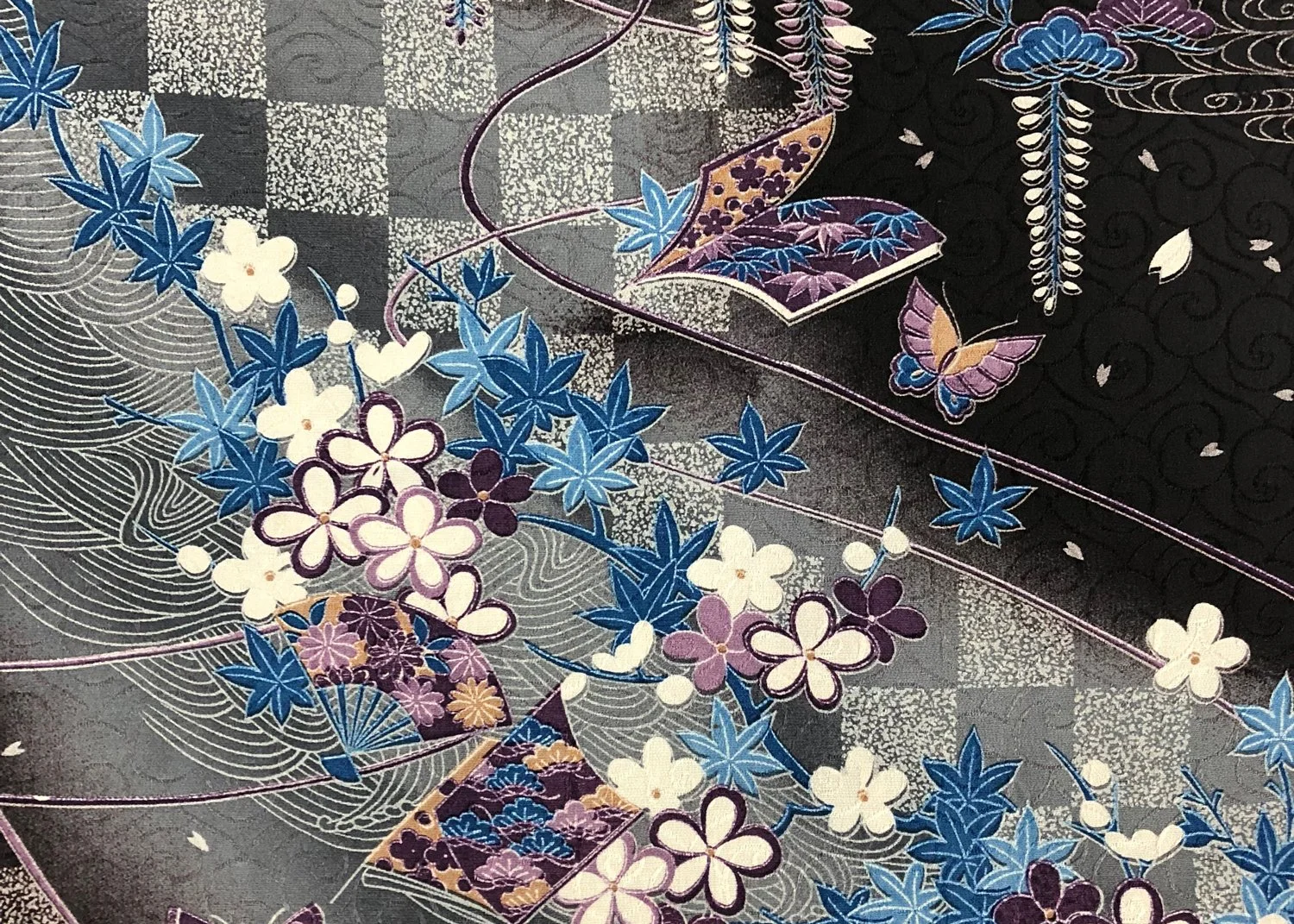
The Story of the Shades of Sakura Pattern
This pattern dates back to the 1970s, a period when strong emphasis was placed on the visual beauty of design. While striking in appearance, it is composed of classical motifs, each carrying its own layered meaning.
At the center of the design is a book, representing a yōkyokubon—a script of Noh theater. Noh was once an essential part of samurai culture during the Edo period and also appeared frequently in women’s kimono designs, symbolizing refinement and literary education.
Butterflies are traditionally associated with the soul and are often seen as beings that move between worlds. In Noh, they appear as symbolic figures bridging the visible and the unseen. The pairing of pine and wisteria is associated with an idealized, serene realm, while cherry blossoms and autumn leaves evoke the changing seasons of the earthly world.
Through these elements, the design can be interpreted as expressing both this world and a more ethereal one. This duality reflects the essence of Noh itself, where reality and the spiritual realm intertwine. The combination of motifs—pine and wisteria suggesting timeless serenity, seasonal flowers representing the passage of time, and butterflies moving between realms—creates a poetic and mysterious composition.
Today, the aesthetic world embodied by Noh continues to be recognized as a profound expression of Japanese beauty, admired both within Japan and around the world.