
The Lion Guardian
獅子 - Shishi
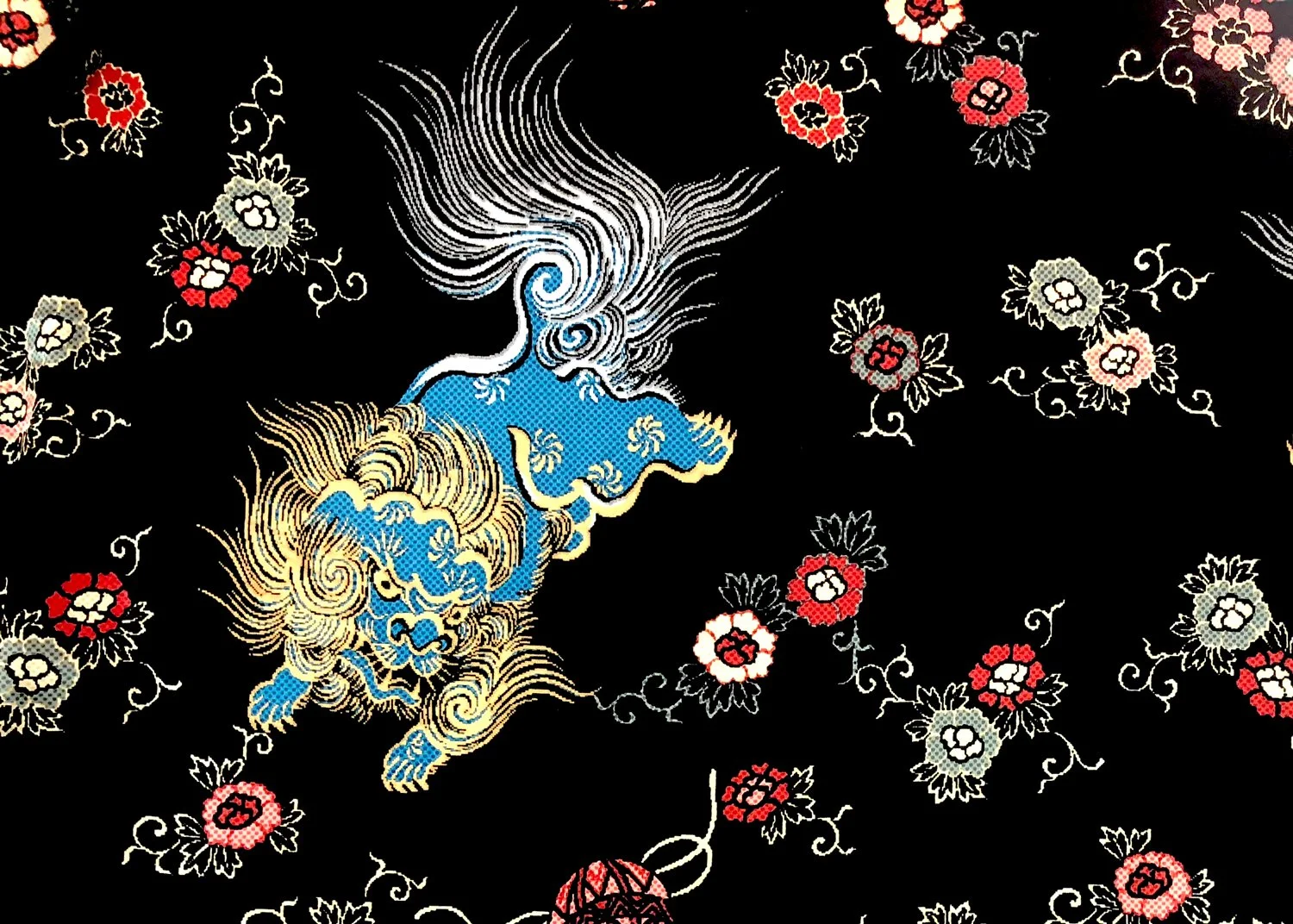
The Story of the The Lion Guardian Pattern
The combination of lion and peony, commonly known as “Karajishi Botan,” originates from the Noh play Shakkyo.
The story tells of Oe no Sadamoto, who, after becoming a monk known as Jakushō Hōshi, encountered a sacred mountain. There, a narrow stone bridge stretched across a deep gorge. As he prepared to cross, a mysterious boy appeared and warned him that the bridge was not meant for humans, hinting instead at a divine realm beyond. After the boy vanished, a miraculous vision unfolded—a lion emerged, praying for peace and dancing joyfully among blooming peonies.
The lion is an imaginary and sacred beast, known as a servant of Manjushri Bodhisattva, who represents wisdom. In Esoteric Buddhism, this deity is revered in ceremonies as a guardian of prosperity and harmony. Through this imagery, Shakkyo expresses a world filled with virtue and auspicious meaning.
As the king of beasts, the lion is paired with the peony, the king of flowers. Together, they form a powerful and refined motif symbolizing strength, dignity, and prosperity. For centuries, this combination has been favored by warriors and feudal lords as a symbol of status and elegance.
There is also a well-known legend that lions test their cubs by casting them into a deep ravine, raising only those strong enough to climb back. Inspired by this idea, Kabuki performances such as Renjishi and Kagamijishi were developed from Shakkyo. The dramatic costumes seen in these dances—featuring flowing manes and fan-shaped headpieces adorned with peony motifs—eventually became iconic visual elements reflected in this design.