
Snow falling on the Banana Leaves
段片身替りに雪持芭蕉文縫箔 - Danpenmigawari ni yukimochi basyou monnuihaku
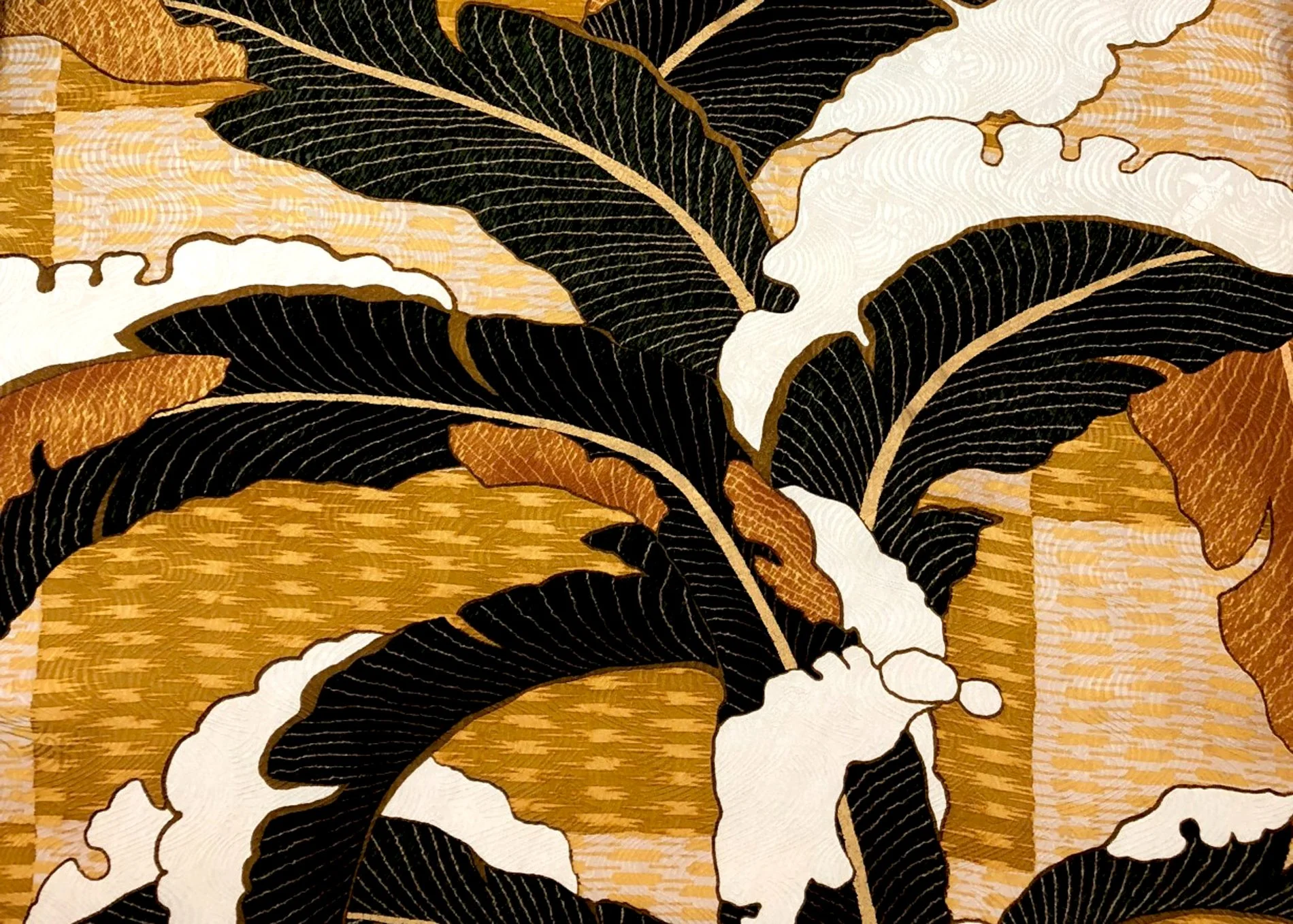
The Story of the Snow falling on Banana Leaves Pattern
In 2020, Pagong participated in a project organized by the Kyoto Municipal Institute of Industrial Technology and Culture, in which the aesthetic world of Noh costumes held by the Hayashibara Museum of Art was reinterpreted for contemporary lifestyles and presented from Kyoto under the concept theme “Momoyama Mode: refined elegance with a dignified grace.”
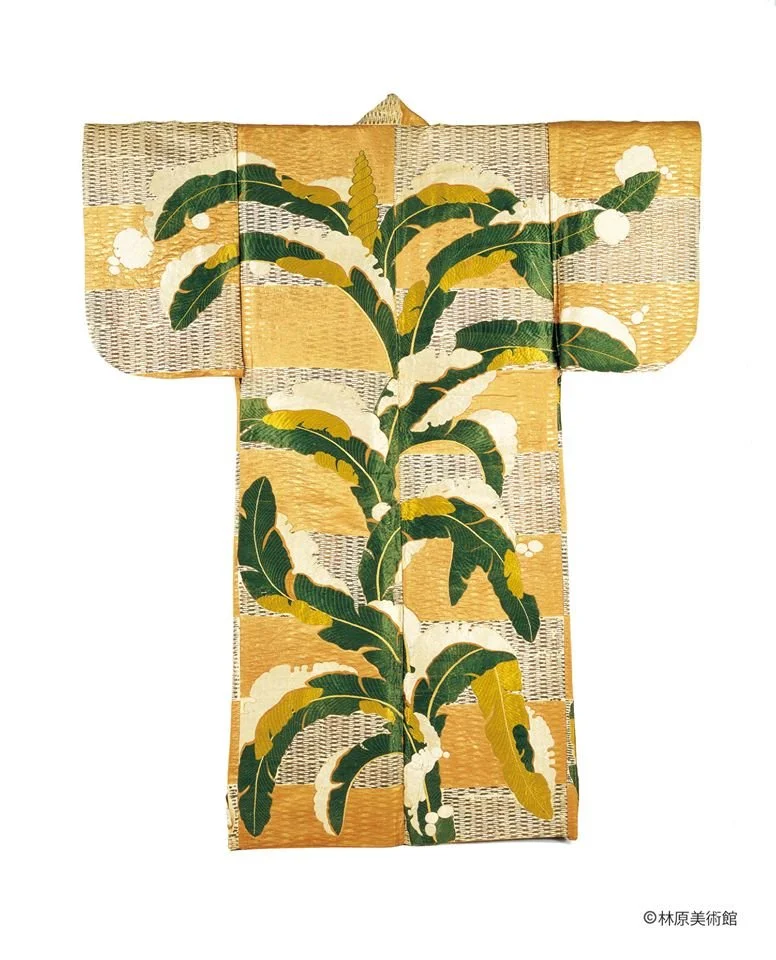
(From the collection of the Hayashibara Museum of Art: "Dankatamigawari ni Yukimochi Basho-mon Fuibiki" Noh costume)
Kyoto during the Momoyama period was a time of great cultural transformation, when foreign influences were actively embraced within an open and expansive atmosphere. This period fostered a distinctive aesthetic sensibility that continues to shape Japanese traditional culture to this day.
From among the Noh costumes preserved in the collection of the Hayashibara Museum of Art—masterpieces that embody the refined sensibilities of this era—Pagong has recreated the design of “Dankata Migawari ni Yukimochi Basho-mon Nuibaku” using Kyoto Yuzen dyeing techniques.
This design portrays an almost miraculous scene: snow accumulating on banana plants in a region where snow would not normally fall. The soft, flexible leaves and branches are shown bearing the weight of snow, capturing a quiet strength that endures pressure without breaking, and a resilient vitality that quietly awaits the arrival of spring.
At the same time, the heavy snowfall itself carries an auspicious meaning. The snow that melts and nourishes the earth is associated with abundant water supply and rich harvests, symbolizing prosperity and agricultural blessing.