
Souka monyo
草花文様
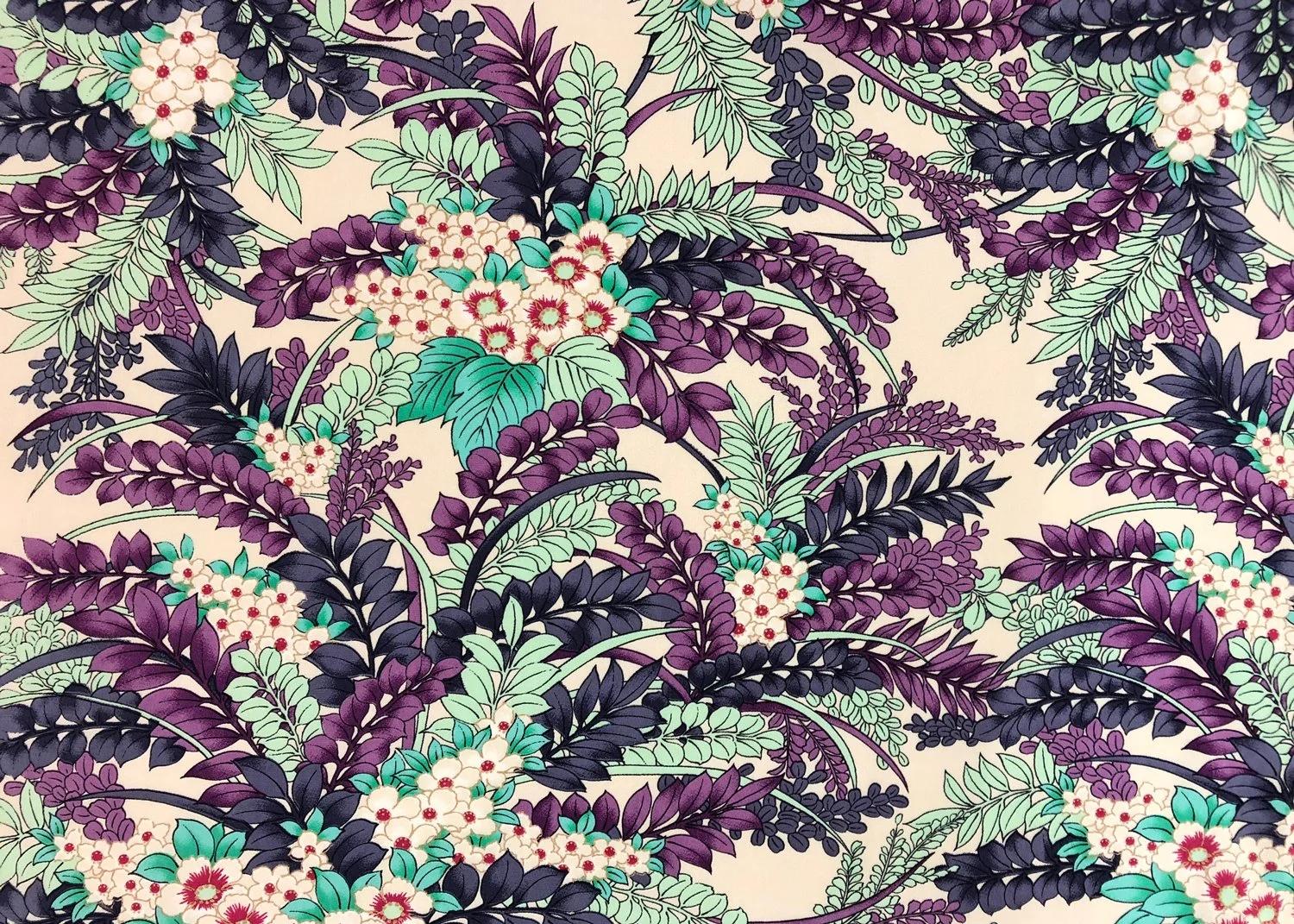
The Story of the Souka monyo Pattern
This pattern brings together a rich variety of plants and flowers, depicted with striking realism. The lifelike expression of grasses and blossoms reflects the deep connection between such natural motifs and the development of kimono design—particularly through the evolution of Yuzen dyeing.
The origins of Yuzen dyeing date back to the Edo period. It is said to have been established in the mid-Edo period by Miyazaki Yūzensai, who created painted fan designs in front of Chion-in Temple.
Before the emergence of Yuzen, decorative techniques for textiles were relatively limited—such as embroidery, gold leaf application, tie-dyeing, and stencil dyeing. In contrast, Yuzen dyeing was revolutionary. It enabled artisans to apply intricate, painterly designs directly onto fabric, much like creating a painting on cloth.
Because Miyazaki Yūzensai was originally a fan painter, Yuzen designs inherited a strong sense of composition and artistry. They often carry a refined balance along with a subtle playfulness, reflecting the aesthetic sensibilities of painted works.
Through this innovation, the natural world—long cherished in Japanese culture—could be expressed with greater depth, delicacy, and realism. Flowers, grasses, and seasonal plants were no longer symbolic alone; they became vividly alive within the fabric itself.
At the heart of these richly detailed floral patterns lies the enduring legacy of Yuzen dyeing—a tradition that continues to shape kimono design to this day.