
Tachiwaku
立涌
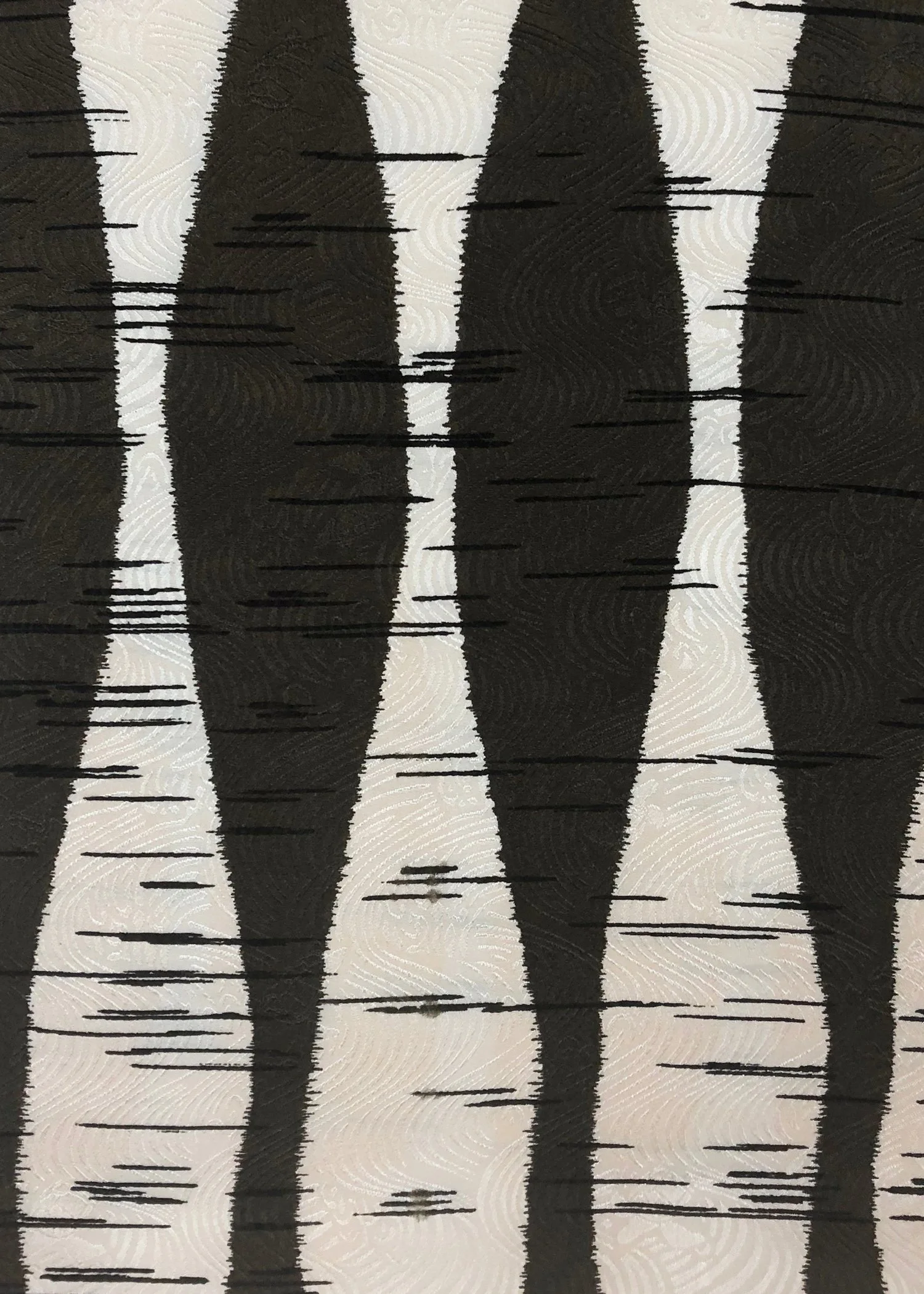
The Story of the Tachiwaku Pattern
This pattern is known as tachiwaku (also read tachiwaki), a continuous design characterized by a central swelling form that tapers at both ends. Its rhythmic, flowing structure creates a sense of upward movement and graceful expansion.
There are several theories regarding its origin. One interpretation suggests that it represents rising water vapor—soft currents of steam swirling upward into the air. Another theory traces its roots to arabesque patterns, possibly derived from designs of wave-like vines arranged symmetrically. It is believed that such motifs originated during the Tang Dynasty and were later introduced to Japan. Similar arabesque expressions can also be seen among the treasures preserved in the Shōsōin.
The tachiwaku pattern is thought to have been brought to Japan during the Nara period and further refined into a distinctly Japanese aesthetic during the Heian period. Despite these theories, its exact origins remain uncertain.
From the Heian period onward, tachiwaku became a foundation for creating refined and elegant designs by incorporating additional motifs within its swelling forms. Among these, kumo-tachiwaku—a variation featuring cloud motifs—was particularly esteemed and used as part of yūsoku (courtly) patterns worn by high-ranking nobles.
Other variations, such as “rising waves,” “rising wisteria,” and “rising pine,” were also considered classical court designs. These motifs later appeared in traditional performing arts, especially in Noh costumes, where their flowing forms enhanced the sense of movement and formality.