
Taisho Romance
大正ロマン - Taisho roman
The Story of the Taisho Romance Pattern
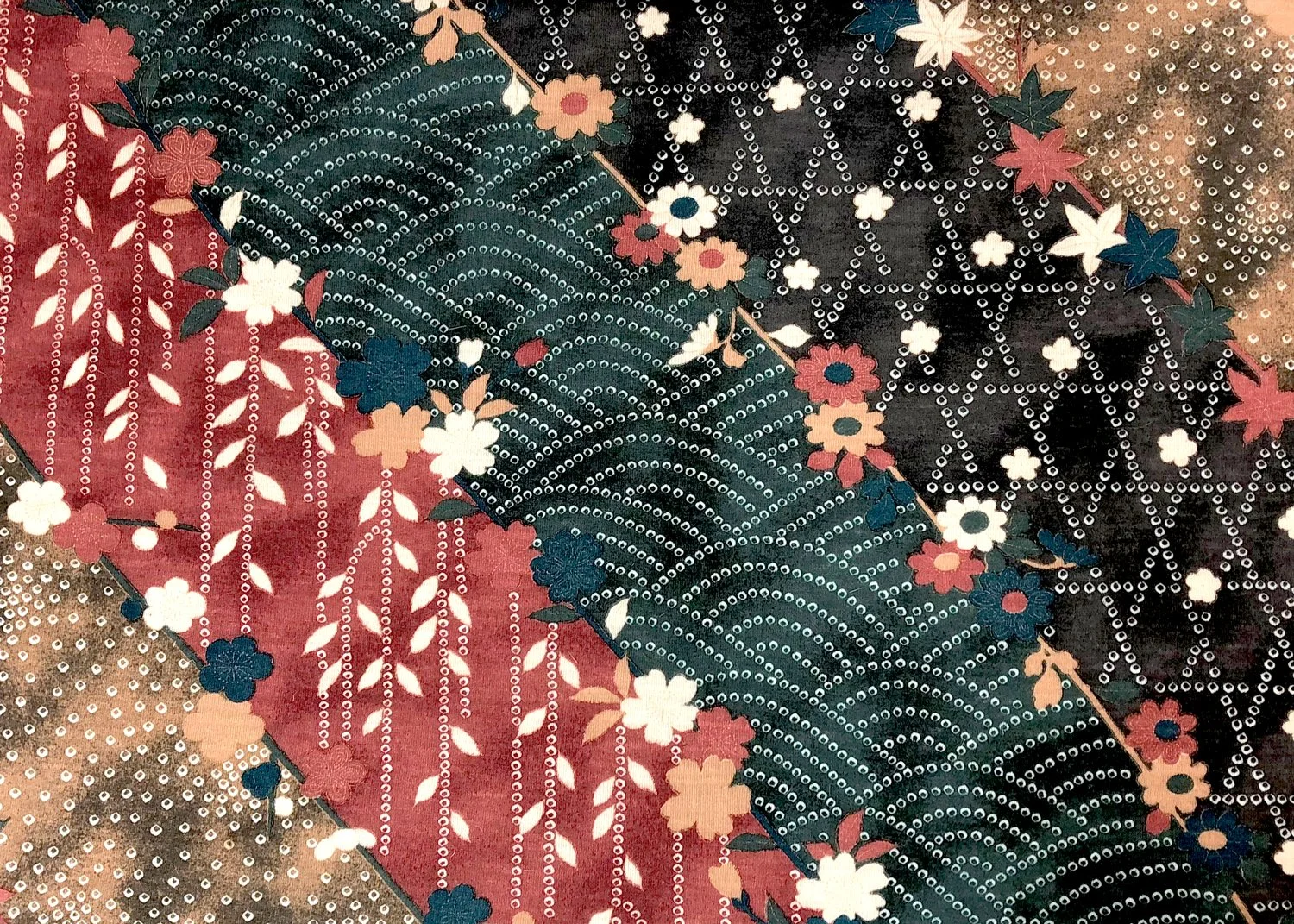
This pattern is relatively modern, dating back to the 1970s. Around this time, the traditional symbolic meanings of patterns began to fade, and greater emphasis was placed on visual design and color. However, the era also saw the rise of the “Discover Japan” movement, which renewed appreciation for traditional aesthetics and cultural motifs.
This design, featuring flowers representing Japan’s four seasons, evokes the poetic imagery of snow, moon, and flowers (setsugekka). Flowing willow branches suggest the presence of wind, while shibori-like textures and water motifs evoke the quiet beauty of falling snow.
The pattern also incorporates seigaiha, a traditional Japanese motif of layered, overlapping arcs symbolizing waves. As a design that extends endlessly, it represents continuity, peace, and good fortune. Similarly, the kagome pattern—modeled after the woven structure of a basket—carries connotations of protection and enduring stability.
At the time, a retro aesthetic inspired by Taisho Romanticism was gaining popularity. The soft yet vivid colors and elegant composition of this pattern reflect that trend, blending modern sensibilities with nostalgic charm.