
The Eagle
鷲 - Washi
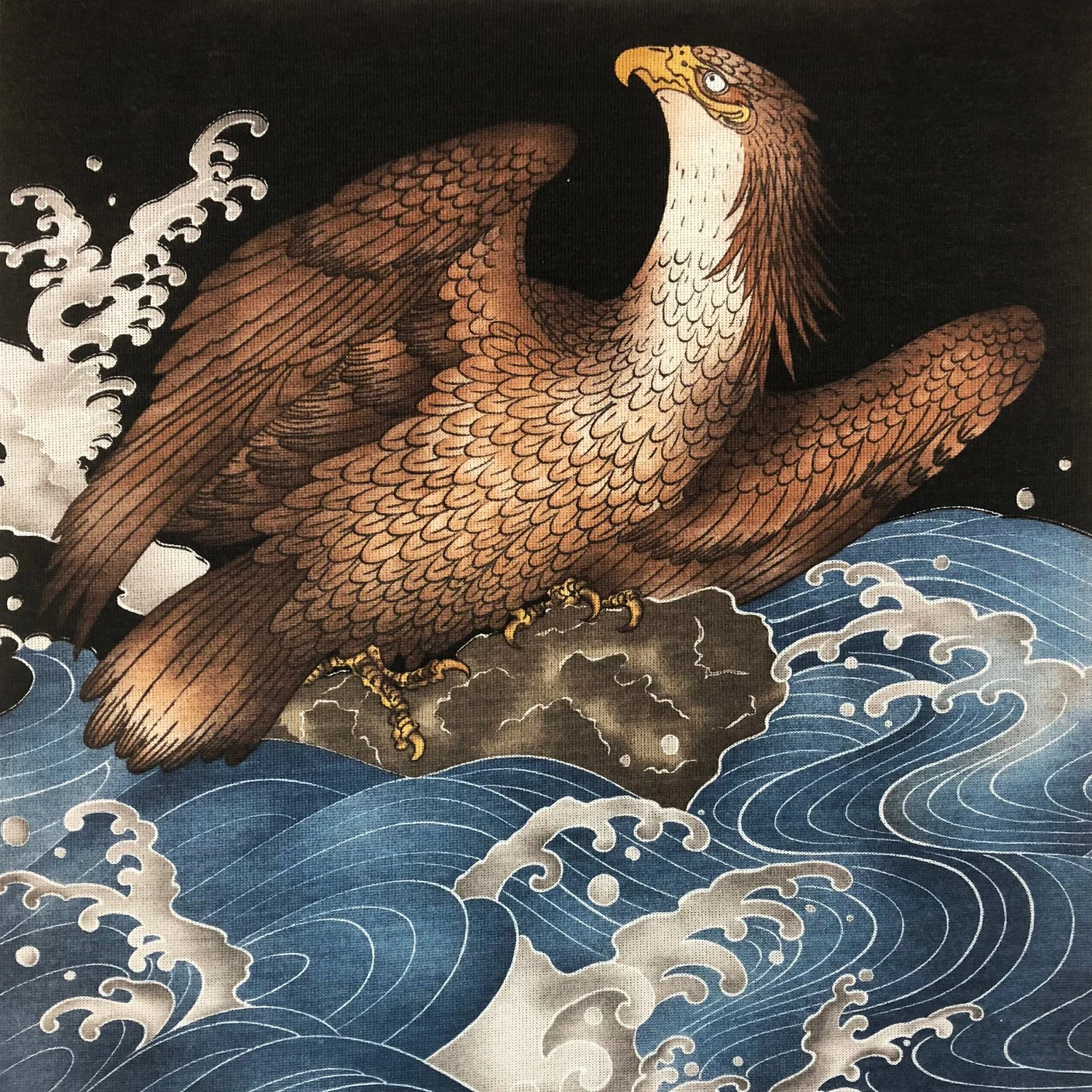
The Story of the Eagle Pattern
There is no strict distinction between eagles and hawks in Japanese usage; generally, larger birds are referred to as eagles, while smaller ones are called hawks. Both are powerful birds of prey, known for their sharp beaks, keen talons, and fierce nature.
In Japan, hawks have long been used in falconry by the aristocracy and warrior class. Their bold, soaring presence in the sky made them a favored motif, and their feathers were often stylized into family crests, reflecting admiration for strength and dignity.
As a textile motif, birds of prey began to appear in kimono designs during the later Edo period, often combined with other auspicious elements. Today, they are especially common in garments for young boys, such as celebratory robes for special occasions.
This particular design depicts a hawk (or eagle) perched upon a large rock rising from the vast sea, its sharp gaze fixed in the distance. Traditionally used for a child’s first ceremonial garment, the motif carries a powerful wish: to grow strong, resilient, and noble—like a ruler of the skies.
Eagle feathers have long been considered the finest material for arrow fletching, prized for their strength and precision. Historical records note that such feathers were once offered to the imperial court and sacred shrines as valuable gifts.
Because of its commanding presence, the eagle has often been regarded as the “king of birds” and has held symbolic significance across cultures. In Europe, the double-headed eagle became an emblem of imperial authority, while in other parts of the world, eagles serve as national symbols representing power and freedom.
The hawk, with its speed and strength, has also inspired many modern symbols. Its name and image are often used for vehicles, sports teams, and various forms of design, continuing to evoke energy, sharpness, and determination.