
The Tengu’s Magical Fan
鞍馬天狗のうちわ - Tengu no Uchiwa
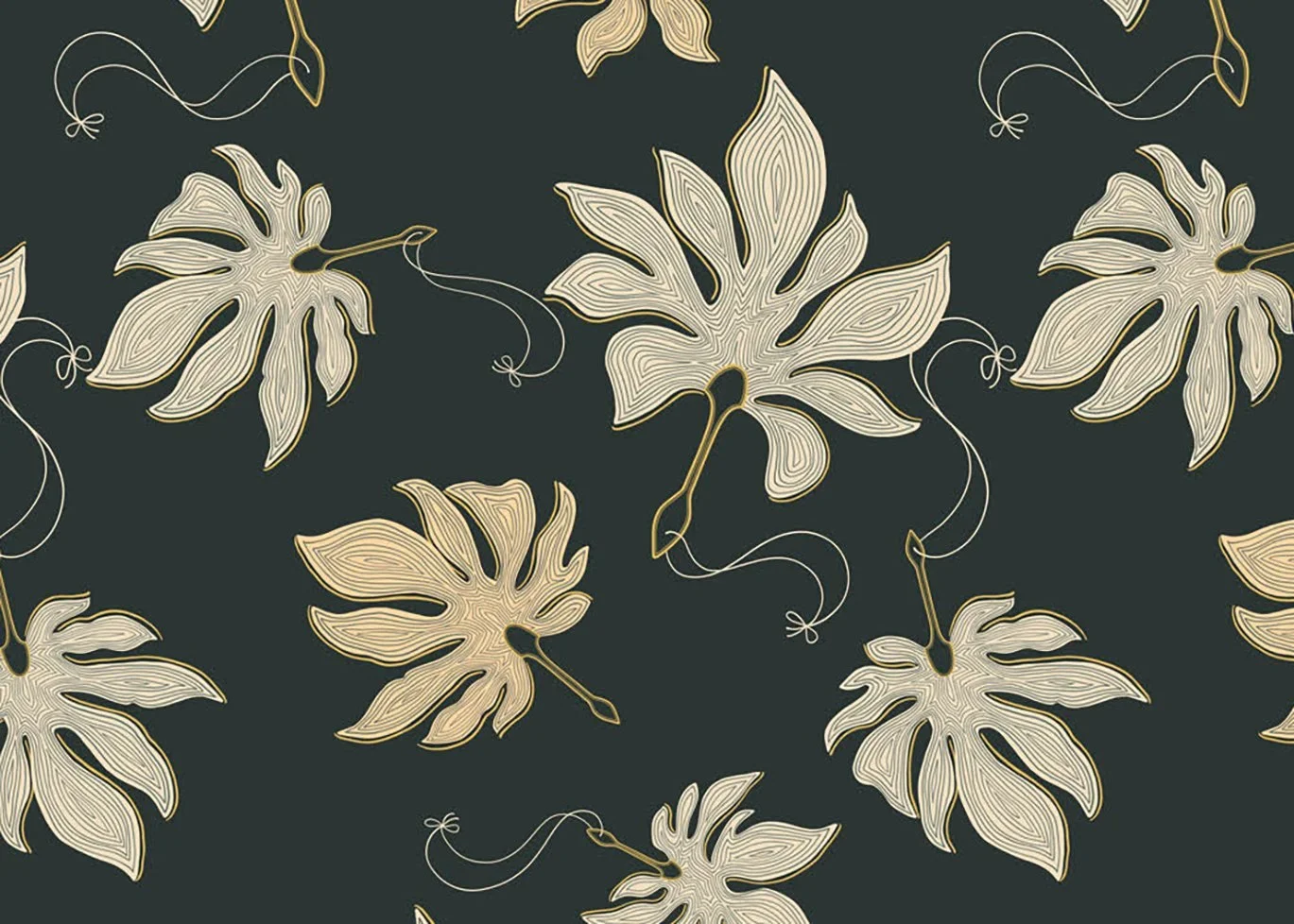
The Story of the Tengu’s Magical Fan Pattern
When speaking of tengu in Kyoto, one place immediately comes to mind: Mount Kurama.
Located in northern Kyoto, this mountain has long been regarded as a spiritual site and is often described as a place of powerful energy. It is also known as the birthplace of tengu legends.
According to ancient lore, a celestial being known as Gohō Maō-son descended from Venus millions of years ago, becoming the origin of the Great Tengu of Kurama. Another well-known legend tells of the young warrior Minamoto no Yoshitsune—then called Ushiwakamaru—who was trained in the art of warfare by the tengu on this very mountain.
At Kurama-dera Temple, the principal object of worship is a unified form known as “Sonten,” combining three sacred aspects: Bishamonten, Senju Kannon, and Gohō Maō-son.
It is said that this final figure forms the origin of the Kurama Tengu. Enshrined within the temple grounds, the image of Gohō Maō-son is striking—featuring a long nose and wings, closely resembling the classic image of a tengu.
At Kurama-dera, there is also a ritual fan known as the “Demon-Subduing Fan,” inspired by the tengu’s own fan. This sacred object is believed to possess the power to dispel evil and purify the spirit. Simply fanning oneself with it is said to drive away negative influences and restore balance.
The tengu’s fan itself is considered a powerful symbol of protection—an object said to bring strong winds that sweep away misfortune.
A plant known as yatsude is often called “the tengu’s feather fan” because of its resemblance to this object. Native to Japan, it has large, hand-shaped leaves that spread outward in multiple lobes. Although its name suggests “eight hands,” the leaves typically divide into an odd number of sections, symbolizing abundance rather than a literal count.
Because of its association with the tengu’s fan, the yatsude plant is believed to have protective qualities. Its hand-like shape is also thought to invite people in, making it a popular symbol of prosperity when placed at entrances.
Pagong’s new design, “ Tengu’s Magical Fan,” draws inspiration from this tradition. By combining the bold, tropical form of yatsude leaves with the structure of a fan handle, the pattern creates a unique visual identity. It blends a slightly exotic, island-like atmosphere with Pagong’s signature style, making it especially well-suited for Aloha-inspired pieces.
Just as the tengu’s fan is said to summon powerful winds that sweep away misfortune, wearing this design may feel like a quiet act of purification—clearing negativity, uplifting the spirit, and inviting a flow of good fortune into your life.