
Tora (Tiger)
竹林の虎 - Chikurin no Tora
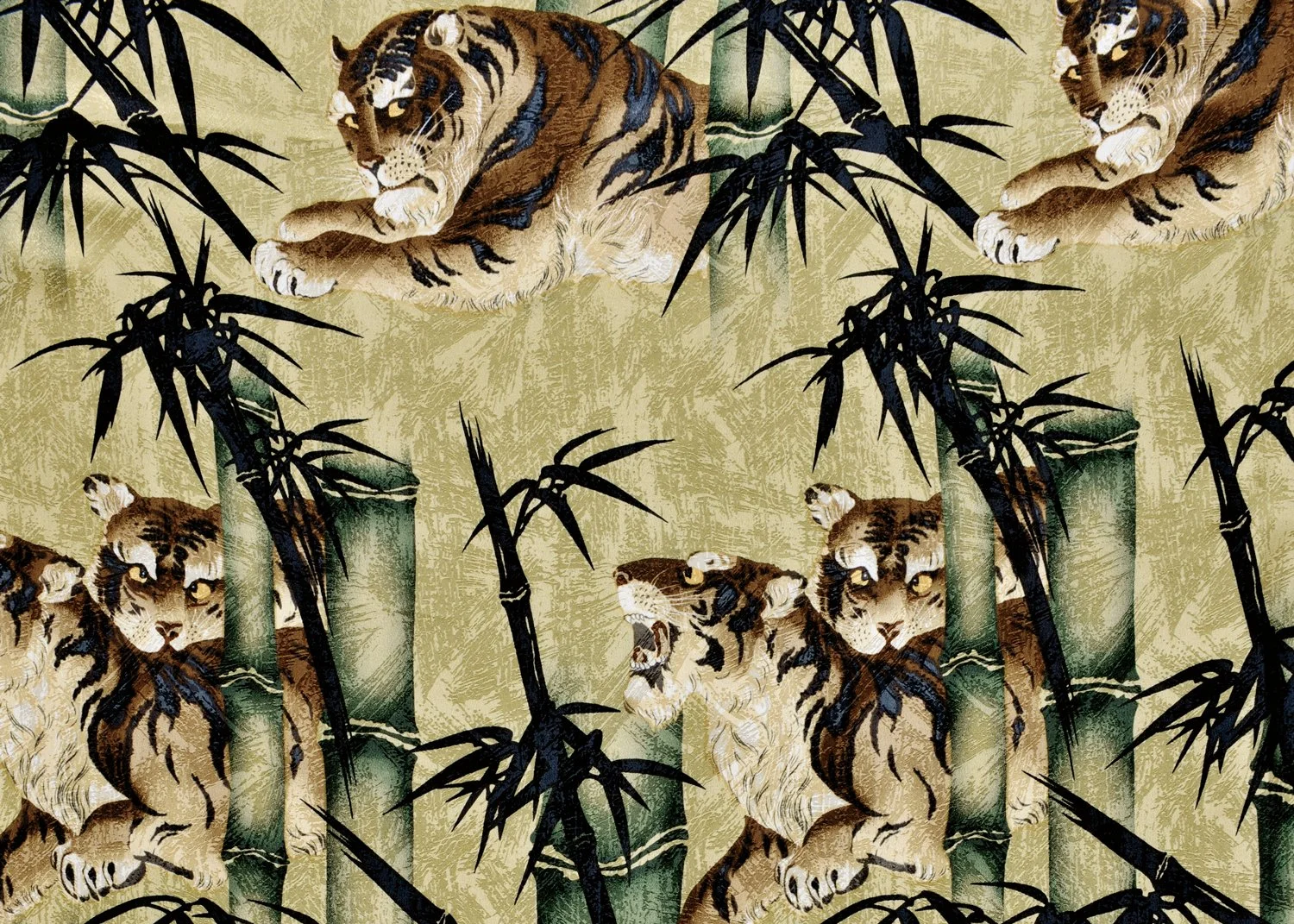
The Story of the Tora Pattern
This pattern was used on boys’ kimonos from the Taisho period to the Showa period, a time when symbolic and expressive designs were especially valued.
In ancient lore, tigers were believed to dwell within bamboo groves and were regarded as the kings of the forest. In Japan, the tiger is also associated with Byakko, one of the Four Symbols, and has appeared since the Kofun period on tomb murals and bronze mirrors as a powerful guardian figure.
During the Meiji era, the artist Kishi Chikudo became well known for his masterful depictions of tigers in Yuzen designs. Although this particular work is not attributed to him, the tiger is rendered with remarkable skill, reflecting the high level of craftsmanship among designers of the time.
The Taisho period was also an era marked by curiosity and a spirit of adventure. There are accounts suggesting expeditions to seek out Amur tigers in regions such as the Korean Peninsula, reflecting the fascination with this powerful animal. Against this cultural backdrop, the design’s simplicity—featuring only bamboo and tiger—gives it a surprisingly modern and striking presence.
At the center, a seated tiger gazes outward with quiet intensity, while behind him, a playful cub nips at the back of the mother tiger. Together, they form a warm and lively family scene. This gentle narrative reflects the values of the time, when family life was deeply cherished and children were regarded as precious.
The pattern embodies a heartfelt wish: that children may grow strong and resilient like the tiger, and upright and steadfast like bamboo—healthy, courageous, and full of life.