
Wisteria
藤 - Fuji
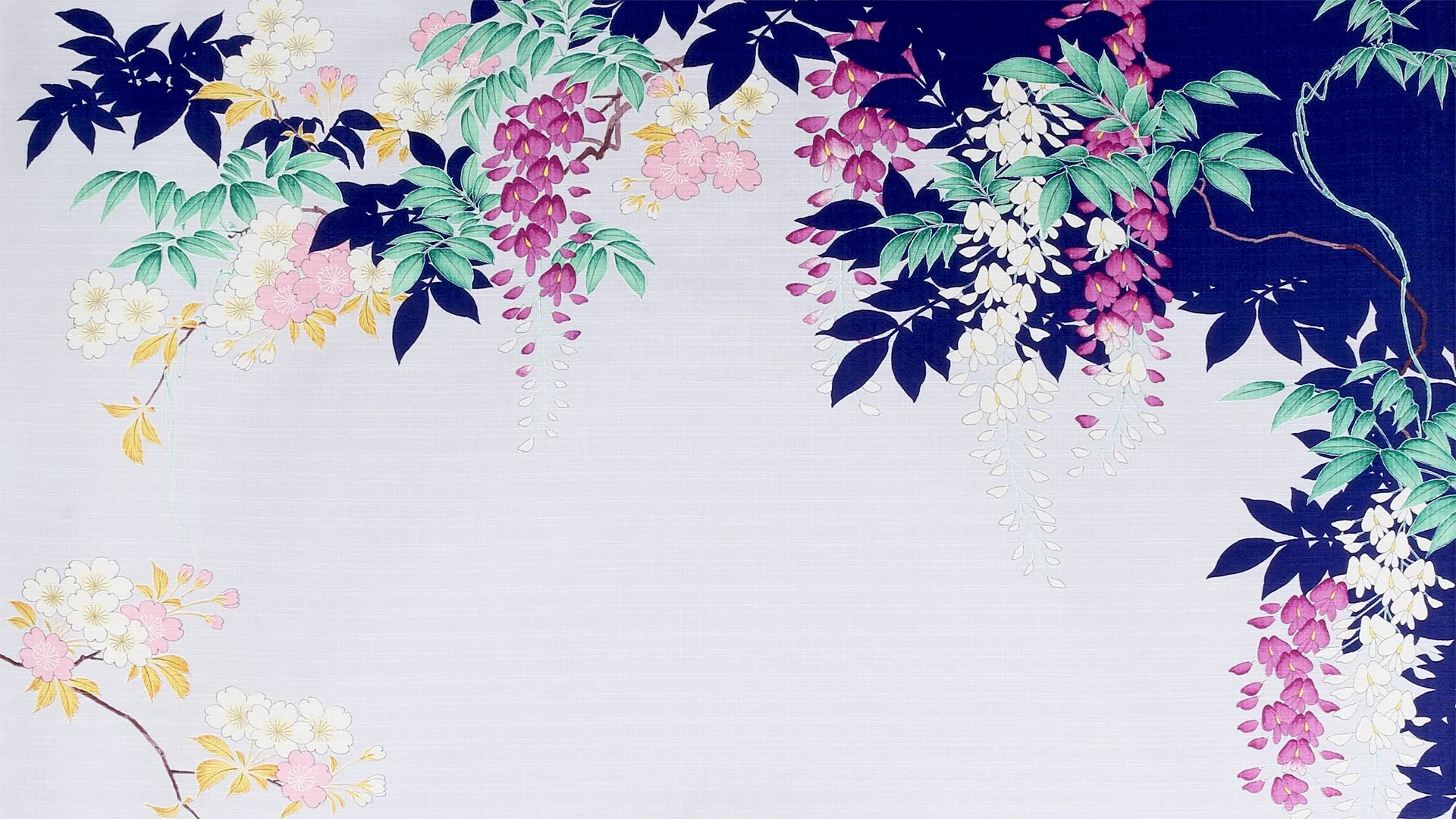
The Story of the Wisteria Pattern
The soft purple of wisteria has long been regarded as a noble color, especially when paired with the deep green of pine. It is even listed among “beautiful things” in The Pillow Book. The gracefully cascading clusters of wisteria blossoms have been admired since ancient times, and their refined beauty has appeared in yūsoku-monyō (courtly patterns), including costumes for Noh theater.
Wisteria is often combined with other motifs, particularly pine, which symbolizes eternity and unchanging strength. Together, the matsu-fuji (pine and wisteria) motif represents longevity and enduring prosperity, making it an auspicious design.
From late spring to early summer, hillsides adorned with flowing clusters of white and pale purple wisteria create a dreamlike landscape. Such scenery invites reflection on ancient tales, including one found in the Kojiki.
According to the story, a goddess who received many suitors refused them all. Two brother deities made a wager: the elder brother declared that if the younger could win her hand in marriage, he would reward him with his garments, a large jar of sake, and a harvest’s bounty. Confident, the younger brother sought help from his mother, a goddess herself.
In a single night, she wove garments and shoes from wisteria vines and gave him a bow and arrows also made from the same vines. When he arrived at the goddess’s home, these humble creations transformed into beautiful wisteria blossoms. Moved by their beauty, the goddess accepted his proposal, and in time, they were blessed with a child.