
September in Kyoto: Welcoming Autumn, the Moon, and the Beauty of the Changing Season
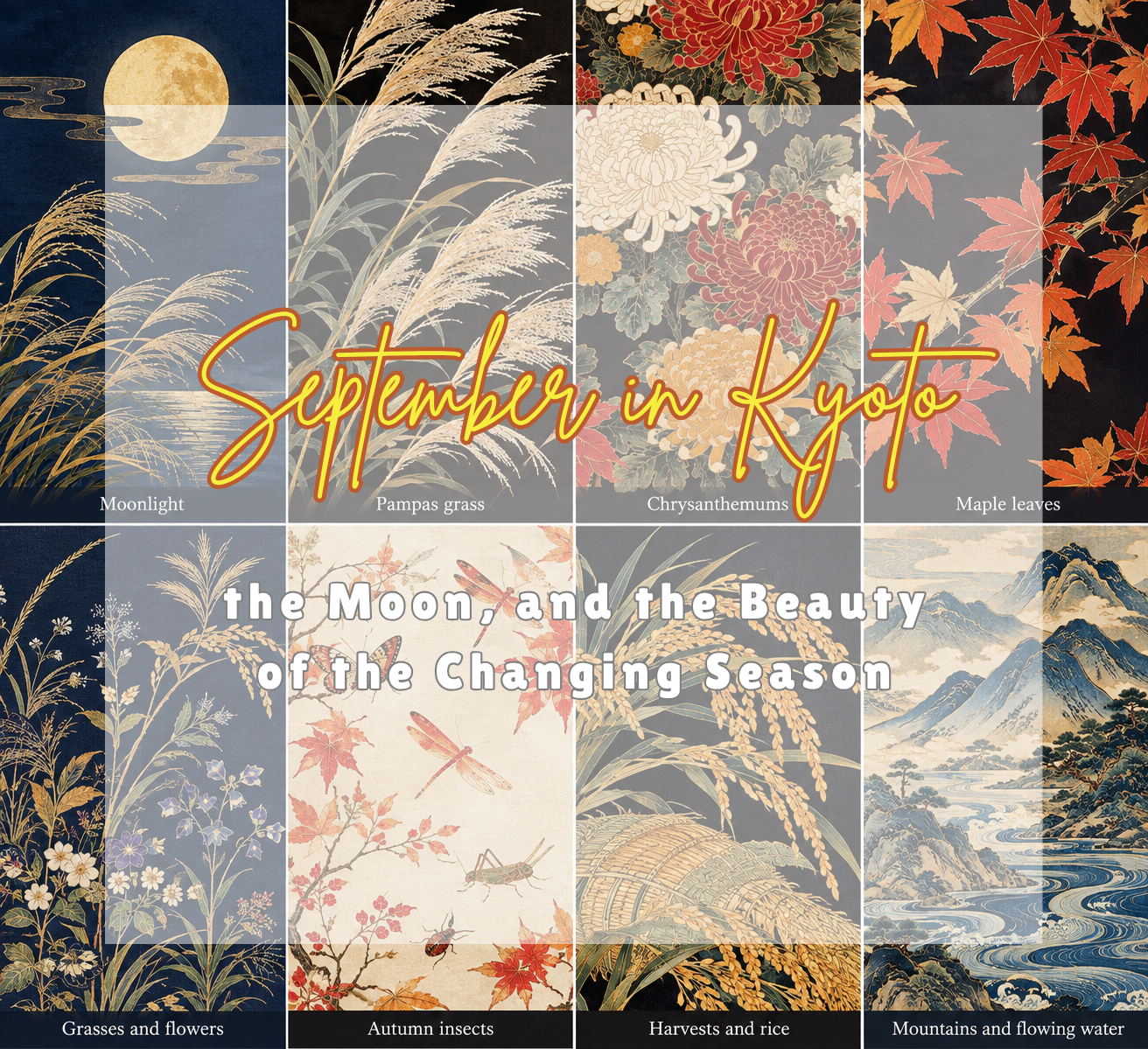
September in Kyoto is a month of transition.
The intense heat of summer gradually begins to soften, the evenings become more comfortable, and the city slowly turns its attention toward autumn. The mountains surrounding Kyoto remain green, but the feeling of the season begins to change. In gardens, temples, streets, and homes, small signs of autumn start to appear.
For centuries, Japanese culture has celebrated this transition not only through the changing landscape, but also through food, flowers, poetry, tea, traditional crafts, and the moon.
September is therefore a wonderful time to experience a quieter and more reflective side of Kyoto.
At Pagong, where traditional Kyoto dyeing meets contemporary fashion, we find something especially beautiful about this season: the colors, patterns, and atmosphere of autumn have always been deeply connected to Japanese textile culture.
The Beginning of Autumn in Kyoto
In Japan, autumn is associated with a rich collection of seasonal sensations.
The Japanese word aki (秋) means autumn, but the season is more than a change in temperature. It is a time when people begin noticing subtle changes in nature.
The evening sounds of insects become part of the atmosphere. Pampas grass, or susuki (すすき), begins to appear in seasonal decorations. Seasonal fruits and vegetables arrive at markets and restaurants, while traditional Japanese sweets begin to reflect autumn motifs.
You may see designs inspired by:
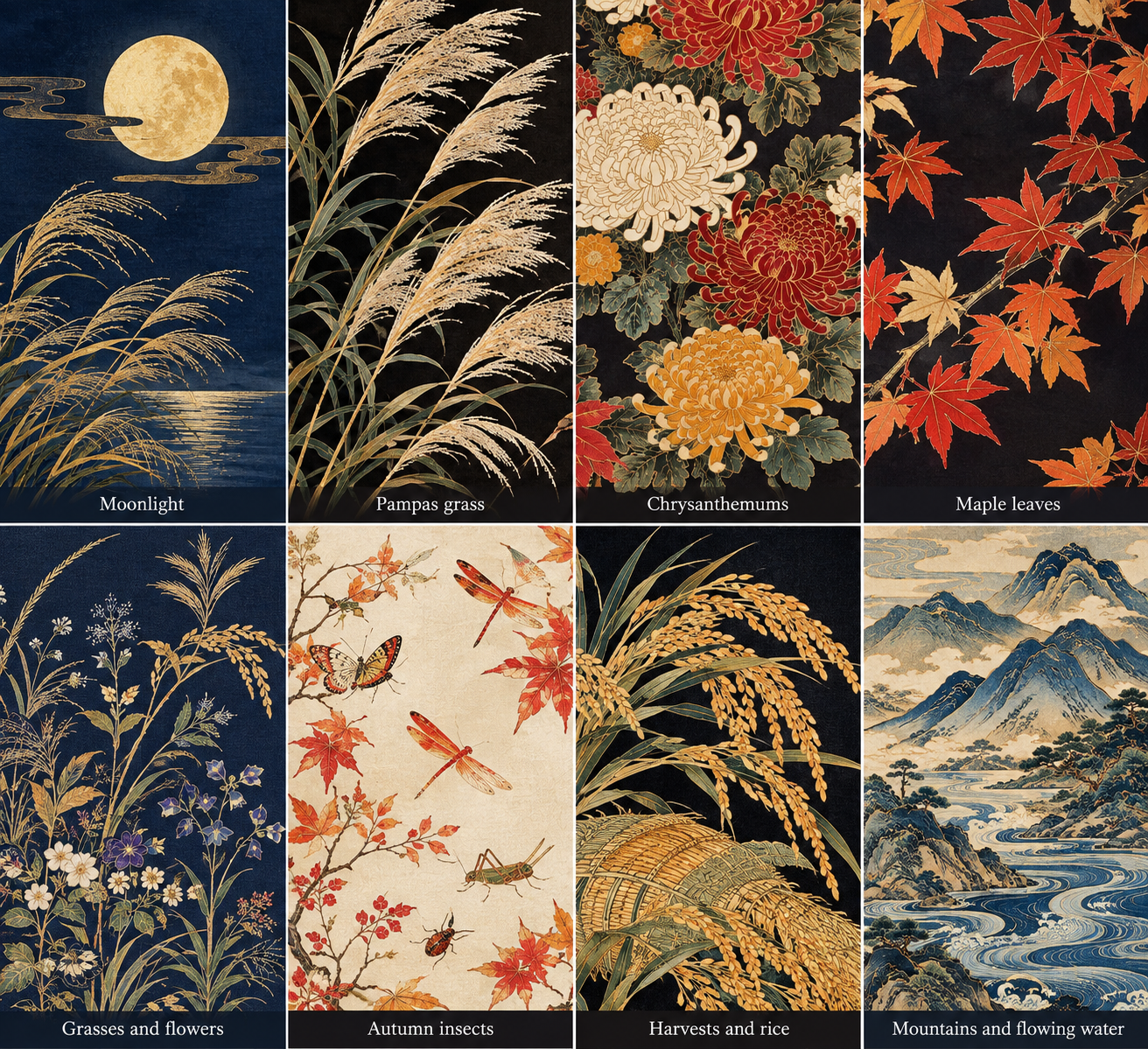
Moonlight
Pampas grass
Chrysanthemums
Maple leaves
Grasses and flowers
Autumn insects
Harvests and rice
Mountains and flowing water
Japanese artists have long looked to these seasonal details for inspiration, and textiles are no exception.
A kimono, haori, or Kyo-Yuzen garment can tell a seasonal story through its colors and patterns.
Tsukimi: Looking at the Autumn Moon
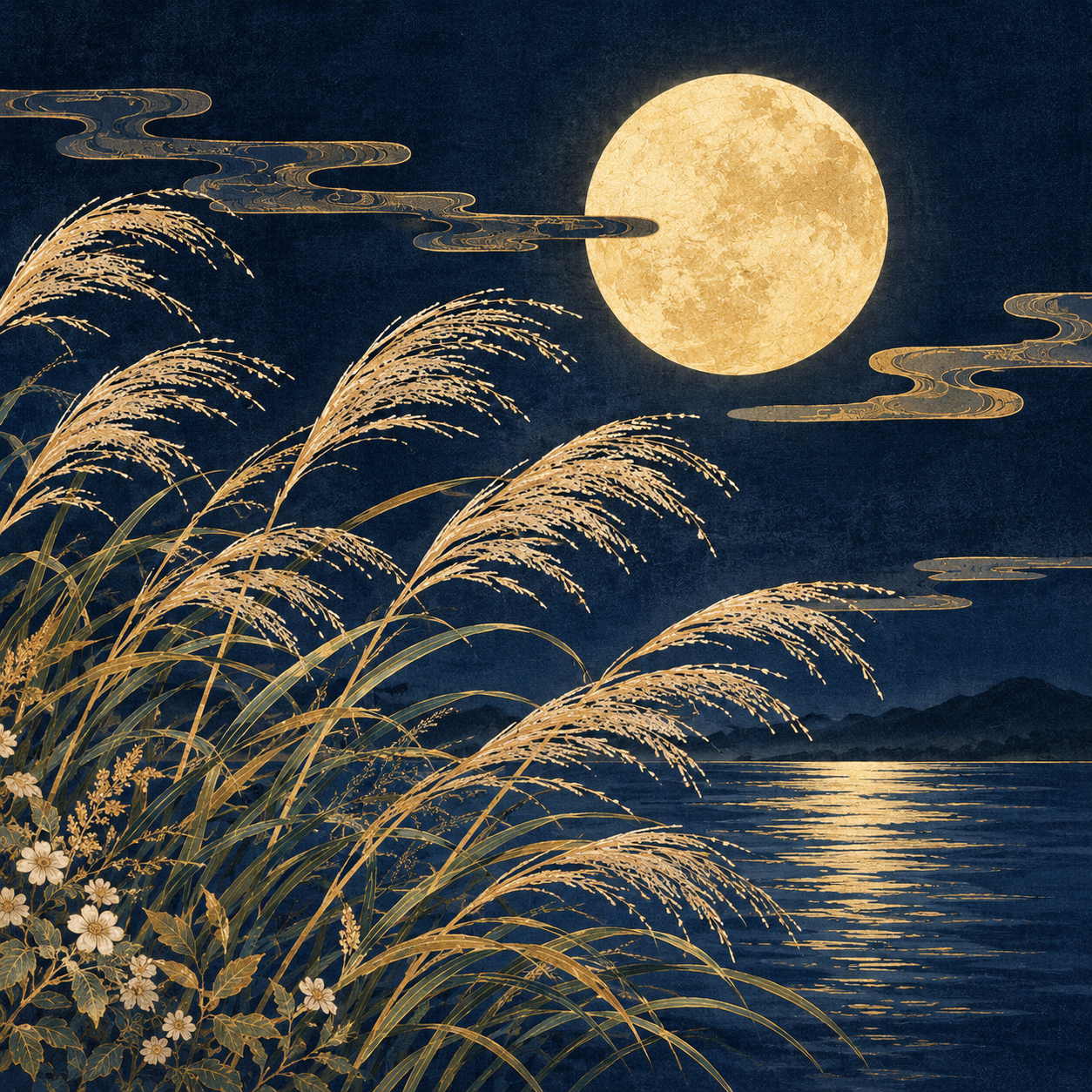
One of the most beautiful traditions associated with early autumn is Tsukimi (月見), or moon viewing.
The word literally means “moon viewing.” During this tradition, people appreciate the beauty of the autumn moon and express gratitude for the harvest.
The moon of autumn has been admired in Japanese culture for centuries. Rather than simply looking at the moon as an astronomical object, people have traditionally enjoyed the atmosphere surrounding it — the quiet evening, the changing season, seasonal foods, and the beauty of nature.
Traditional moon-viewing decorations may include susuki, whose silver-white plumes resemble the moonlit landscape.
You may also find tsukimi dango, small round rice cakes traditionally offered during moon-viewing celebrations.
The atmosphere is simple:
A quiet evening.
A bright moon.
A garden.
A cup of tea.
And the feeling that summer is slowly becoming autumn.
Moon Viewing in Kyoto
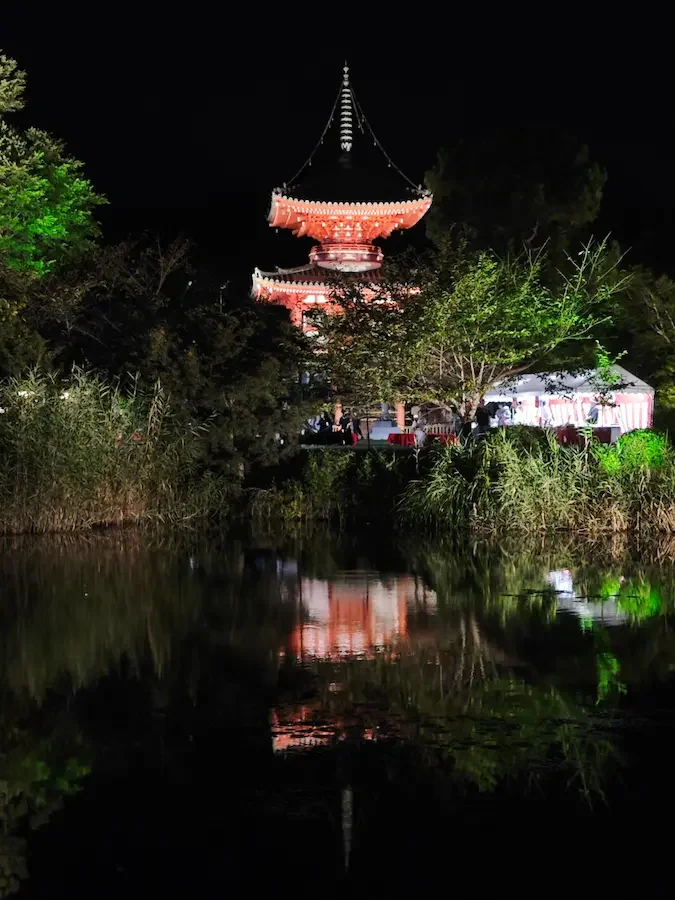
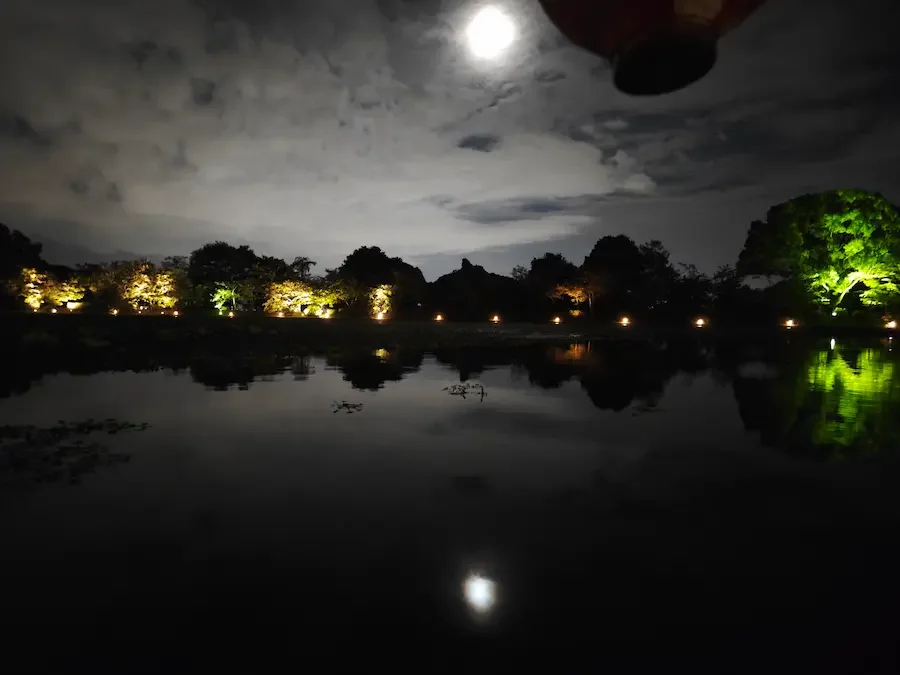
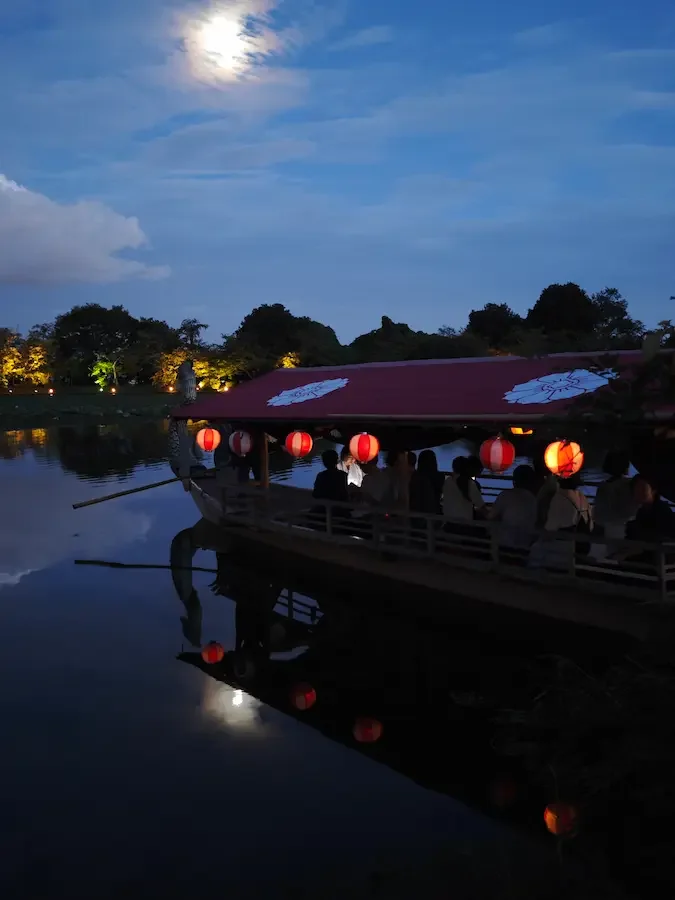
Kyoto offers some particularly beautiful places to experience the tradition of moon viewing.
One of the city's most famous locations is Daikaku-ji Temple, where the annual Kangetsu Kai moon-viewing event takes place around the harvest moon.
In 2026, the event is scheduled for September 25–27, with evening moon viewing around Ōsawa Pond. The reflection of the moon on the water creates a scene that connects Kyoto's landscape with centuries of Japanese tradition.
There is something particularly fitting about experiencing the moon this way in Kyoto.
The city does not need to create an elaborate spectacle.
The garden, the water, the temple architecture, and the moon already provide everything.
Kyoto's Autumn Colors Begin with More Than Red and Orange
When people think about autumn in Japan, they often imagine brilliant red maple leaves.
But in September, Kyoto's autumn palette is much more subtle.
Before the famous autumn foliage arrives, the season can be found in softer colors:

Moon white.
Hex Code: #F4F6F0

Moon white
HEX Code: #D8BCAB

Deep green
HEX code: #006B40

Muted gold
HEX Code: #D2B450

Earthy brown
HEX Code: #B18061

Soft red
Hex: #F47174

Dark Indigo
Hex #2A0D5D
These colors are especially beautiful in traditional Japanese textiles.
Japanese textile artists have long used nature as a source of inspiration. Instead of reproducing a landscape literally, a pattern can suggest the atmosphere of a season through color, movement, and composition.
This is one reason traditional Japanese garments can feel timeless.
A pattern does not simply decorate the fabric.
It tells a story.
Seasonal Beauty in Kyo-Yuzen
Kyoto is famous for Kyo-Yuzen, the traditional hand-dyeing technique that has developed in the city over centuries.
One of the most fascinating characteristics of Yuzen is the ability to create detailed imagery directly on fabric.
Flowers, birds, landscapes, fans, waves, animals, plants, and scenes from nature can become part of a garment.
The process requires patience and precision.
Colors are carefully applied to different areas of the design, while resist-dyeing techniques help preserve boundaries between colors. The result is a textile in which the artwork becomes part of the fabric itself.
For Kyoto artisans, the seasons have always provided an enormous source of inspiration.
The autumn moon, for example, can become more than a circle in a pattern. It can represent stillness, harvest, evening, or the changing passage of time.
A flower can represent a season.
A bird can suggest a particular landscape.
A wave can connect the garment to the movement of water.
This relationship between nature and textile art is one of the things that makes Kyoto's traditional clothing so distinctive.
September Is Also a Season of Gratitude
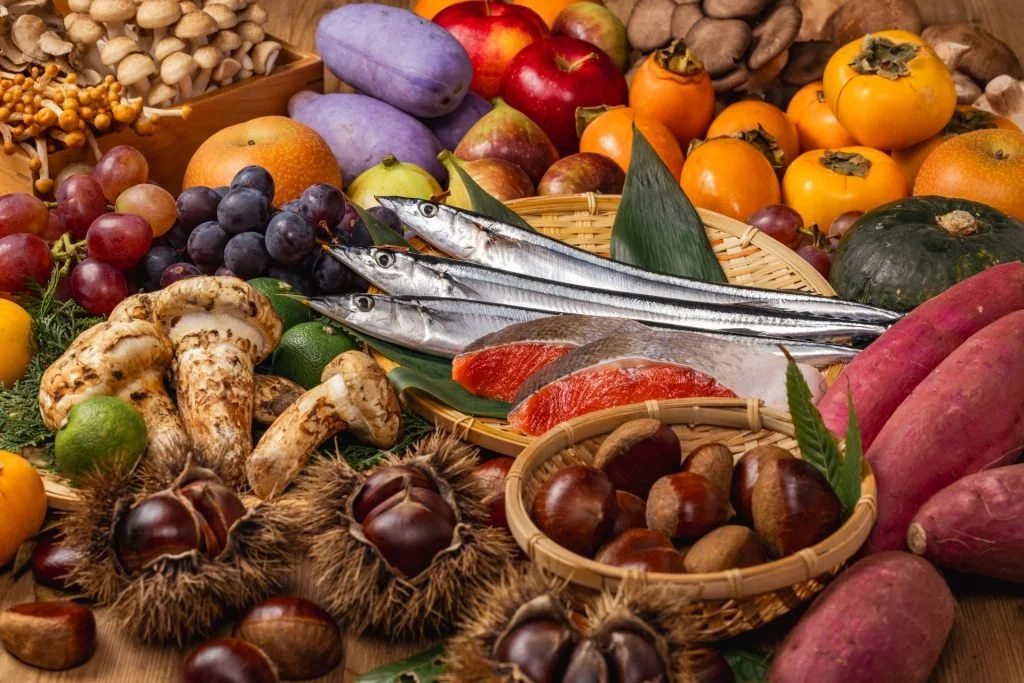
Autumn in Japan is strongly connected with harvest.
Rice fields begin to take on golden colors, and seasonal foods become an important part of everyday life.
Japanese culture has many expressions connected with appreciating seasonal food. Autumn is sometimes called shokuyoku no aki (食欲の秋) — “autumn of appetite” — because of the abundance of delicious seasonal ingredients.
You may find:
Sweet potatoes
Chestnuts
Mushrooms
Persimmons
Grapes
Japanese pears
Seasonal fish
New rice
Food is another way that people experience the changing seasons.
In Kyoto, this seasonal awareness is particularly visible in traditional sweets, restaurant menus, tea culture, and local markets.
The season changes, and the table changes with it.
Keirō no Hi: Respect for the Elderly
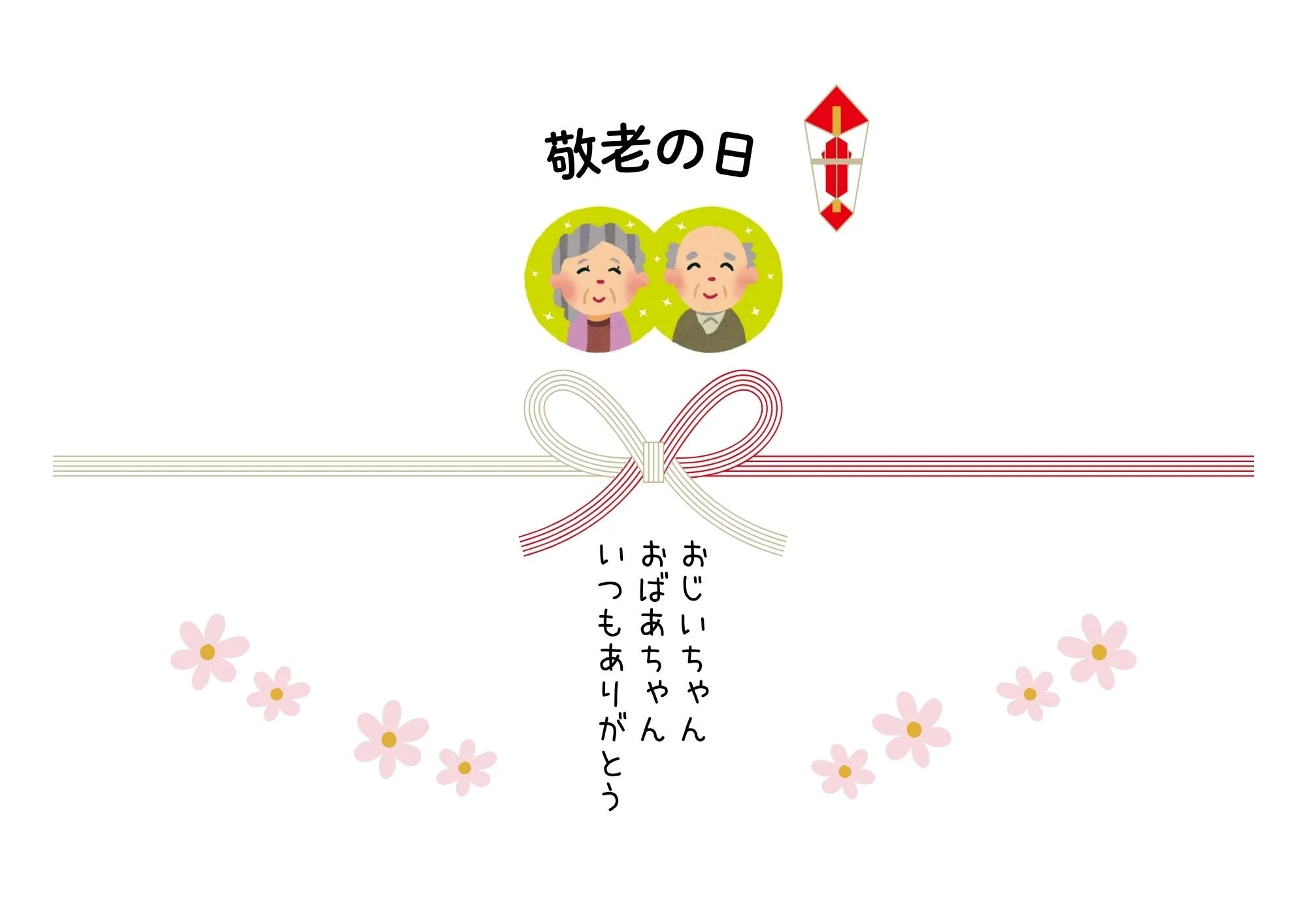
September also includes an important Japanese national holiday: Keirō no Hi (敬老の日), Respect for the Aged Day.
In 2026, Respect for the Aged Day falls on September 21.
It is a day to express gratitude and appreciation toward older generations.
Families may visit parents or grandparents, share a meal, give gifts, or simply spend time together.
This idea of respecting previous generations connects naturally with Kyoto's traditional arts.
Many Japanese crafts survive because knowledge is passed from one generation to the next.
An artisan teaches another artisan.
A technique is practiced again and again.
A pattern is preserved, changed, and reinterpreted.
In this way, tradition is not simply something from the past.
It is something that continues to live.
Autumn and the Japanese Idea of Seasonal Beauty
There is a Japanese aesthetic idea called mono no aware, often described as an awareness of the impermanence of things and the gentle sadness or appreciation that comes from knowing that beautiful moments do not last forever.
The changing seasons are one of the clearest examples.
Cherry blossoms are beautiful partly because they do not remain forever.
Autumn leaves are beautiful because they change.
The moon is beautiful because the night eventually ends.
September sits directly between two seasons.
Summer has not completely disappeared, but autumn has already begun to arrive.
That makes September a particularly poetic time in Kyoto.
What to Look for in Kyoto in September
If you visit Kyoto during September, you do not necessarily need a complicated itinerary.
Some of the most memorable experiences can be very simple.
Take an evening walk.
Visit a quiet temple garden.
Look for seasonal flowers.
Try a Japanese sweet made with autumn ingredients.
Stop for tea.
Listen to the insects after sunset.
Look toward the moon.
And notice how the colors of the city slowly begin to change.
Kyoto's beauty often appears in these small moments.
Bringing Kyoto's Seasons Into What We Wear
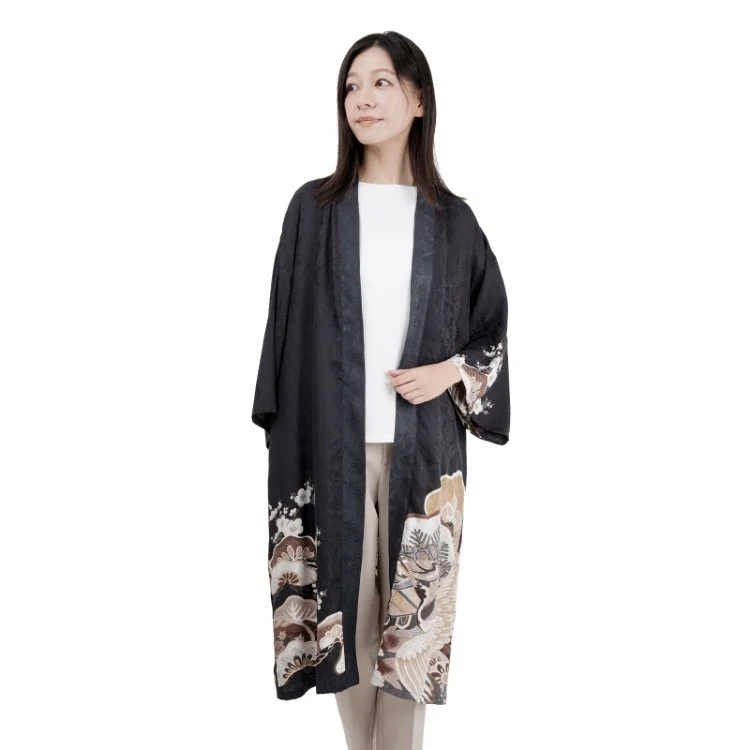
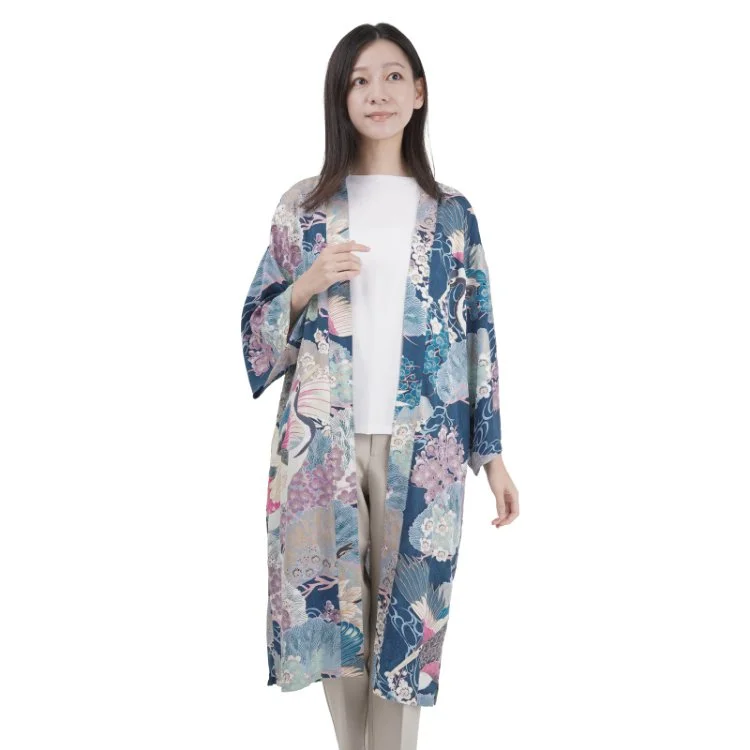
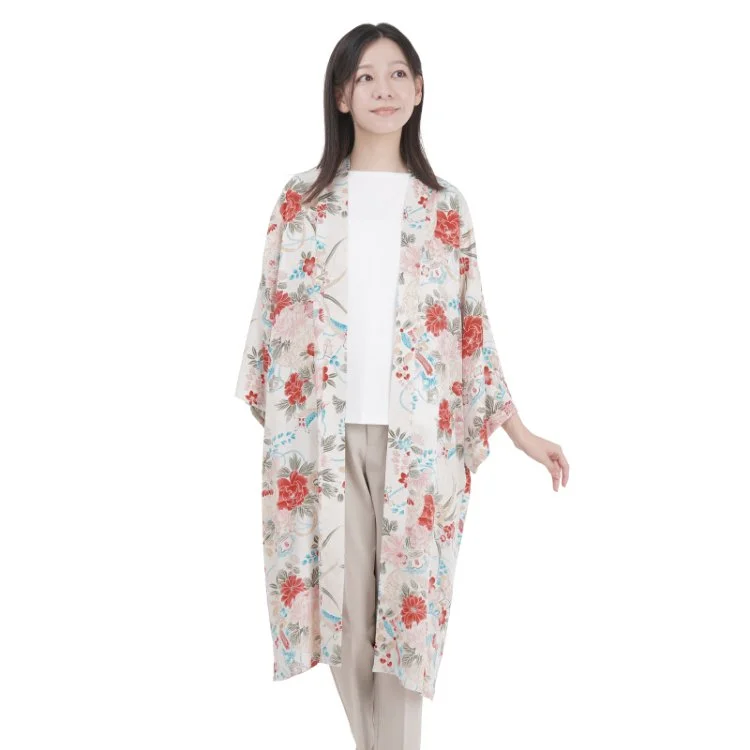
Traditional Japanese clothing has always been closely connected to the seasons.
A garment is not only something worn for practical reasons. Its pattern, color, material, and imagery can express the time of year.
This idea continues today.
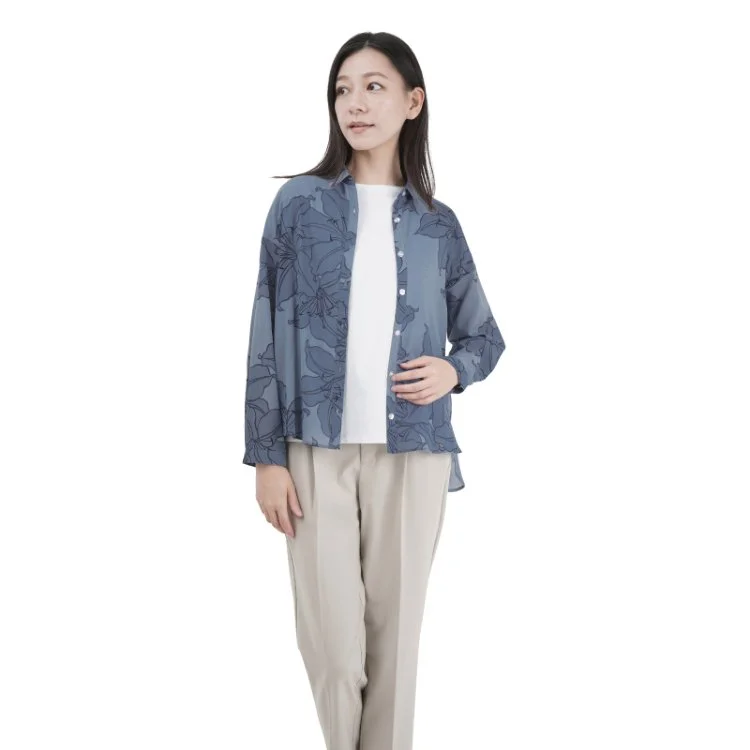
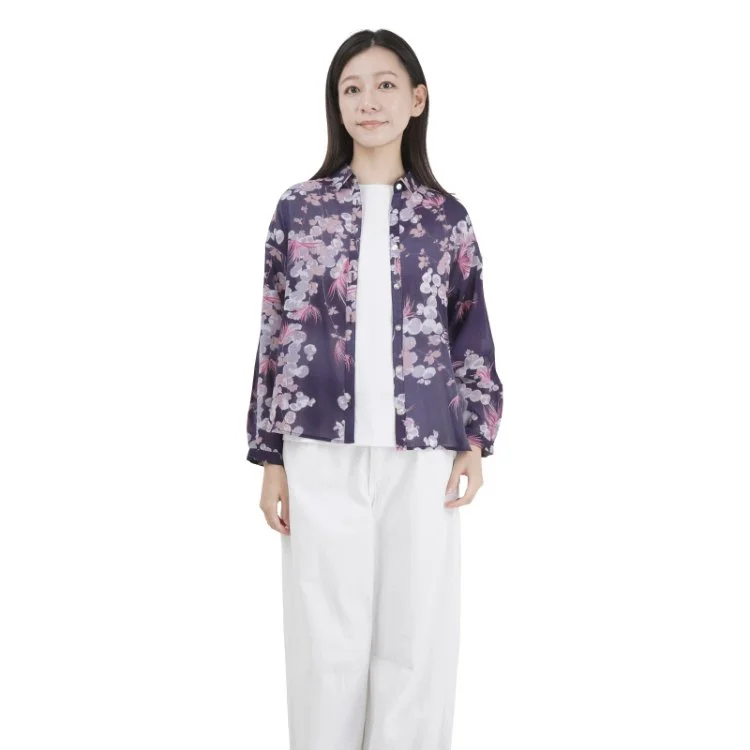
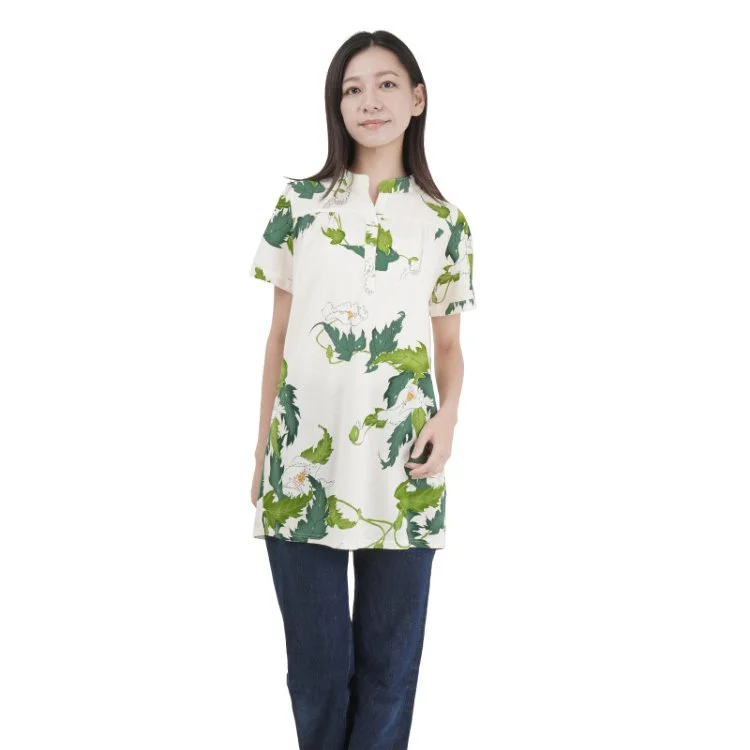
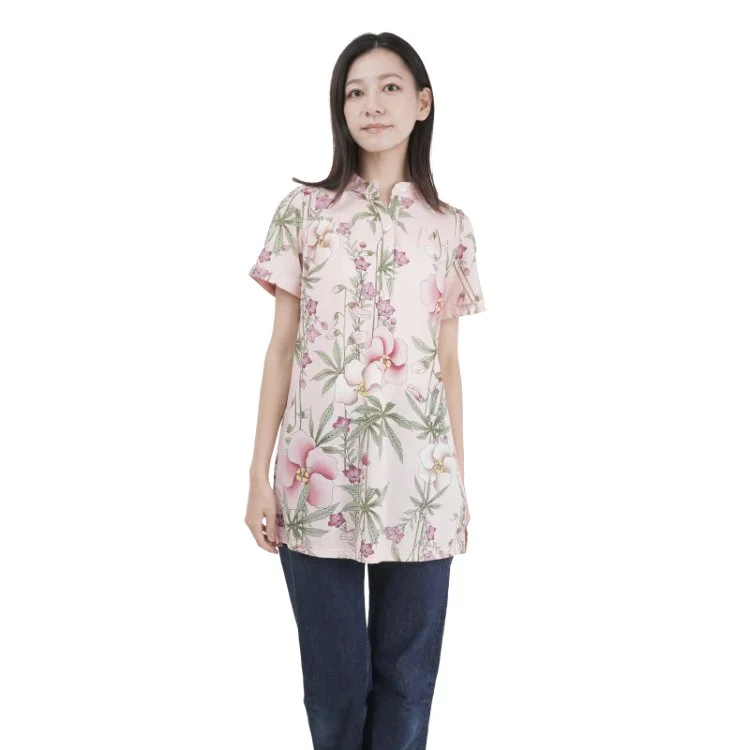
A silk haori decorated with flowers can bring the feeling of a Kyoto garden into everyday life.
A flowing kimono-style gown can recall traditional Japanese silhouettes while remaining comfortable and contemporary.
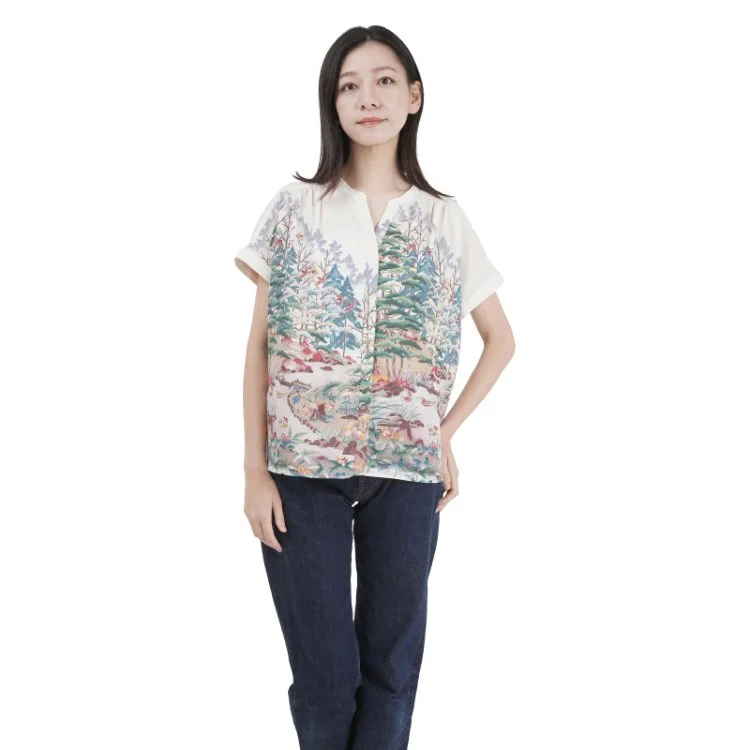
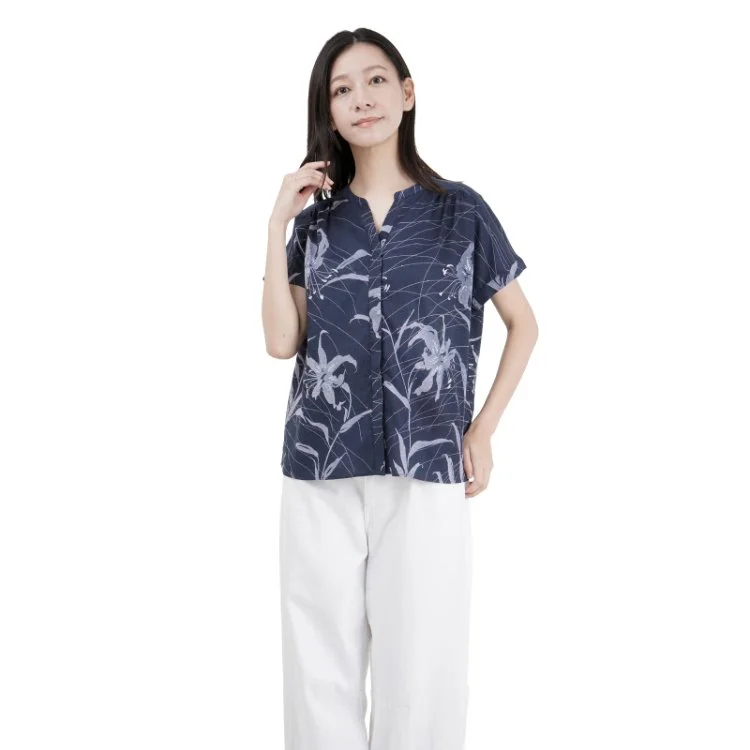
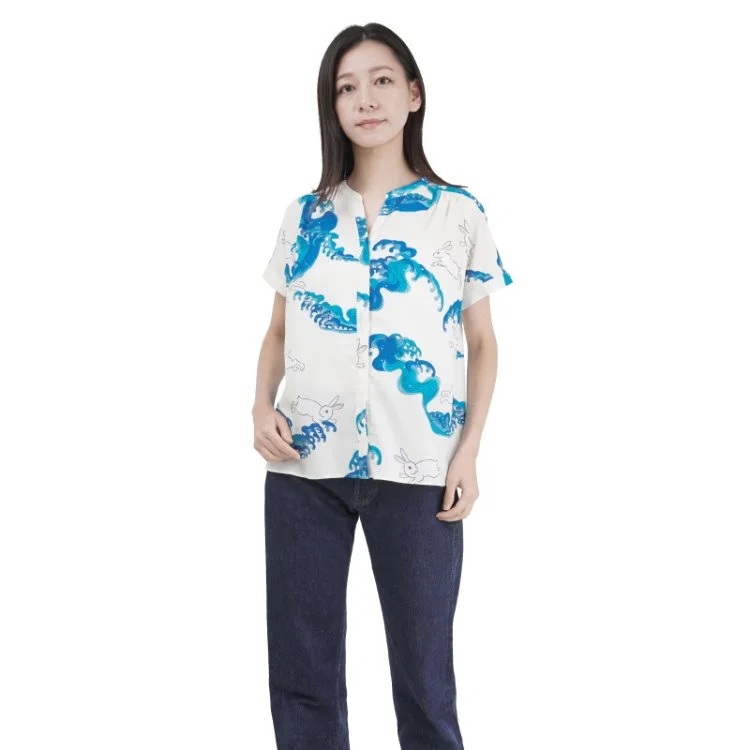
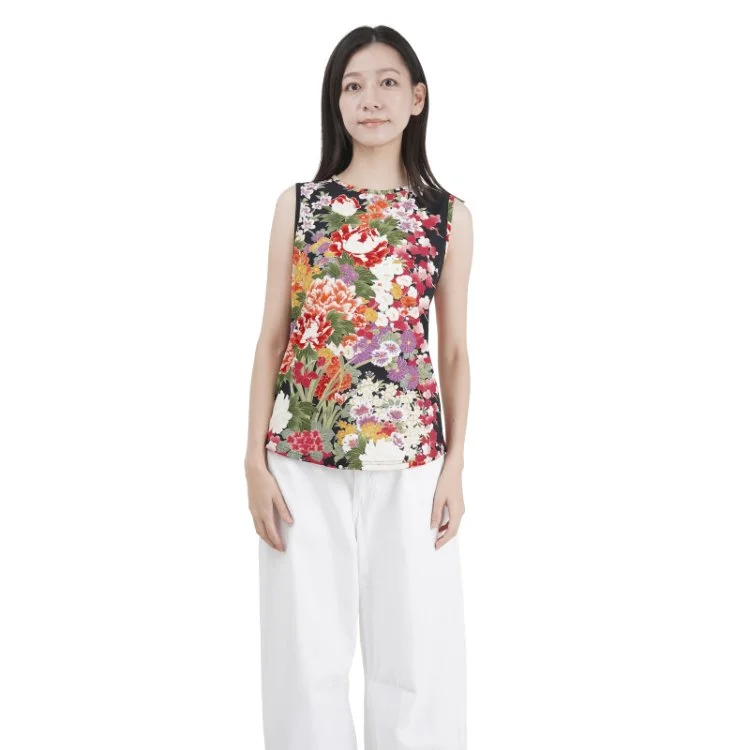
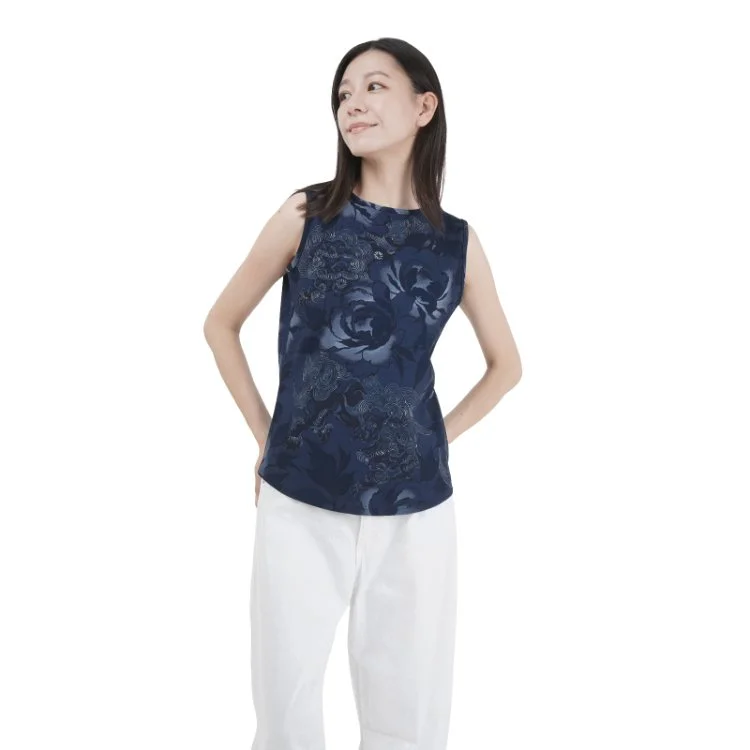
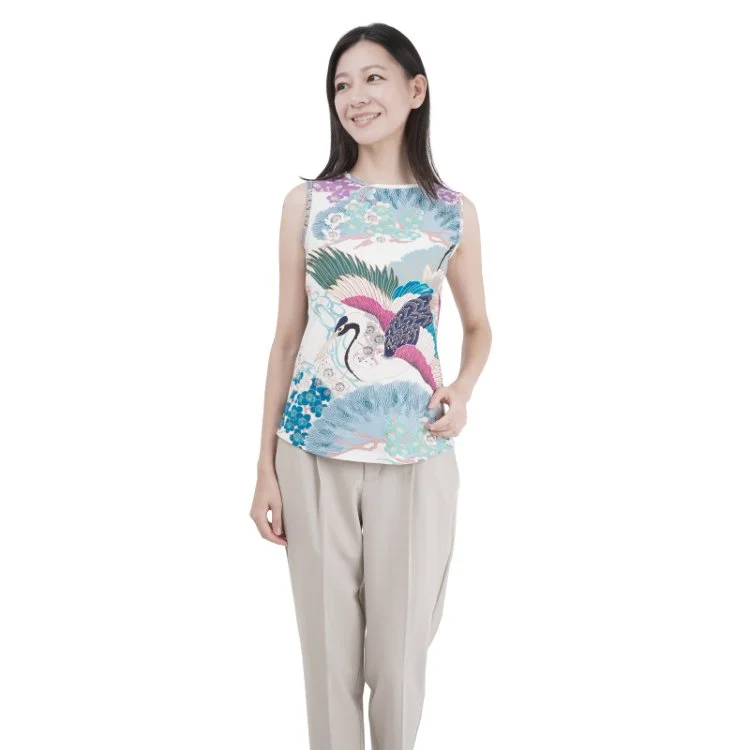
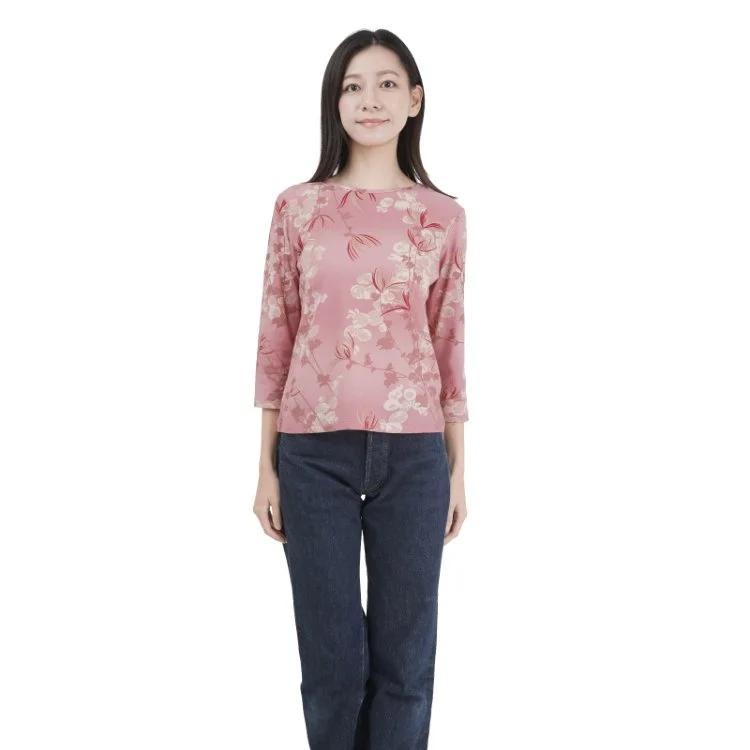
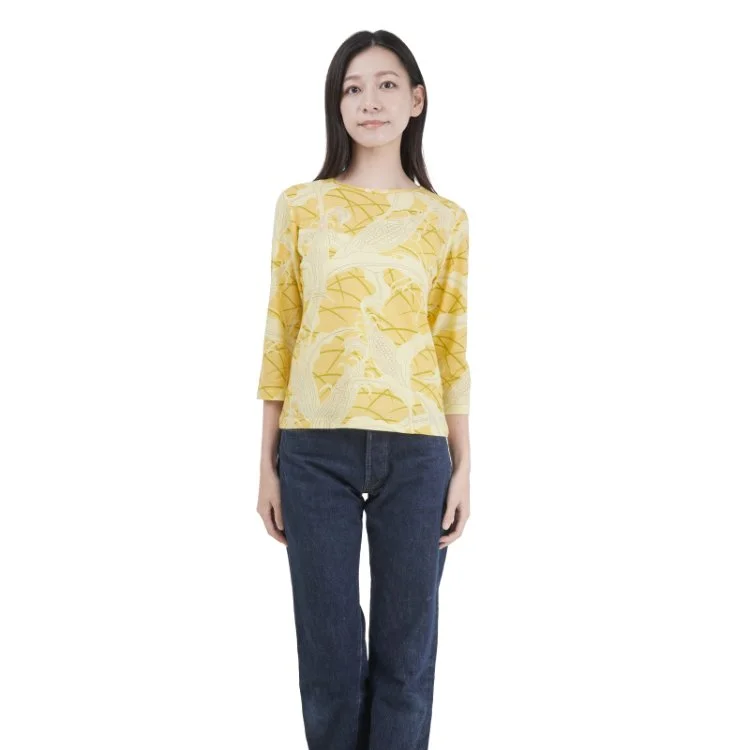
A pattern inspired by waves, birds, flowers, or landscapes can carry a small piece of Japanese artistic history into modern life.
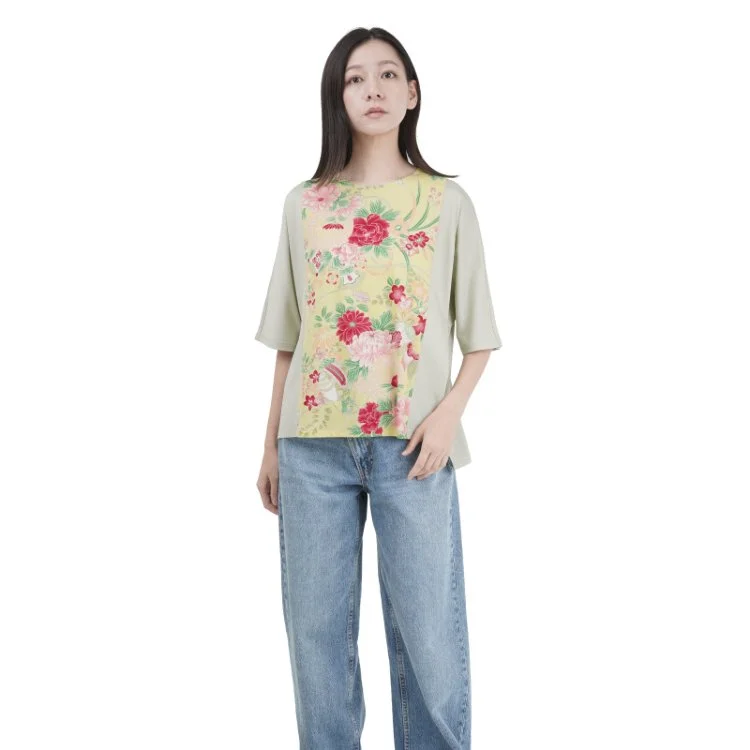
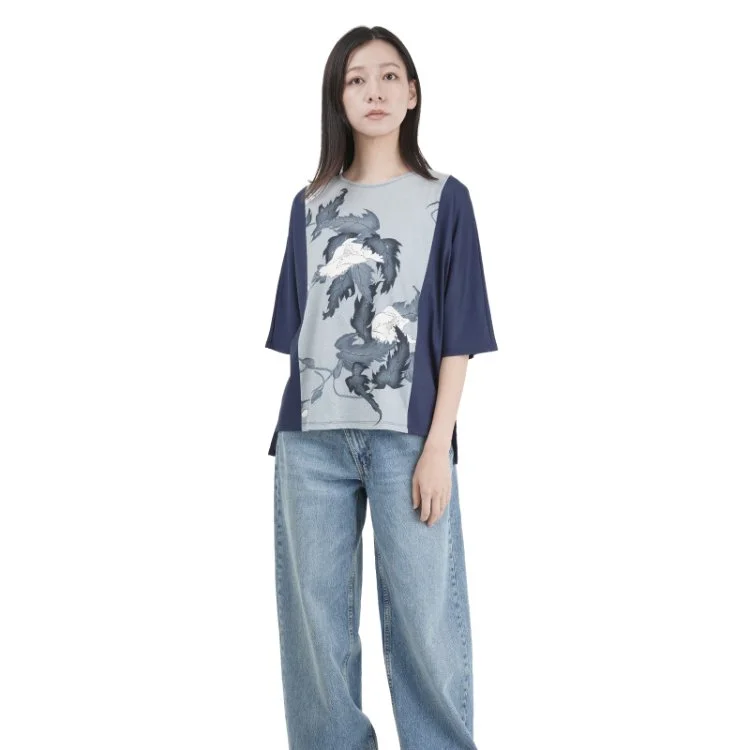
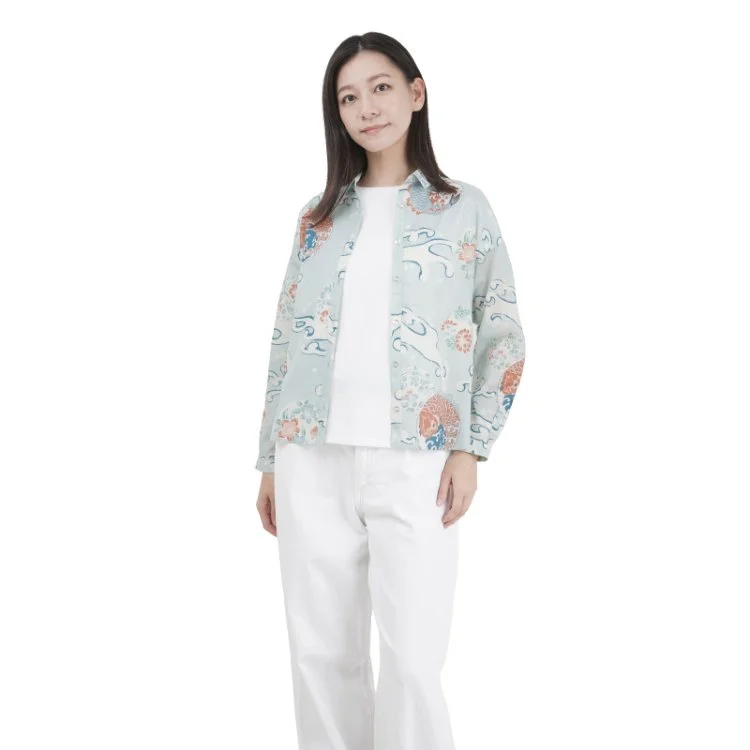
At Pagong, this connection between traditional Kyoto craftsmanship and contemporary clothing is at the heart of what we create.
Our garments are inspired by the visual language of Kyoto and brought to life through hand-dyed textile techniques.
Each pattern has its own character.
Each color interacts differently with the fabric.
And each garment carries a connection to the long tradition of Kyoto textile art.
September in Kyoto: A Quiet Invitation
September does not have to be the loudest month of the year.
It is a month for noticing.
Notice the first signs of autumn.
Notice the changing evening light.
Notice the moon.
Notice the colors of the garden.
Notice the patterns appearing in seasonal sweets and textiles.
And notice how Kyoto continues to preserve its traditions while allowing them to evolve.
This is perhaps one of the most beautiful things about Kyoto.
The city does not simply preserve the past behind museum glass.
Traditional culture continues in temples, gardens, kitchens, workshops, tea rooms, streets, and everyday life.
And in Kyoto's textile traditions, it can even become something you wear.
Welcome, Autumn
As September arrives, Kyoto begins its gradual journey toward autumn.
The famous red maple leaves are still ahead.
The cold winter evenings are still far away.
For now, there is simply the changing season — the softening heat, the evening moon, the first signs of autumn, and the quiet beauty of Kyoto.
From the moonlit gardens of Arashiyama to the hands of Kyoto's textile artisans, September reminds us that beauty does not always need to be dramatic.
Sometimes, it is simply a moment worth noticing.
Welcome to autumn in Kyoto.