


Kimono Aloha Shirt

Men

Women
Best Sellers
Color / Black and White
Japanese name/ 甲州石班澤 (Koshu Kajikazawa)
-About-
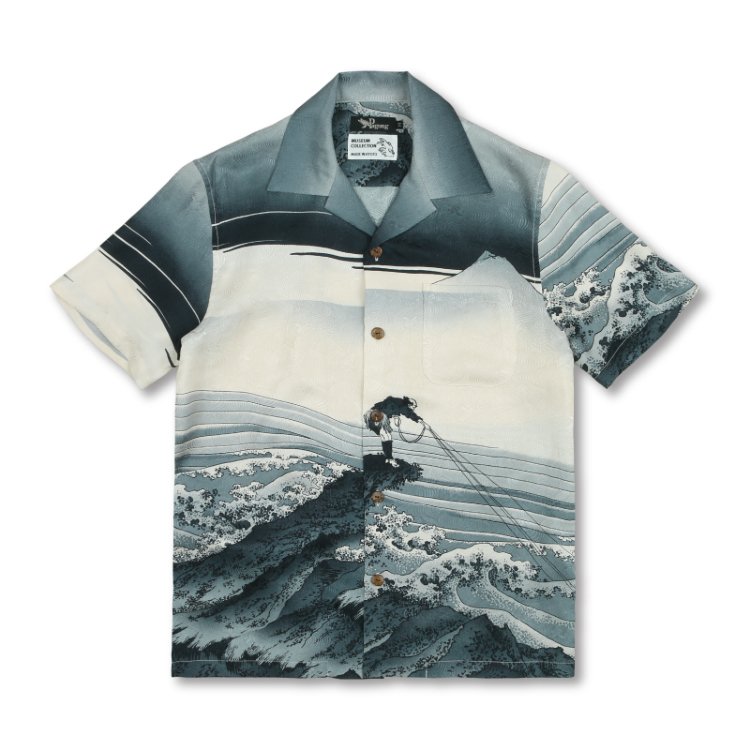
At the age of seventy, with a career of over 50 years experience making traditional woodblock prints, Katsushika Hokusai (1760-1849),undertook making his now-famous series “Thirty Six Views of Mount Fuji”, honoring the most spiritual and sacred mountain in all Japan. The traditional technique he used was most common at the time, ukiyo-e, literally meaning “pictures of the floating world”.
“Koshu Kajikazawa”, is the name of a place between Tokyo and Kyoto where two rivers meet, the 14th print of the series, which we the viewer have the pleasure of seeing through Hokusai’s eyes.
In this masterpiece, the fisherman’s pose intentionally reflects the shape of Mount Fuji in the background, an example of Hokusai’s “signature” compositional genius, no doubt contributing to Hokusai becoming the most renown and respected Japanese artist of all time.
We have been been given official permission to use this extraordinary woodblock print from the Metropolitan Museum of Art in New York , to which Pagong has implemented the dye technique of Kyoto Yuzen.
・Currency : US Dollar (USD)
・100% Silk (Custom-woven Jacquard )
・Made in Japan
・Classic-fit Aloha shirt
・Coconut buttons
・Dry-clean

Color / White and Black Size Chart Care Instruction
Japanese Name / 富士越龍 (Fuji Koshi Ryu)
-About-
Katsushika Hokusai (1760-1849) was to spend his final years passionately making a rare collection of “free-hand” paintings, quite unlike any of his previous ukiyo-e print-works which he is most world-renowned.
Hokusai’s enduring passion to portray Mount Fuji, Japan’s sacred mountain, is a challenge he continued to pursue for his entire lifetime. The many ephocal events of his long prolific career seem to culminate in his final masterpiece, “Dragon Flying Over Mount Fuji” where we the viewer are given the rare opportunity to look deeply into the stillness and peace within the artist’s final year.
・Currency: US Dollar (USD)
・100% Silk (Custom-woven Jacquard )
・Made in Japan
・Classic-fit Aloha shirt
・Coconut buttons
・Dry-clean
Color / Multi-color Care Instruction
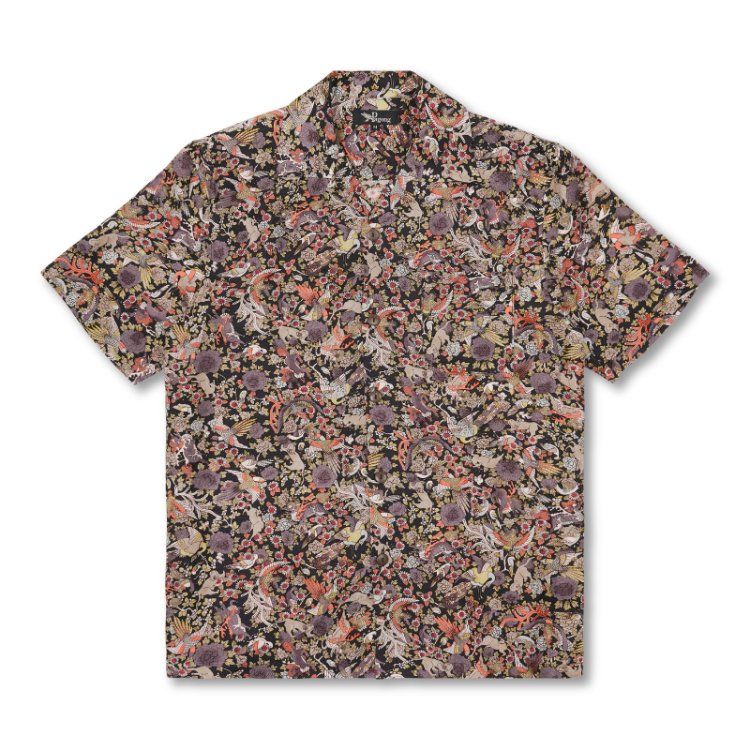
Japanese name/ 動物更紗 ( Doubutsusarasa )
-About-
The term “chintz” refers to cotton textiles with a printed design, especially flowers. This type of fabric was brought to Japan from India through the “Silk Road”. This particular pattern represents a multitude of flowers such as the peony, chrysanthemum, and imaginery flowers along side animals such as the peacock, deer, phoenix, dragon, and panther. Known as “sarasa” in Japanese, becoming a very familar pattern in Japanese culture. Japanese design styles were often combined with designs from other countries creating a new exotic blend.
・Currency : US Dollar (USD)
・100% Silk (Custom-woven Jacquard )
・Made in Japan
・Classic-fit Aloha shirt
・Coconut buttons
・Dry-clean
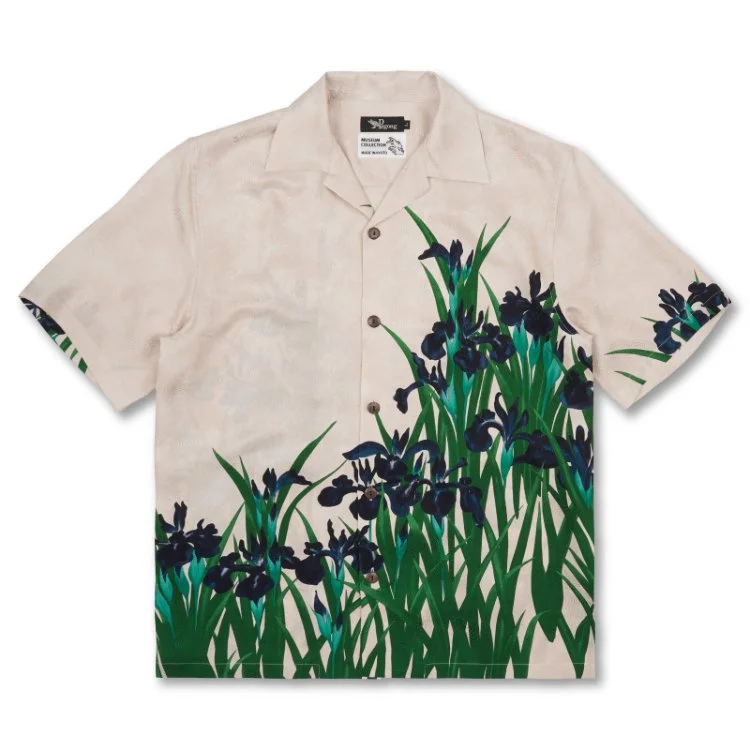
Japanese name/燕子花 (Kakitsubata)
-About-
This exquisite pattern was inspired by a work of art in the collection of the Metropolitan Museum of Art in New York called “Irises at Yatsuhashi (Eight Bridges)”, a pair of six-panel folding screens or “byobu” by Japanese artist Ogata Korin (1658-1716) of the Rimpa school. Born and raised in Kyoto, Korin became an official painter for the royal court in 1701, with Irises being painted just after receiving this honor.
Korin’s focus on irises seems to have many hidden meanings which stem from Japanese literature written over 1,000 years ago; telling of the noble class putting the iris in high regard due to its purple color, which could purify negative energies, and protect those who wore it. The flower was also believed to bring happiness and good fortune, as well as symbolize wisdom, hope, trust, and valor; therefore becoming a pattern which is often seen used on ceremonial kimono.
We are delighted to have been given official permission to use this extraordinary painting from the Metropolitan Museum of Art in New York, to which Pagong has implemented the dye technique of Kyoto Yuzen.
・Currency : US Dollar (USD)
・100% Silk (Custom-woven Jacquard )
・Made in Japan
・Classic-fit Aloha shirt
・Coconut buttons
・Dry-clean
Color / Black
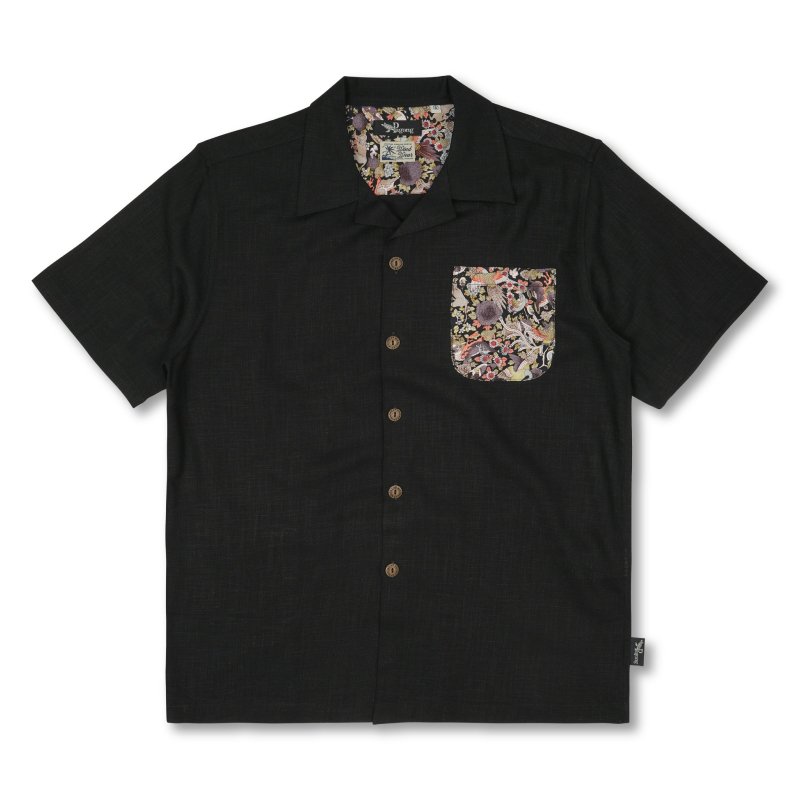
Pagong X Windwear Second Collabortaion
This is the second collaboration with Thai Aloha shirt brand "Windwear". The body of this Aloha shirt is made of cool rayon linen material, and the patterned parts such as the pockets are made of silk fabric dyed by artisans in Pagong.
Our second collaboration features an aloha shirt with black and violet colour combination where the inner shoulders and pockets have been silk fabric fitted with animal chintz.
The animal chintz patterns were chosen as a reflection of Thai and Japanese nature and culture.
*Regarding sizing please note:
The sizes for this collaboration shirt are cut larger than Pagong’s silk Aloha shirts.
For example: The chest-size for Pagong’sMEDIUM silk Aloha shirt is 42 inches. Windwear’s rayon Aloha shirt chest-size for MEDIUM is 44 inches.
・Currency : US Dollar (USD)
・85% Rayon 15% linen
・Classic-fit Aloha shirt
・Coconut buttons
・Wash by hand

Japanese name / 流水四季草花図
(Ryusuishikisoukazu / Sakai Houitsu
-About-
Sakai Hōitsu, (August 1, 1761 to January 4, 1829) was born and raised in Edo, modern-day Tokyo.
A master painter, he was also a much-beloved poet of the late Tokugawa period (1603–1867).
This exquisite painting, originally from a folding screen “Flowing Water With Plants and Flowers of the Four Seasons” has flowers which move from spring to summer on the right, and flowers moving from autumn to winter on the left.
The water flowing in the center of the painting is a symbol for the universe, purifying all difficulties.
A collaboration with the TOKYO NATIONAL MUSEUM.
Currency : US Dollar (USD)
・100% Polyester (Quick Dry)
・Made in Japan
・Classic-style Aloha shirt
・Coconut buttons
・Hand-wash

Color / Navy adn Multi-color Size Chart Care Instruction
Japanese name/ 荒磯丸文 Arasomarumon
-About-
The name "Araiso" can be pronounced as "Ariso" or "Araiso." Its origin stems from "Araiso Junko," depicting carp-like fish rhythmically leaping on the waves in opposite directions. This mesmerizing pattern of carp gracefully bouncing on the waves is commonly referred to as Araiso-bun.
In this pattern, the Araiso pattern arranged in a round pattern placed between the waves along with the Hanamaru pattern. Combining the wild and heroic image of Araiso with the Hanamaru pattern adds softness, creating a pattern that combines strength and gentleness. The carp symbolizes bravery and strong faith in the face of adversity and hardship, and the flowers, which evoke kindness, encourage us as we strive toward the future.
・Currency : US Dollar (USD)
・100% Silk (Custom-woven Jacquard )
・Made in Japan
・Classic-fit Aloha shirt
・Coconut buttons
・Dry-clean
Mens

Aloha Shirts

Hoodies
Color / Black
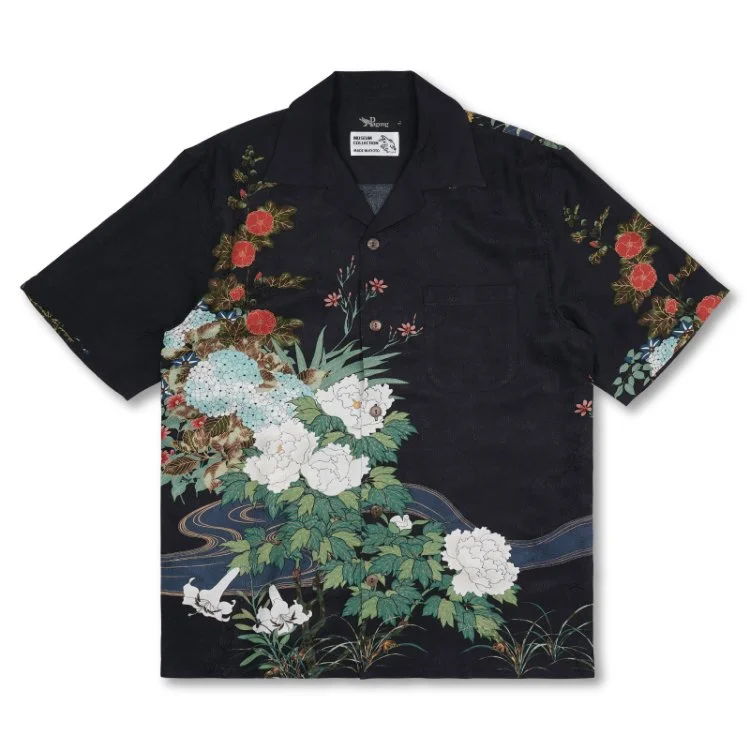
Japanese name / 流水四季草花図 (Ryusuishikisoukazu / Sakai Houitsu)
-About-
Sakai Hōitsu, (August 1, 1761 to January 4, 1829) was born and raised in Edo, modern-day Tokyo.
A master painter, he was also a much-beloved poet of the late Tokugawa period (1603–1867).
This exquisite painting, originally from a folding screen “Flowing Water With Plants and Flowers of the Four Seasons” has flowers which move from spring to summer on the right, and flowers moving from autumn to winter on the left.
The water flowing in the center of the painting is a symbol for the universe, purifying all difficulties.
A collaboration with the TOKYO NATIONAL MUSEUM.
・Currency : US Dollar (USD)
・100% Silk (Custom-woven Jacquard )
・Made in Japan
・Classic-fit Aloha shirt
・Coconut buttons
・Dry-clean
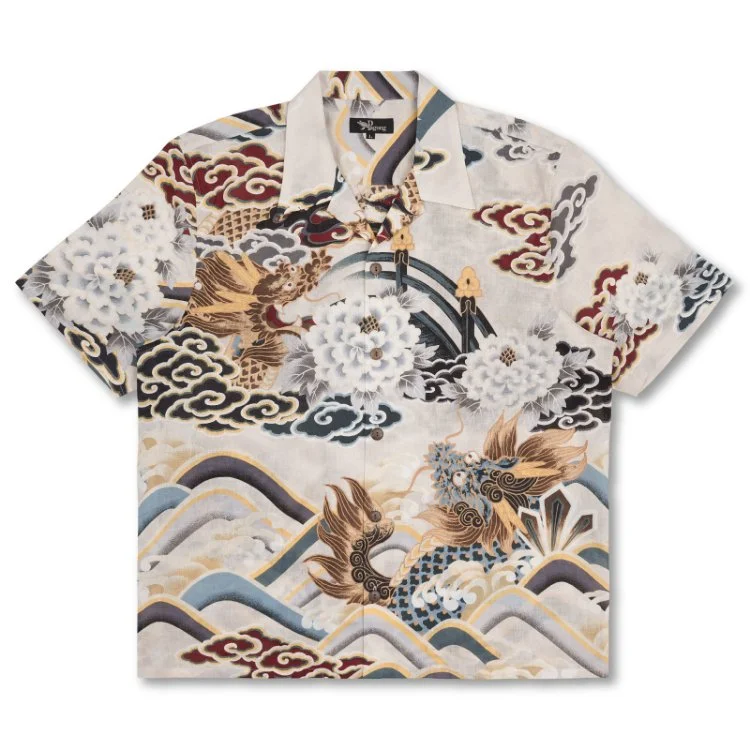
Color / Beige and Multi-color Size Chart
Japanese name / 龍と麒麟 - Ryu to Kirin
-About-
This auspicious pattern, depicting a dragon and a Kirin facing one another, has long been cherished as a symbol of harmony between heaven and earth and the union of power and virtue.
The dragon is a sacred being believed to ascend to the heavens, summon clouds, and bring life-giving rain. Often associated with thunder and the sky, it has been revered as a manifestation of celestial power.
In contrast, the Kirin is known as a benevolent and gentle guardian, said to herald times of peace and wisdom. Though it bears horns, it is believed to possess such compassion that it would not even harm a single living creature.
Traditionally, the dragon represents the energy of the heavens, while the Kirin embodies the virtue of the earth. When these two stand together, they express the moment when heaven and earth are united. The vermillion bridge at the center symbolizes connection—between sky and land, humanity and nature, and differing forces brought into balance.
The scene of the dragon and Kirin facing one another captures the meeting of strength and virtue, merging in harmony and giving rise to renewal and new beginnings.
The mountains and waves in the background reflect the rhythms of nature and the flow of life, while blooming peonies symbolize prosperity, abundance, and noble grace.
Softly drifting clouds carry auspicious signs, lending depth and quiet movement to the composition.
This design reflects the refined elegance of classical court aesthetics, later echoed in ceremonial and performance garments, and is distinguished by its dignified and timeless beauty.
Within this composition, where the dragon and Kirin form a single world, there lives a quiet wish—that celestial power and earthly virtue may intertwine, bringing peace, balance, and prosperity.
・Currency : US Dollar (USD)
・70% Cotton / 30% Linen
・Classic-style Aloha shirt
・Coconut buttons
・Wash by hand
・Made in Japan
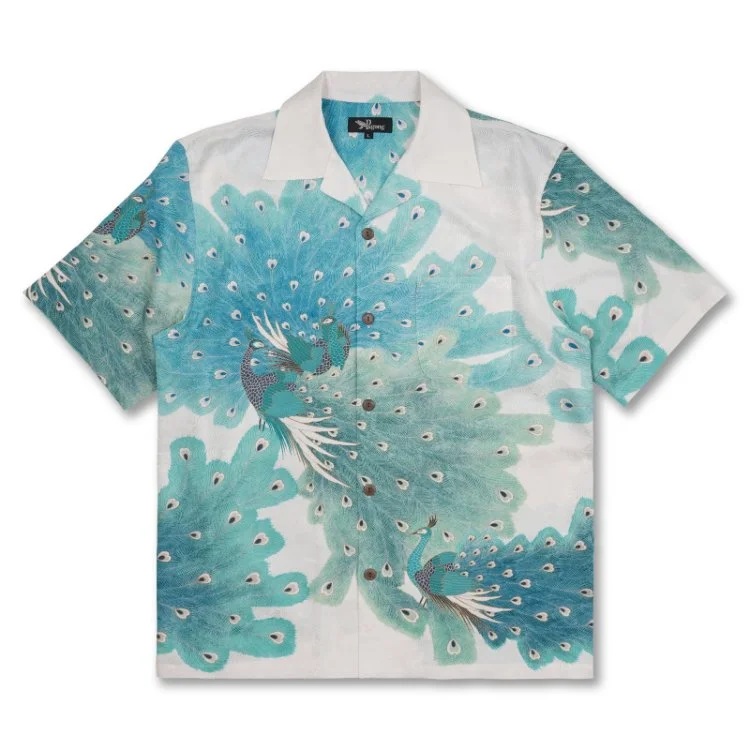
Color / White and Multi-color
Japanese name / 孔雀 (Kujaku)
-About-
Peacocks are admired for their striking beauty and graceful presence. With their flowing silhouettes and richly layered feathers, they bring a sense of elegance and quiet grandeur to any design.
Their most distinctive feature—the long, radiant tail—creates a dramatic sense of movement and rhythm. When spread, it forms a captivating display of repeating eye-like patterns, giving the motif both depth and visual richness.
In design, peacocks have long been associated with beauty, dignity, and a sense of refined luxury. Their presence adds a feeling of celebration and splendor, making them especially suited to garments intended to stand out with quiet confidence.
In this pattern, the peacock is often depicted with its tail fully extended, allowing its intricate forms to unfold across the surface. The composition balances boldness with delicacy, as each feather contributes to an overall harmony of line and flow.
As a motif, the peacock expresses not only visual brilliance but also a sense of protection and positivity. It carries an atmosphere of elegance, prosperity, and graceful strength—making it a timeless and captivating design element.
・Currency : US Dollar (USD)
・100% Silk (Custom-woven Jacquard )
・Made in Japan
・Classic-fit Aloha shirt
・Coconut buttons
・Dry-clean
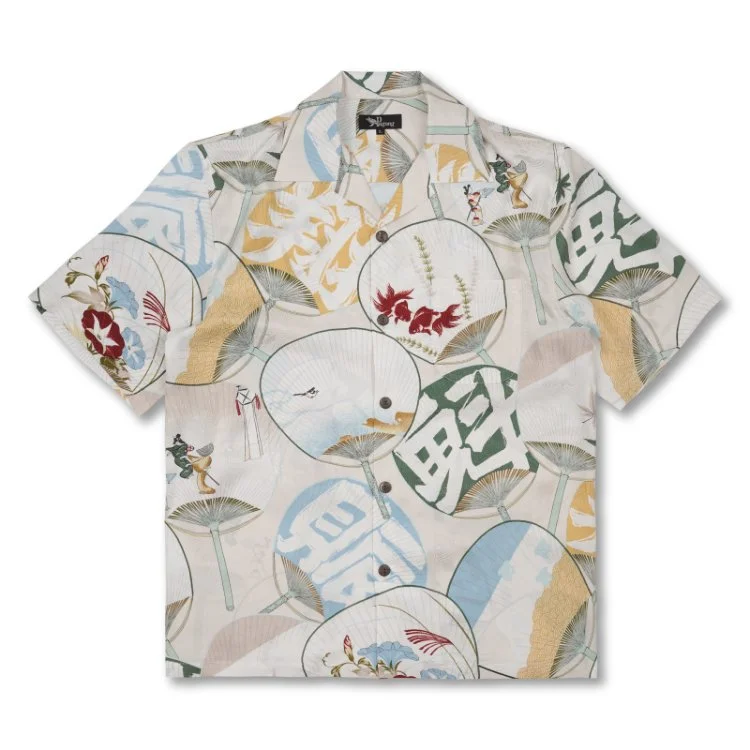
Color /Beige and Multi-color
Japanese name / 京涼の団扇(Kyoryō Uchiwa)
-About-
The Kyoryō Uchiwa design captures the essence of Kyoto’s summer scenery.
Inspired by Kyoto-style uchiwa fans, long cherished in daily life as symbols of comfort and coolness, this design expresses Kyoto’s distinctive elegance and the longing for purity and serenity amid the summer heat.
The overlapping fans are adorned with seasonal motifs such as morning glories, goldfish, flowing water, and dancing figures, evoking the vibrant atmosphere of summer.
Each element reflects the changing seasons and carries prayers for happiness and peaceful living.
The auspicious kanji depicted within the fans convey the following meanings:
「魁」 (Sakigake) — to lead the way, to stand at the forefront, and to guide an era forward.
「翔」 (Shō) — to soar freely through the open sky, transcending limitations and rising toward one’s dreams.
「賑」 (Nigiwai) — signifying liveliness, abundance, and prosperity, expressing the joyful gathering of people and the fullness of happiness, much like a festival.
The layered composition of the fans suggests the gentle flow of passing breezes and the quiet passage of time.
It depicts the interplay of light and shadow on summer days, the prayers woven into everyday life, and tranquil moments shaped by people and the wind.
Since ancient times, uchiwa fans have been regarded as auspicious objects, believed to invite good fortune and ward off misfortune. This pattern carries a wish that pure breezes may bring calm and clarity to the heart.
To express the unseen wind as beauty—this is a sensibility passed down through generations of Kyoto’s artisans and artists.
Kyoryō Uchiwa brings this appreciation of the invisible into the present, offering gentle coolness and quiet healing within the summer air.
Like a soft embrace of Kyoto’s summer, this design delivers a tender breeze to the wearer’s heart, adding peaceful blessings to everyday life.
・Currency : US Dollar (USD)
・100% Silk (Custom-woven Jacquard )
・Made in Japan
・Classic-fit Aloha shirt
・Coconut buttons
・Dry-clean
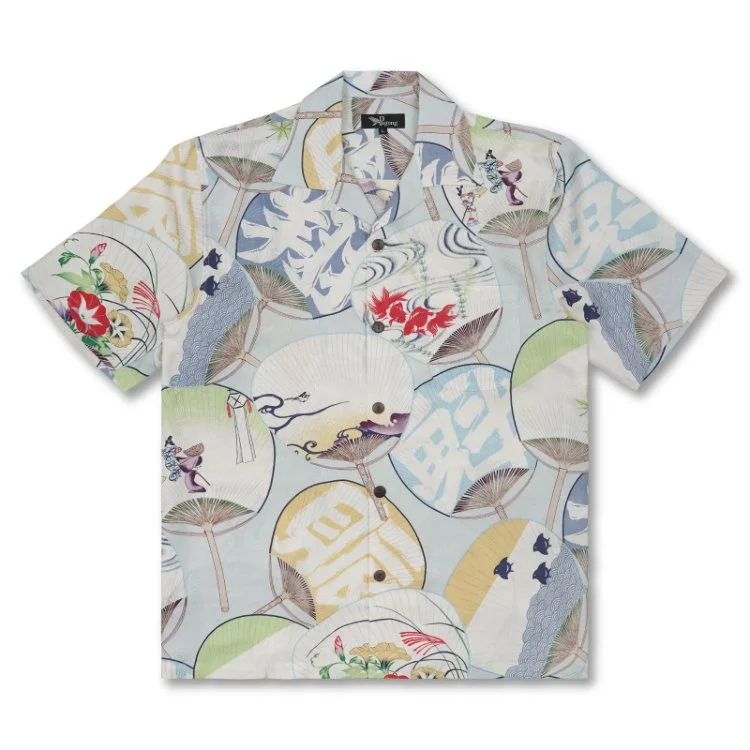
Color /Light Blue and Multi-color
Japanese name / 京涼の団扇(Kyoryō Uchiwa)
-About-
The Kyoryō Uchiwa design captures the essence of Kyoto’s summer scenery.
Inspired by Kyoto-style uchiwa fans, long cherished in daily life as symbols of comfort and coolness, this design expresses Kyoto’s distinctive elegance and the longing for purity and serenity amid the summer heat.
The overlapping fans are adorned with seasonal motifs such as morning glories, goldfish, flowing water, and dancing figures, evoking the vibrant atmosphere of summer.
Each element reflects the changing seasons and carries prayers for happiness and peaceful living.
The auspicious kanji depicted within the fans convey the following meanings:
「魁」 (Sakigake) — to lead the way, to stand at the forefront, and to guide an era forward.
「翔」 (Shō) — to soar freely through the open sky, transcending limitations and rising toward one’s dreams.
「賑」 (Nigiwai) — signifying liveliness, abundance, and prosperity, expressing the joyful gathering of people and the fullness of happiness, much like a festival.
The layered composition of the fans suggests the gentle flow of passing breezes and the quiet passage of time.
It depicts the interplay of light and shadow on summer days, the prayers woven into everyday life, and tranquil moments shaped by people and the wind.
Since ancient times, uchiwa fans have been regarded as auspicious objects, believed to invite good fortune and ward off misfortune. This pattern carries a wish that pure breezes may bring calm and clarity to the heart.
To express the unseen wind as beauty—this is a sensibility passed down through generations of Kyoto’s artisans and artists.
Kyoryō Uchiwa brings this appreciation of the invisible into the present, offering gentle coolness and quiet healing within the summer air.
Like a soft embrace of Kyoto’s summer, this design delivers a tender breeze to the wearer’s heart, adding peaceful blessings to everyday life.
・Currency : US Dollar (USD)
・100% Silk (Custom-woven Jacquard )
・Made in Japan
・Classic-fit Aloha shirt
・Coconut buttons
・Dry-clean
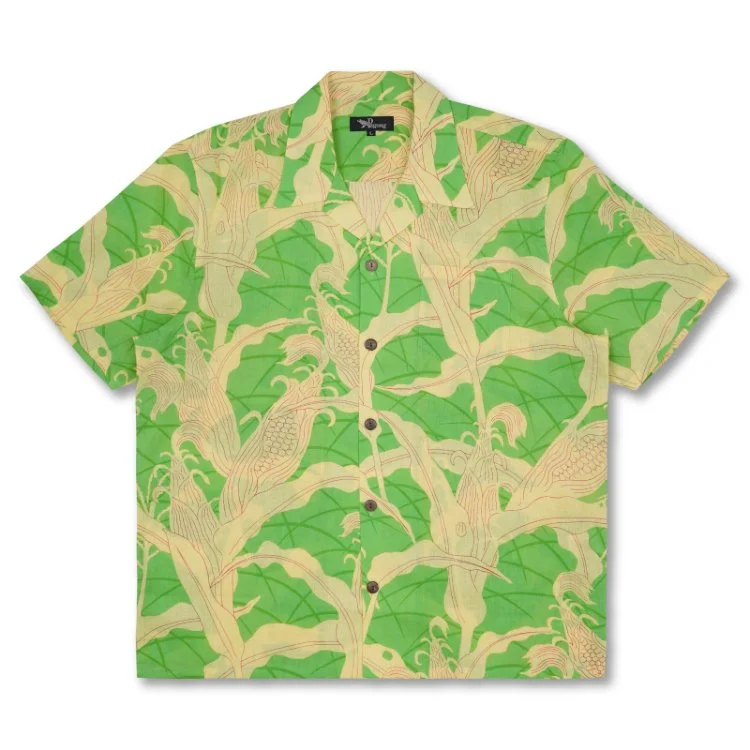
Color / Green and Yellow
Japanese name / 玉蜀黍(とうもろこし)
-About-
Rooted in the earth and growing straight in the sun, corn is depicted as a symbol of harvest and life. Its neat rows of golden grains evoke the order and abundance of nature, each one seemingly conveying the breath of the earth. The supple curves of the leaves rustling in the breeze and the soft flow of the stalks enveloping the kernels evoke both the strength and gentleness of life, quietly speaking to the beauty of nature's woven forms. Corn was introduced to Japan during the Edo period, initially attracting people's attention as a rare imported crop. Its simple yet powerful appearance eventually blended with the Japanese climate, and by the Meiji and Taisho periods, it was incorporated into textiles and decorative designs as a new natural motif. Though a plant from a foreign land, its shape evokes a sense of nostalgia, and it became a beloved symbol of harvest alongside rice and wheat. Designers discovered a modern sense of beauty in the unique shape, arrangement of grains, and overlapping leaves. They went beyond the realism of nature to project the power of life within abstract rhythms and compositions. Corn depicted as a pattern on kimonos and obi is not simply a plant, but is expressed as a new natural beauty that embodies the spirit of the times and the hopes of the people. This pattern is imbued with joy for the fruitful season and a deep respect for nature. Born from the earth, illuminated by the sun, and eventually bearing fruit, it is also a symbol of the cycle and connection of life. This pattern exudes a sense of undeniable power and warmth in its quiet presence, gently conveying the beauty of humans and nature living together. It is a pattern that makes you feel that nature is at its most artistic.
・Currency : US Dollar (USD)
・70% Cotton / 30% Linen
・Classic-style Aloha shirt
・Coconut buttons
・Wash by hand
・Made in Japan
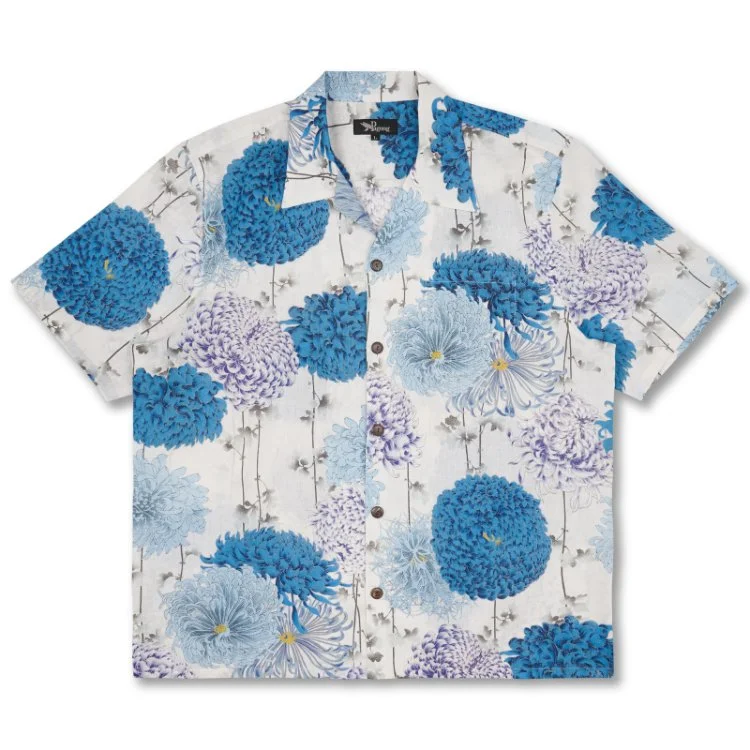
Color / White and Blue
Japanese name/ 彩り菊蔦文様 (Irodori Kikutsuta monyo)
-About-
Chrysanthemums, which have long been a symbol of longevity and immortality in Japan, were introduced from China during the Nara period as medicinal flowers. In ancient China, chrysanthemums were considered a symbol of immortality due to various historical events that linked chrysanthemums to longevity, and on the Double Ninth Festival, also known as the Chrysanthemum Festival, people drank chrysanthemum wine to pray for longevity.
・Currency : US Dollar (USD)
・70% Cotton / 30% Linen
・Classic-style Aloha shirt
・Coconut buttons
・Wash by hand
・Made in Japan
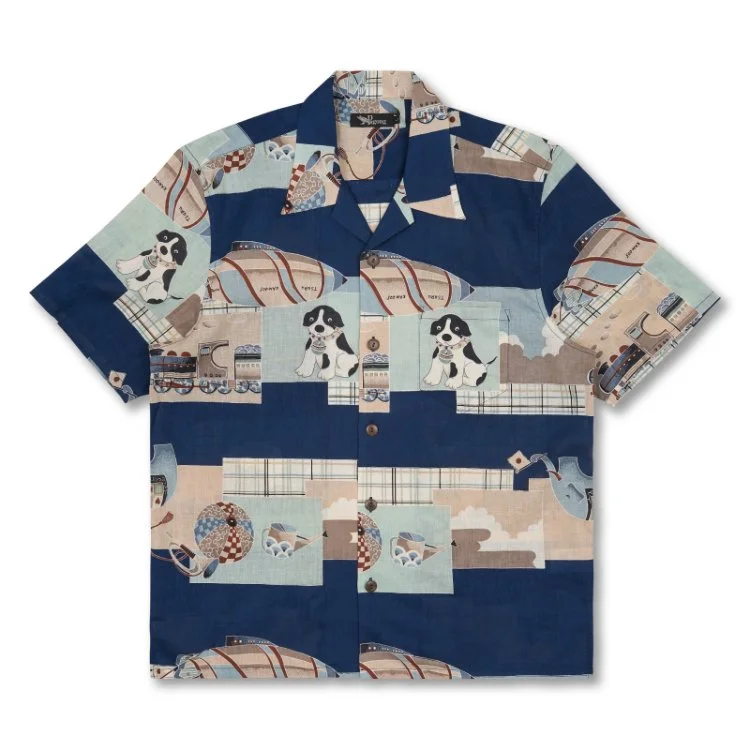
Color / Blue and Multi-color
Japanese name/ ぼんち柄 - Bonchi
-About-
This is a boys’ kimono pattern from the early Showa period, featuring motifs that would have appealed to young boys. It belongs to a style known as “bonchi-gara,” a category of playful and imaginative designs created especially for children.
The background is composed in a way reminiscent of the noshime kosode, a formal garment worn by samurai during the Edo period. It is structured in horizontal sections, combining plain areas with patterned bands such as stripes and checks. When worn with formal attire, the upper portion would appear plain, while patterned sections would be visible around the waist—much like the costumes seen in period dramas.
Layered over this traditional composition are charming, childlike motifs. The depictions of dogs and elephants have a distinctly retro character. Dogs not only symbolize cuteness but were also associated with emotional development in children. Owning a pet dog—often given a familiar name like “Pochi”—was considered a sign of a cultured and modern lifestyle at the time.
The elephant, on the other hand, represents strength and grandeur. During this era, boys’ kimono patterns often featured modern and exciting subjects such as steam locomotives, ships, war vessels, and even hot air balloons—symbols of progress and adventure that captured a young boy’s imagination. Elements like trumpets, rising sun flags, and battleships reflect the strong, spirited ideals of the time, emphasizing courage and masculinity.
Also depicted are nostalgic items such as a tin watering can, a toy trumpet, and paper balloons. The watering can is decorated with a wave pattern, while the paper balloon features checkered and arabesque designs. Above, large billowing summer clouds stretch across a bright blue sky, and together with the watering can, evoke a vivid scene of midsummer.
・Currency : US Dollar (USD)
・70% Cotton / 30% Linen
・Classic-style Aloha shirt
・Coconut buttons
・Wash by hand
・Made in Japan
Womens

T-Shirts

Shirts


Jackets
Shirts
Recommend Items

Dress

Cardigans
Skirts/ Pants
Recommend Items
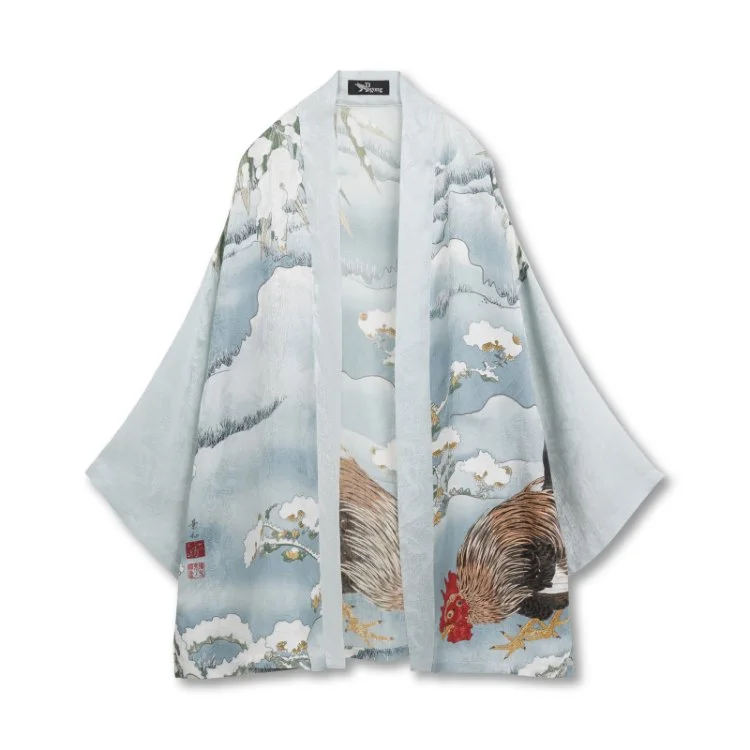
Color / Light Blue and Multi-color Care Instruction
Japanese name/ 雪中雄鶏図 ( Setchu Yukei-zu )
-About-
Jakuchū Ito (March 2, 1716 to October 27, 1800) was raised in the Nishiki area of Kyoto during the “golden age of art” of the Edo era, before Japan opened its doors to the outside world.
The eldest son of a wholesale vegetable merchant, Jakuchu was self-taught, and passionate about painting from childhood. A student of Buddhism at the Shokokuji Zen monastery, he devoted himself to the art of painting, taking inspiration from the temple’s collection of Chinese Yuan and Ming dynasty paintings.
He made thorough sketches of all natural phenomena, especially chickens and roosters, which he used to keep at his home as pets, in order to closely observe and study their nature.
This is Jakuchu’s earliest known painting, created in his thirties when he was still actively working in his family’s business. In a playful style which he would become known for, Jakuchu depicts a lone rooster pausing for a moment, aloof from the world, searching for food among the thickly-piled snow.
The rooster is considered a creature of virtue, and in this outstanding rendering, Jakuchu’s meticulous attention to precision and detail bring the subject to life.
At Pagong, in celebration of the 300th anniversary of the birth of Jakuchu Ito, we wish to breathe new freshness into this masterpiece with the use of a kimono dyeing technique called Kyo-Yuzen.
~A collaboration with the Hosomi Museum, Kyoto.
・ 100% Silk
・One-Size-Fits-All
・Made in Japan
・Dry-wash
・Currency : US Dollar (USD)
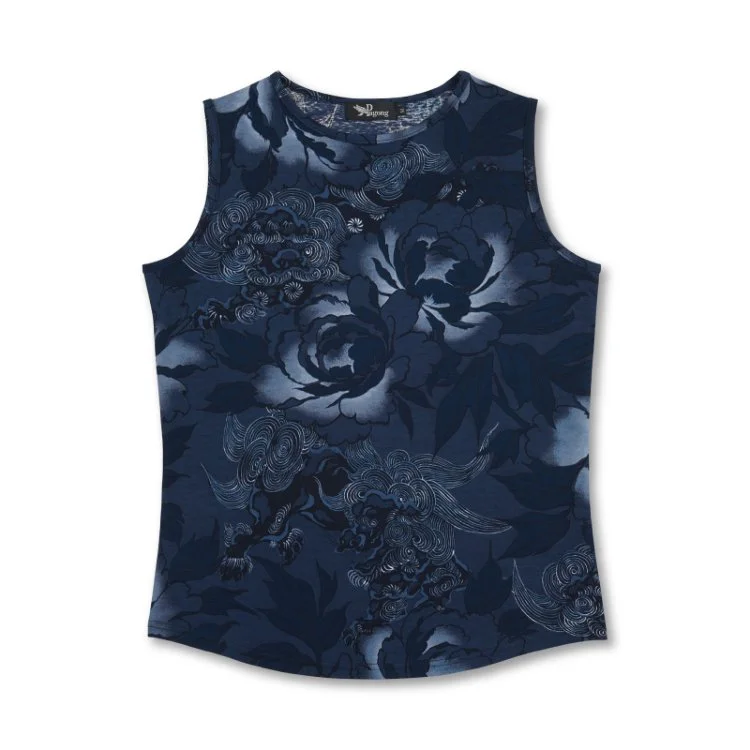
Color / Navy Care Instruction
Japanese name/ 唐獅子牡丹 ( Karashishibotan)
-About-
Karashishi are mythical beasts first introduced to Japan from 7th or 8th century AD, during the same period as Buddhism’s transmission to Japan. “Shishi” (or Jishi) is translated as lion but it can also refer to a deer or dog with magical properties and thepower to repel evil spirits. “Kara” is meant to suggest something of East Asia origin.
Traditionally depicted in pairs, statues of Karashishi stand guard outside the gates of Japanese Shinto shrines and Buddhist temples; one with mouth open and one with mouth shut; as symbols of protection. The opened/closed mouth relates to Ah (open mouth) and Un (closed mouth). “Ah” is the first sound of the Japanese alphabet, while “N” (pronounced “un”) is the last. These two sounds symbolize the beginning and the end, birth and death, and all possible outcomes (from alpha to omega) in existence.
It is also said the open mouth is to scare off demons, and the closed mouth to shelter and keep in good spirits. In sculptures, the circular object often beneath their feet is the “Tama”, or sacred Buddhist jewel, a symbol of Buddhist wisdom that brings light to darkness and the power to grant wishes.
At Pagong Kyoto, our artisans implement the technique of Kyoto-Yuzen, to bring to life the delightful spirit and tradition of the Guardian Beast “Karashishi”.
・100% Premium Cotton
・Made in Japan
・Hand-wash
・Hang to dry
・Currency : US Dollar (USD)
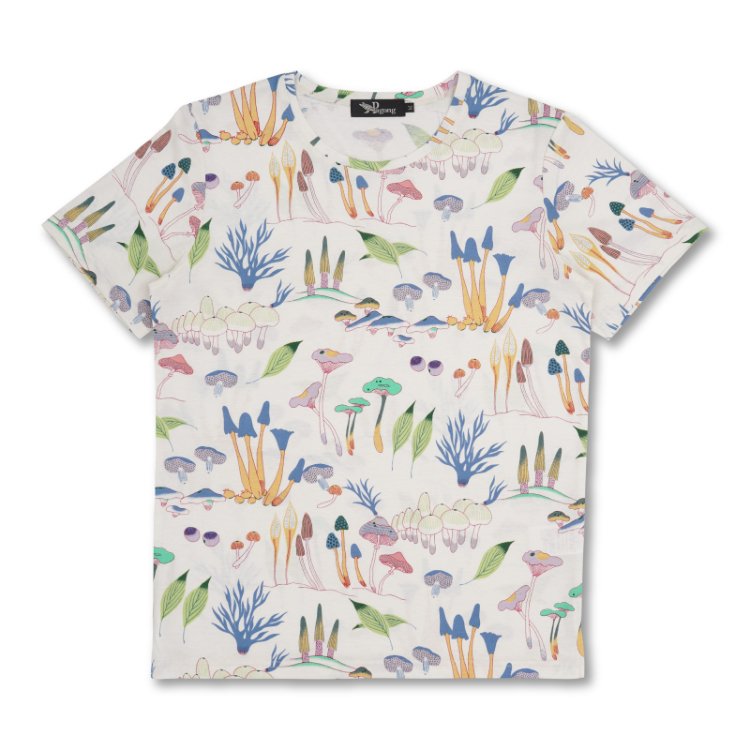
Color / White and Multi-color Care Instruction
Japanese name/ きのこ (Kinoko)
About-
The mushrooms are drawn in a graphic design style, like illustrations in printed matter. This trend of drawing mushrooms in this way began in the Taisho era but became more popular before and after the war. After the war, the motifs also moved away from traditional flowers and birds and became more Western-style motifs and modern expressions influenced by European textile design.
・100% Premium Cotton
・Made in Japan
・Hand-wash
・Model (5 feet, 3 inches)
・Currency : US Dollar (USD)
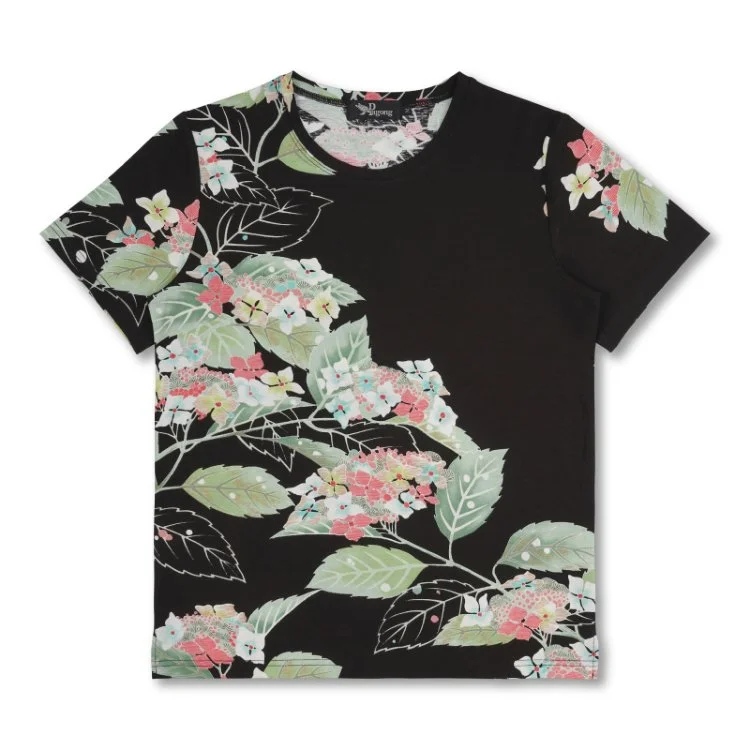
Color / Black Care Instruction
Japanese name/ 紫陽花 (Ajisai)
-About-
Hydrangeas, native to Japan, include a variety called "Gaku hydrangea," which has been integrated into Japanese culture since ancient times and is mentioned in the Man'yoshu.
The flower's color changes with soil pH, giving it the nickname "Shichihenge" or "seven changes." Notably, large blue-purple flowers have been popular since the Edo period and are common motifs in ceramics, lacquerware, kimonos, and yukata, evoking early summer.
A poem in the Man'yoshu expresses a wish for a loved one’s prosperity, likening it to the layered blooming of hydrangeas. This imagery symbolizes deep connections between people, suggesting that the beauty of blooms and dew may inspire enduring bonds.
・100% Premium Cotton
・Made in Japan
・Hand-wash
・Model (5 feet, 3 inches)
・Currency : US Dollar (USD)
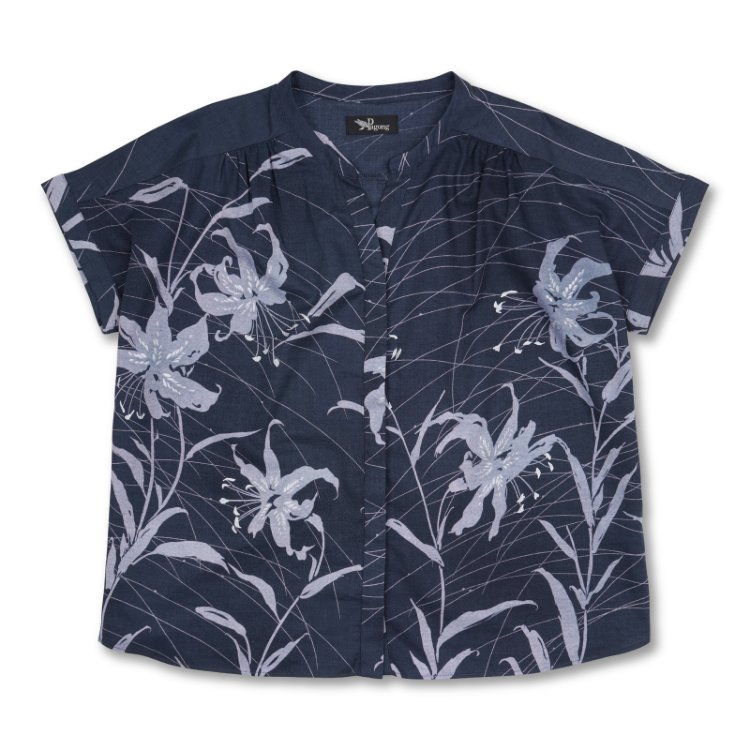
Color / Navy and Multi-color Care Instruction
Japanese name / 百合と露芝 (Yuri to Ro )
-About-
Japan is famously known as the land of lilies, which have thrived in its mountains and fields since the Manyo period. The bulbs, referred to as lily roots, consist of overlapping, fleshy, scale-like leaves. The name "lily" is thought to originate from the way these leaves gather together, with some theories suggesting it comes from the flower's graceful sway in the wind. Lilies have been appreciated for centuries, but realistic motifs are mainly found in Noh costumes from the Momoyama period.
As Western flowers gained popularity in the late Meiji period, sketch-like designs began to emerge, and by the Taisho period, lilies started to appear on kimonos.
This style often depicted lilies in a realistic yet simplistic manner, emphasizing their elegance. The Japanese aesthetic values the fleeting beauty of morning dew. The "dew grass" pattern features layered grass shapes adorned with dewdrops, capturing a quintessential Japanese sentiment. The saying "walking like a lily flower" highlights the flower’s dignified beauty, evoking images of misty fields with graceful lilies swaying in the breeze. Wearing this pattern of lilies and dew grass offers an ultimate expression of elegance.
・Cotton 75% / Rayon 25%
・Made in Japan
・Hand-wash
・Model ( 5 feet, 3 inches )
Currency : US Dollar (USD)
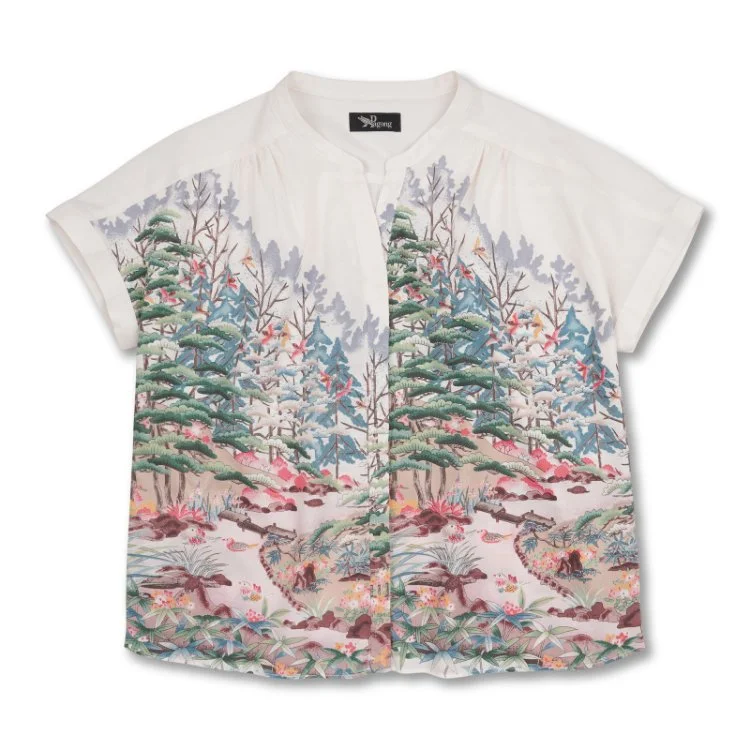
Color / White and Multi-color Care Instruction
Japanese name / 風景画 (fukeiga)
-About-
From ancient times, beautiful artistic patterns on kimono have reflected a delicate sensibility with nature. Fukeiga or “Japanese Mountain Landscape” is no exception, which celebrates forested mountains, and a river with turtles and ducks which are meant to bring back idyllic childhood memories of childhood. In short, a desirable place for one to live!
・Cotton 75% / Rayon 25%
・Made in Japan
・Hand-wash
・Model ( 5 feet, 3 inches )
Currency : US Dollar (USD)
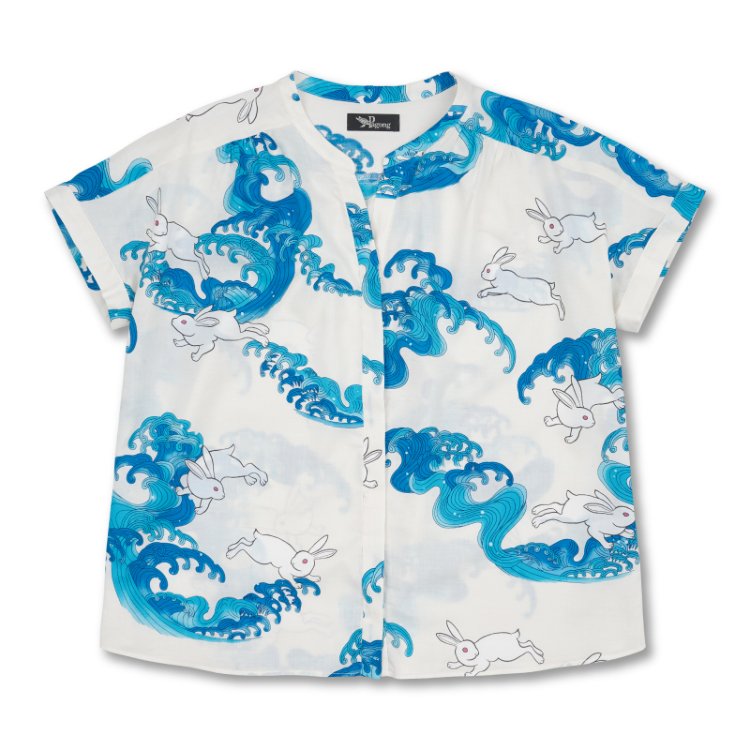
Color / White and Multi-color Care Instruction
Japanese name / 波に兎 ( Nami ni usagi )
-About-
In Japan, rabbits are known as “messengers from the gods, or “kami”, and represent intelligence, prosperity, and moving forward especially in new directions.
In this dynamic, fun-loving pattern, rabbits are seen frolicking with “standing waves”, or “seigaha” taking on an even deeper traditional meaning representing surges ofgood fortune, power against adversity, and resilience.
・Cotton 75% / Rayon 25%
・Made in Japan
・Hand-wash
・Model ( 5 feet, 3 inches )
Currency : US Dollar (USD)
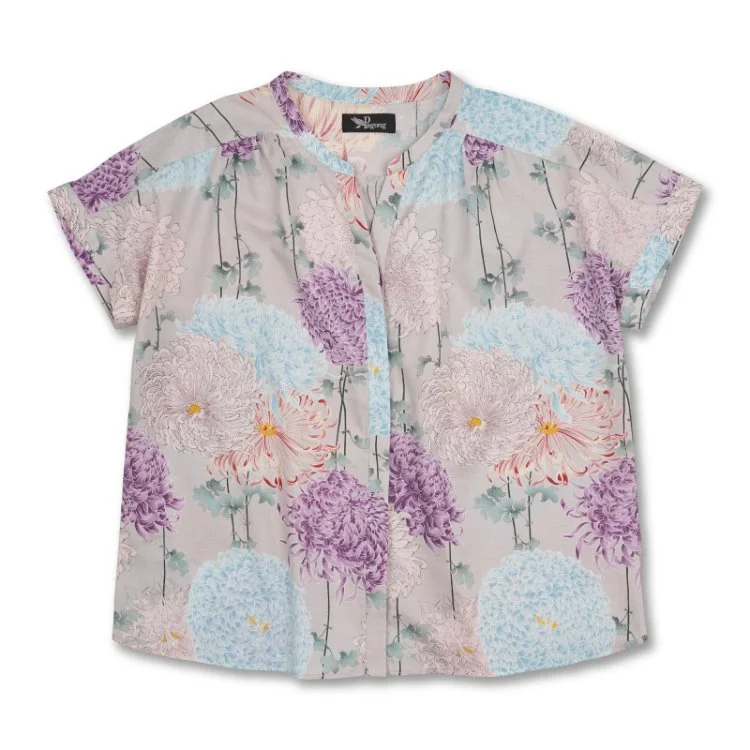
Color / Gray and Multi-color Care Instruction
Japanese name / 彩り菊蔦文様 ( Irodori Kikutsuta monyo )
-About-
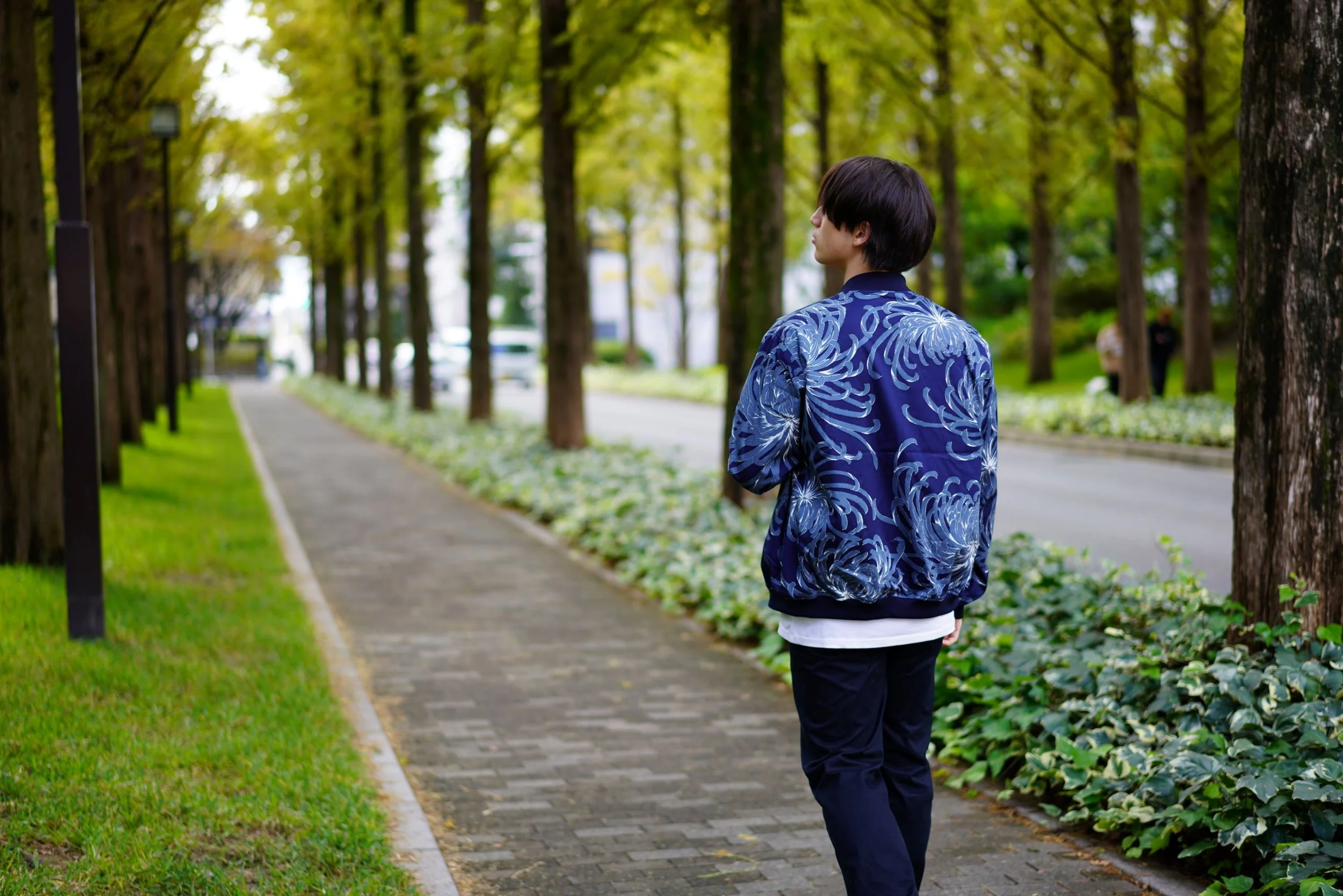
The colorful chrysanthemum and ivy pattern beautifully combines the elegance of the chrysanthemum with the vitality of ivy, resulting in a design that exudes sophistication and refinement. This pattern is particularly popular on women's kimonos, obi, and various Japanese accessories, as it creates a noble and aesthetically pleasing appearance.
The chrysanthemum symbolizes "nobility" and "elegance," while ivy represents "vitality," "prosperity," and "growth." The harmonious combination of these two plants is considered auspicious, making it a favored choice for kimonos and obi worn during celebratory occasions such as weddings, coming-of-age ceremonies, Shichigosan, and school entrance ceremonies.
The chrysanthemum and ivy pattern is especially prevalent on women's "furisode" and "homongi" kimonos, which are worn during significant events. This pattern not only adds a gorgeous and noble impression but also carries with it wishes for good luck and prosperity.
・Cotton 75% / Rayon 25%
・Made in Japan
・Hand-wash
・Model ( 5 feet, 3 inches )
Currency : US Dollar (USD)
Accessories

Scarf

Accessories

Bag
Recommend Items

Color / Black,Blue and Navy Care Instruction
Japanese name/ 曜変天目 (Yohen Tenmoku)
-ABOUT-
Each is only 12 centimeters, less than 5 inches across, but inside is what seems to be “a galaxy aglow with stars”…
There are only three intact centuries-old Yohen Tenmoku tea bowls known to still exist in the world. The bowls are believed to have been produced at Jian-yao kiln in China’s Fujian province during the Song dynasty (1127-1279).
Although it wasn’t until the Muromachi era (1338-1573) when the custom of tea began to take root, they were brought back to Japan as a gift by a Japanese Zen monk who was receiving training at Tianmoku mountain, pronounced “Tenmoku” in Japanese, in China’s coastal Zhejiang province.
The Tenmoku type are black glazed bowls with the inside surface covered with iridescent patterns and lapis lazuli colored areas surrounded by lighter colors ranging from blue to bluish purple.
The meaning of “Yohen” describes the glistening pattern which transforms with light, and created while the bowls were being fired, the method in which this was done remains unknown, but it is thought to not be reproducible. The Yohen Tenmoku bowls are known as the highest grade of Tenmoku-ware, and considered to be the most precious pieces among black tea bowls produced at Jian kiln.
In recent years, fragments of Yohen Tenmoku were excavated in China from the site of the imperial guesthouse in Lin’an (Hangzhou) which used to be the southern capitol during the Song Dynasty; this discovery getting much attention world-wide.
At this time, one bowl is owned by Ryoko-in, a sub-temple of Daitokuji Temple in Kyoto, a second is owned by the Fujita Museum of Art in Osaka, and a third is owned by Seikado Bunko Art Museum in Tokyo; all three being designated by the Japanese government as Important National Treasures.
It is a great honor and brings us much joy for Pagong Kyoto to have been selected to replicate these ancient patterns of the Yohen Tenmoku by the Seikado Bunko Art Museum in Tokyo, to be admired and appreciated by art enthusiasts once more!
・Size 25.5 x 25.5 (inches)
・100% Silk
・Made in Japan
・Dry-clean
・Currency : US Dollar (USD)

Color / Yellow, Brown and White Care Instruction
Japanese name/ カトレア
-About-
・Size 75 x 41 (inches)
100% Wool
・Made in Japan
・Dry-clean
・Currency : US Dollar (USD)

Color / Black and White Care Instruction
Japanese name/ 乱菊 ( Rangiku )
-About-
Starting from the late Taisho era (1912-1926), more modern and exuberant patterns became fashionable in Japan. This depiction of “dancing” chrysanthemums was made during Japan’s “Art Nouveau Movement”, and became a very popular design for those who wished to represent the fashion style of a new era.
Kiku, or chrysanthemums, were introduced to Japan from China in the Nara-era(710-794. In Japan, the chrysanthemum has become a symbol for the emperor and appears on the Japanese imperial seal.
In the language of flowers, the chrysanthemum carries the symbolic meaning of devoted love, loyalty, happiness, longevity, and joy.
・Size 43 x 42.5 (inches)
・100% Silk
・Made in Japan
・Dry-clean
・Currency : US Dollar (USD)
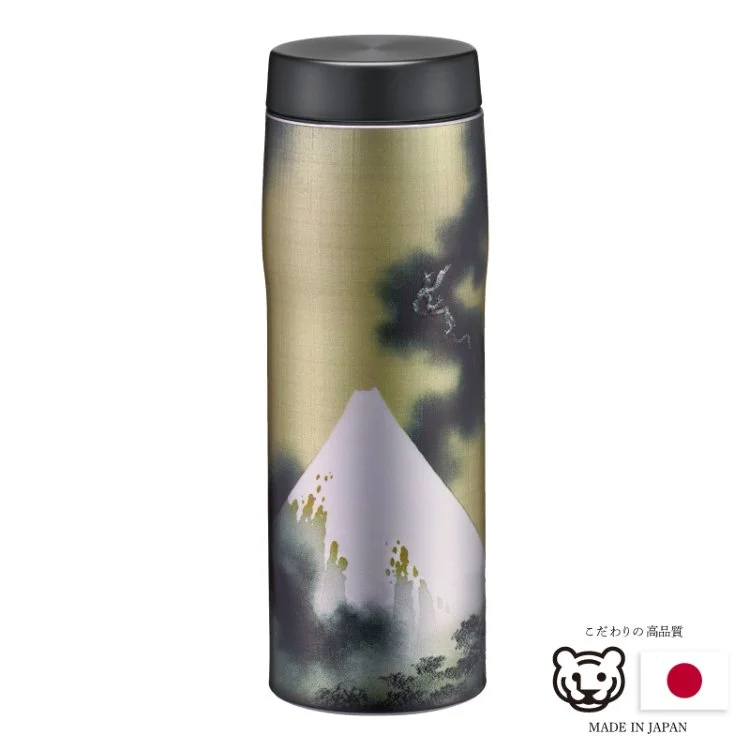
Japanese name / 富士越龍 (Fuji Koshi Ryu)
-About-
Katsushika Hokusai (1760-1849) was to spend his final years passionately making a rare collection of “free-hand” paintings, quite unlike any of his previous ukiyo-e print-works which he is most world-renowned.
Hokusai’s enduring passion to portray Mount Fuji, Japan’s sacred mountain, is a challenge he continued to pursue for his entire lifetime. The many ephocal events of his long prolific career seem to culminate in his final masterpiece, “Dragon Flying Over Mount Fuji” where we the viewer are given the rare opportunity to look deeply into the stillness and peace within the artist’s final year.
・Size:2.8 × 2.8 × 7.9 (inches)/ Mass : 0.51 lbs / Caliber : 1.9 (inches)
・Made in Japan
・Currency : US Dollar (USD)
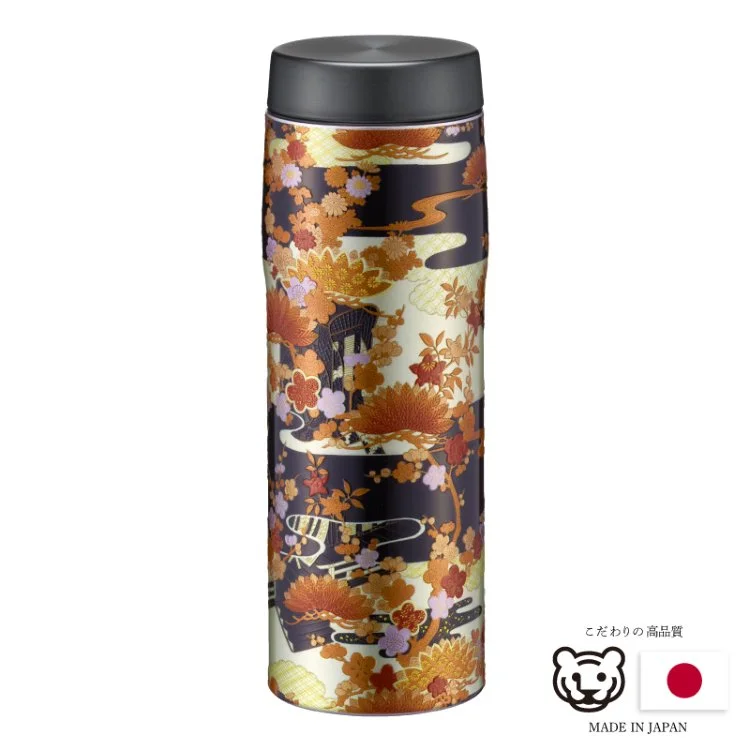
Japanese name / 御所解 (Goshodoki)
-About-
From the Heian period through the Kamakura period, ox-drawn carriages used by aristocrats during court ceremonies were known as Goshoguruma. Their elegant form became one of the most iconic motifs of the dynasty style. Often depicted alongside seasonal flowers, the design conveys an atmosphere of refinement and opulence.
This particular pattern incorporates the five traditional Japanese colors as well as ma-iro tones, evoking the graceful beauty of Heian court life as described in The Tale of Genji.
Drawing inspiration from themes in Noh theater and stories from the imperial era, it presents a landscape rich in perspective—palaces, ox-carts, and fans harmoniously arranged against flowing water and blossoms—symbolizing the elegance and cultural sophistication of Japan’s classical age.
・Size:2.8 × 2.8 × 7.9 (inches)/ Mass : 0.51 lbs / Caliber : 1.9 (inches)
・Made in Japan
・Currency : US Dollar (USD)
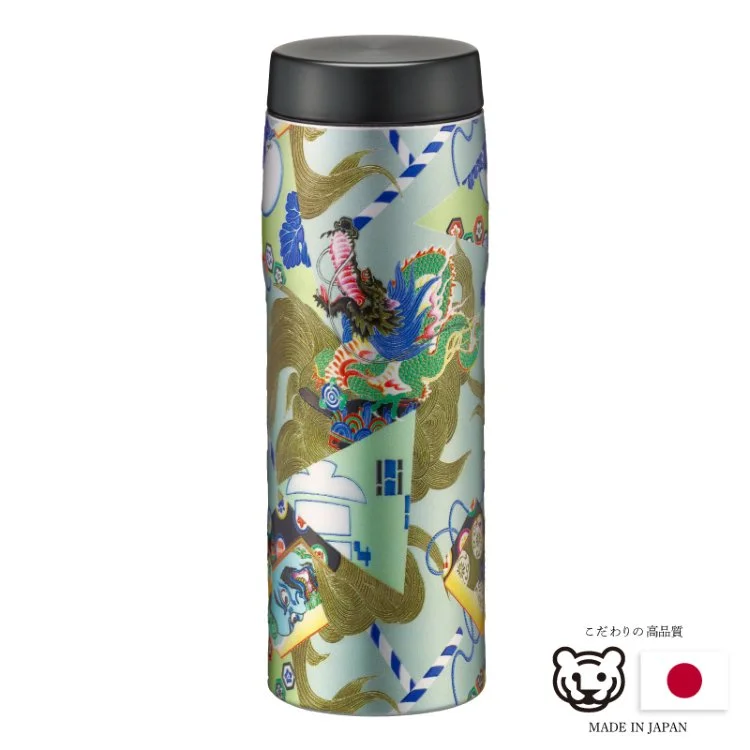
Japanese name / 龍神 (Ryujin)
-About-
A deity of the sea in Japanese mythology, RYUJIN or “Dragon God”, has the powerful capability to transform into a human shape, and is the master of serpents. With his magic jewels he is responsible for the tides, and represents both the perils as well as the bounty of thesea.
Ryujin is one of the eight dragon gods which were originally imported from Indian mythology via China and Korea. His residence is in a palace beneath the sea or in a lake of an extinct volcano. The depths of Lake Biwa, north-east of Kyoto, are often cited as the home of Ryujin.
・Size:2.8 × 2.8 × 7.9 (inches)/ Mass : 0.51 lbs / Caliber : 1.9 (inches)
・Made in Japan
・Currency : US Dollar (USD)
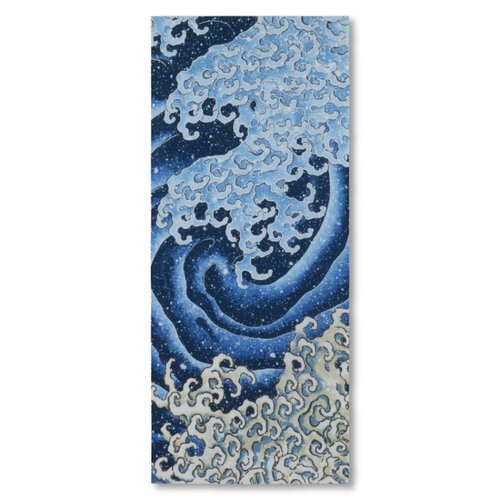
Japanese name/ Dotouzu Onami
-About-
Katsushika Hokusai (1760-1849), an ukiyo-e wood-block print artist and master painter of the Edo era, was invited to Obuse by Takai Kozan, a wealthy farmer and merchant.
During his 3-year stay, 86 year-old Hokusai was asked to paint several masterpieces for the ceilings of festival floats. “Masculine Wave“ (Onami), and “Feminine Wave“ (Menami) were painted for the ceiling of the “Kanmachi”, festival float.
In “Masculine Wave“, the surging crest of a huge wave and the power of the ocean are delightfully expressed with hand-drawn lines, evoking Hokusai’s spirited character and inner strength.
A collaboration with the Hokusai Museum (Obuse, Nagano).
A tenugui (手拭い) is a traditional Japanese decorative towel made from thin and light cotton. It dates back to the Heian period or earlier. By the Edo period, tenugui became what they are today; about 35 by 90 centimeters (14 by 35 in) in size, plain woven, and almost always dyed with plain color or some pattern. The long sides are finished with a selvage, while the short sides are left unfinished to allow fraying.
Tenugui is traditionally used, tied in a specific manner, as a sling to wrap and carry bento boxes. Similarly, they're used to wrap items such as bottles. They are also used as hand towels, and often as headbands, such as for Kendo. They are widely used simply as souvenirs or decorations. Although tenugui were once used as dishcloths, today Western-style thick or terry cloth dishcloths have generally replaced tenugui for dishcloth use.
・Cotton 100%
・35 x 14 inches
・Dyeing method-Kyo-Yuzen
・Wash separately
・Do not soak, line-dry.
・Made in Japan
・Currency : US Dollar (USD)
Color / Blue and Multi-color
Size Chart Care Instruction
Japanese name/ CHOJUKABOKUZU / JAKUCHU ITO
-About-
Jakuchu Ito (1716 to 1800) was raised in the Nishiki area of Kyoto during the “golden age of art” of the Edo era, before Japan opened its doors to the outside world.
Jakuchu was self-taught, and passionate about painting from childhood. A student of Buddhism at the Shokoku-ji zen monastery, he devoted himself to the art of painting, taking inspiration from classic Chinese paintings from the Yuan and Ming dynasties.
With nature as his teacher, he also began making thorough sketches of all natural phenomena, eventually establishing his own richly colored style of painting, as portrayed here in his “Birds,Animals, and Flowering Plants in an Imaginary Scene”, originally a pair of six-panel folding screens.
This timeless expression of flora and fauna is a testament to Jakuchu Ito’s originality and genius. It is comprised of roughly 43,000 squares within each of the painting’s panels. Animal figures within the scene are alive and alert showing their true nature in a style characteristic of Jakuchu.
At Pagong, in celebration of the 300th anniversary of the birth of Jakuchu Ito, we wish to breathe new freshness into these extraordinarily detailed depictions of plants and animals with the use of a kimono dyeing technique called Kyo-Yuzen.
~A collaboration with Idemitsu Museum of Arts.
・Currency : US Dollar (USD)
・100% Silk (Custom-woven Jacquard )
・Made in Japan
・Classic-fit Aloha shirt
・Coconut buttons
・Dry-clean